


A Major Celestial Event
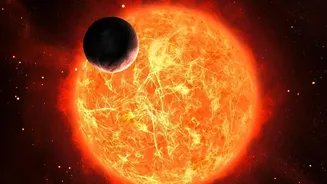
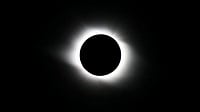
On August 12, 2026, the Moon will pass directly between the Earth and the Sun, casting a shadow that will create a total solar eclipse. This stunning event will trace a path across Greenland, Iceland, the Atlantic Ocean, northern Spain, and a small part
of Portugal. For those within this narrow path of totality, the sky will darken dramatically, and the Sun's magnificent outer atmosphere, the corona, will become briefly visible to the naked eye. This will be the first total solar eclipse in mainland Europe since 1999, making it a highly anticipated event for skywatchers worldwide. Totality will last for a little over two minutes at its peak point just off the coast of Iceland.
Why It's Not Visible From India
The path of totality for the August 12 eclipse is confined to the far northern and western parts of the globe. India will be outside this path, meaning the eclipse will not be visible in the Indian sky. According to Indian Standard Time (IST), the eclipse will begin late at night on August 12 and conclude in the early morning hours of August 13. Since the event occurs during nighttime in India, direct viewing is impossible. Consequently, traditional eclipse-related observances, such as Sutak Kaal, will not be applicable. The good news is that you won't need any special glasses or filters, as you won't be able to see it directly. The real show for Indian viewers will be online.
How to Watch: NASA's Official Live Stream
NASA will provide comprehensive live coverage of the eclipse, making it accessible to a global audience. The space agency plans to stream the event across its various platforms, including NASA TV and its official website, nasa.gov/live. The broadcast will feature live views from different locations along the path of totality, including Iceland and Spain, ensuring clear visuals regardless of local weather conditions in any single spot. The coverage will also include commentary and interviews with scientific experts who will explain the phenomenon, discuss the research being conducted, and answer questions from the public via social media. The live broadcast is scheduled to begin at 1:15 p.m. EDT on August 12. Indian viewers should convert this to IST to tune in at the correct time.
Other Reputable Online Viewing Options
While NASA is a primary source, several other organizations will offer live streams. The European Space Agency (ESA) will also broadcast the event, providing views from an observatory in Spain. The Exploratorium in San Francisco, which has a long-standing partnership with NASA for eclipse broadcasts, will be streaming live from Spain as well. Additionally, websites like Time and Date often host their own live feeds with detailed timelines and eclipse animations. Checking the YouTube channels of these organizations closer to the date will provide direct links and schedules for their broadcasts. These alternative streams can be great backups or provide a different perspective with unique expert commentary.
A Note on Safe Viewing
Since this eclipse is not directly visible from India, there is no risk of eye damage from looking at the sun. However, the principles of safe solar viewing are crucial for any future eclipses that are visible locally. It is never safe to look directly at the Sun without specialized eye protection designed for solar viewing. Regular sunglasses are not sufficient. For future reference, always use certified eclipse glasses (meeting the ISO 12312-2 international standard) or a pinhole projector to watch a partial or total solar eclipse. Looking at the sun through an unfiltered camera, binoculars, or telescope can cause severe and immediate eye injury.
The Next Eclipse Visible From India
For those eager to witness a solar eclipse in person, the wait isn't too long. While the August 2026 event is an online-only affair for India, a significant partial solar eclipse will be visible across the country on August 2, 2027. On that day, a total solar eclipse will pass over North Africa, with a large partial phase visible across India during the afternoon hours. Another partial eclipse will be visible at sunset on June 1, 2030. These future events offer a fantastic opportunity for Indian astronomy clubs, schools, and families to plan ahead and experience the magic of an eclipse firsthand, with the right safety precautions in place.