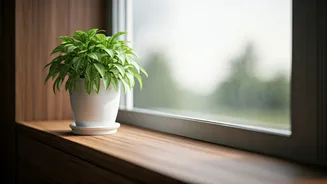









Prioritise Ventilation and Airflow
Stagnant, humid air is the primary culprit behind many monsoon-related issues. The simplest defence is to improve air circulation. Keep windows open during dry spells or on the leeward side (away from direct rain) to let fresh air move through your home.
[27, 29] Use exhaust fans in kitchens and bathrooms to expel excess moisture from cooking and showers. [4, 15] Running ceiling fans, even at a low speed, also helps prevent moisture from settling on walls and furniture, making your home feel less sticky and more comfortable. [5, 12]
Protect Wooden Furniture and Doors
Wood is hygroscopic, meaning it naturally absorbs moisture, which causes it to swell and warp during the monsoon. [5] This is why doors get jammed and drawers become difficult to open. A key preventive step is to keep furniture 2-3 inches away from walls, especially external ones, to prevent moisture seepage. [2, 6] Avoid using a wet cloth for cleaning; a daily wipe-down with a dry microfibre cloth is best to remove surface condensation. [2, 6] Applying a coat of varnish or wax before the season begins can create a protective barrier. [9, 13] For enclosed spaces like cabinets, placing silica gel packets or camphor can absorb trapped moisture. [2, 7]
Combat Mould and Mildew
Mould and mildew thrive in damp, dark, and poorly ventilated environments, often appearing as black, green, or white patches on walls, ceilings, and even furniture. [15] High humidity is their best friend. Besides ensuring good ventilation, you can use natural dehumidifiers. Placing bowls of rock salt or charcoal briquettes in corners of a room can help absorb excess airborne moisture. [4, 30] If you do spot mould, you can treat it with a solution of white vinegar and water. [2, 6] For persistent problems, consider investing in mold-resistant paint for your walls or a portable dehumidifier for very damp rooms. [10, 19]
Keep Wardrobes and Clothing Fresh
The musty smell in clothes and closets is a common monsoon complaint. The most important rule is to ensure clothes are completely dry before storing them. [7, 11] Even slight dampness can lead to fungal growth. [11] To protect your wardrobe, avoid over-stuffing it to allow for better air circulation between clothes. [11, 25] Place moisture absorbers like silica gel packets, naphthalene balls, or even a small bundle of chalk inside. [7, 24] Dried neem leaves also work as a natural insect repellent and help keep fabrics fresh. [24]
Safeguard Electronics and Wiring
High humidity is not just a threat to organic materials; it can also damage your electronic appliances. Moisture can cause short circuits and corrosion in internal components. It's wise to check all electrical wiring and outlets for any exposure to moisture, especially on walls that may be prone to leaks. [12] If an appliance feels damp or is in a room with condensation, unplug it and let it air out completely before use. Using a dehumidifier in rooms with expensive electronics can be a worthwhile investment to protect them from long-term damage. [19]
Manage Monsoon Pests
The rainy season forces many pests indoors in search of dry shelter and food. [3, 18] Cockroaches, ants, and rodents are common intruders. [3, 20] The first line of defence is to block their entry points. Seal any cracks in walls, gaps around pipes, and tears in window meshes before the rains begin. [3] Maintain cleanliness, especially in the kitchen, by storing food in airtight containers and disposing of garbage regularly. [14] Eliminating sources of standing water, both inside and outside your home, is crucial to prevent mosquito breeding. [3, 28]