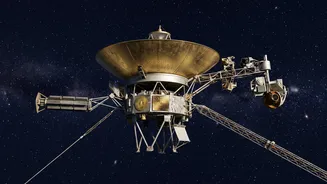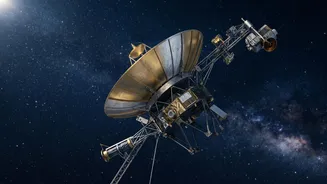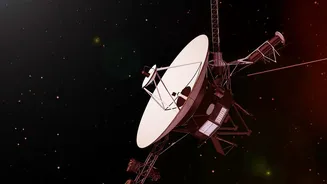



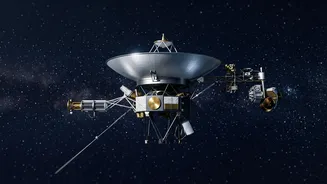
A Call Into the Void Goes Unanswered
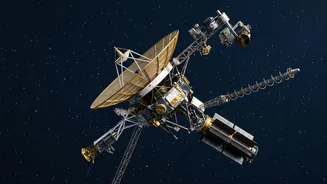
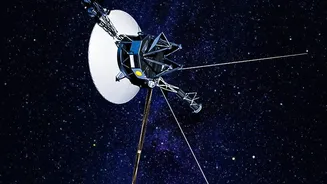
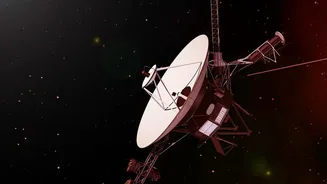
On October 18 and 19, 2026, scheduled communication check-ins with Voyager 1 yielded nothing but static. For the mission team at NASA's Jet Propulsion Laboratory (JPL), it was a moment of profound concern. The spacecraft, launched in 1977, is now so far
away that it's about to cross a mind-boggling milestone: a distance of one light-day from Earth. This means a radio signal, travelling at the fastest speed possible, takes nearly 24 hours to reach the probe. Any command sent from Earth requires a two-day wait for a response, turning any troubleshooting effort into a slow, deliberate process. The sudden, unexpected silence from a probe that has been a reliable companion for nearly 50 years was alarming.
Voyager Phones Home
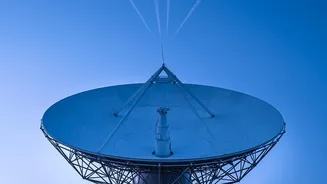
The tension broke on October 20, when Voyager 1's signal reappeared on the screens of the Deep Space Network, NASA's global array of giant radio antennas. Remarkably, the spacecraft seemed to have fixed itself. It restored contact without any commands from the ground. While relieved, the engineering team immediately shifted from concern to investigation. What had caused humanity's interstellar ambassador to fall silent? According to Kareem Badaruddin, the Voyager mission manager at JPL, this was a new behaviour for the seasoned spacecraft. 'This is the first time we've seen the spacecraft do something like this, but we are also at a point in the mission where we have to expect the unexpected', he said in a statement.
Diagnosing a Distant Patient
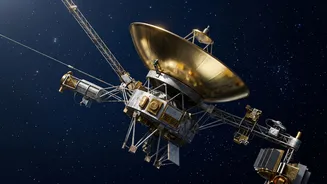
Early analysis suggests the probe's own safety protocols kicked in as designed. Engineers have determined that one group of the spacecraft's thrusters—small engines that help orient it—went offline. This automatically triggered its fault protection system, which then activated a backup set of thrusters. This safety response is programmed to put the spacecraft into a stable 'safe mode', pausing normal operations to give the ground team time to diagnose the issue without further risk. While this explains the sequence of events, the root cause of the initial thruster failure is still under investigation. For a piece of technology operating for almost five decades in the harsh environment of space, the list of potential culprits is long, from the simple wear and tear of aging hardware to a strike from a high-energy particle.
Why This 49-Year-Old Probe Still Matters
Launched in 1977, just weeks after its twin, Voyager 2, the probe conducted a 'grand tour' of the outer solar system, providing the first detailed images of Jupiter and Saturn and their moons. In 2012, Voyager 1 made history by becoming the first and only human-made object to enter interstellar space, crossing the boundary known as the heliopause where the Sun's influence ends. It is currently travelling at over 61,000 kilometres per hour, more than 25 billion kilometres from home. The data it sends back, though from only two remaining active instruments, gives us our only direct measurements of the conditions between the stars. Its longevity is a testament to its robust 1970s engineering and the creative problem-solving of its mission team, who recently performed a power-shuffling manoeuvre to extend its life even further.