








Secure the Perimeter First
The absolute first step is addressing the risk of falls, a phenomenon so common with cats it's been dubbed "high-rise syndrome". Railing gaps that seem small to you can be an escape route or a dangerous trap for a curious cat or a small dog. Secure these
gaps using durable, chew-resistant materials. Options include cat-specific safety netting, plexiglass panels that preserve the view, or even bamboo fencing for a decorative touch. Ensure any material is securely fastened from top to bottom, leaving no spaces for a determined pet to wiggle through. For cats, netting should extend from floor to ceiling or to an overhang to prevent climbing over. Also, move furniture like chairs and tables away from the railings to remove any potential launching pads.
Rethink the Floor Beneath Their Paws
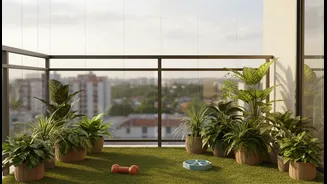
Balcony flooring can get surprisingly hot in direct sun, potentially burning your pet's sensitive paw pads. Concrete and dark tiles are notorious for retaining heat. Consider laying down an outdoor rug, interlocking rubber mats, or a patch of pet-friendly artificial grass to create a cooler, more comfortable surface. These options also provide better traction, which is especially important for puppies and senior dogs who may be prone to slipping. Artificial turf can even double as a designated potty spot, provided it is designed for easy cleaning.
Create Zones for Comfort and Shade
A balcony should be a place of relaxation, not stress. This means providing essentials for your pet's comfort. Unfailingly, this includes a shaded area where they can escape the sun's intensity. A sturdy umbrella, a small canopy, or even a strategically placed doghouse can provide necessary relief from the heat. Always ensure fresh, clean water is available, perhaps in a heavy, spill-proof bowl that won’t get knocked over by a gust of wind or a playful nudge. A comfortable, weather-proof bed or cooling mat will make the space even more inviting, encouraging your pet to lounge safely outdoors.
Beyond Safety: Add Enrichment
A truly pet-friendly balcony isn't just safe; it's also engaging. For cats, this can mean transforming a corner into a "catio" (cat patio) with shelves at different heights, vertical scratching posts, and dangling toys. This encourages their natural instinct to climb and observe from a high vantage point. For dogs, consider a durable chew toy, a snuffle mat to encourage foraging, or even a small, shallow splash pool on hot days. A sensory garden with pet-safe herbs like rosemary or mint can also provide mental stimulation. The goal is to make the balcony a destination, not just an extension of the living room.
Watch Out for Hidden Hazards
While plants are a known concern—lilies, for example, are extremely toxic to cats—other dangers often go overlooked. Store gardening tools, BBQ equipment, and cleaning chemicals in a secure, inaccessible cabinet. Be mindful of any pesticides or weed killers you might use, opting for non-toxic alternatives wherever possible. Even small objects like bottle caps or dropped screws can become choking hazards. And finally, the most important safety feature is your presence. Never leave your pet unsupervised on a balcony for long periods. Unexpected noises or a passing bird can trigger unpredictable behavior, and supervision is the best way to prevent an accident.