


The Patient Hunt for Cosmic Secrets
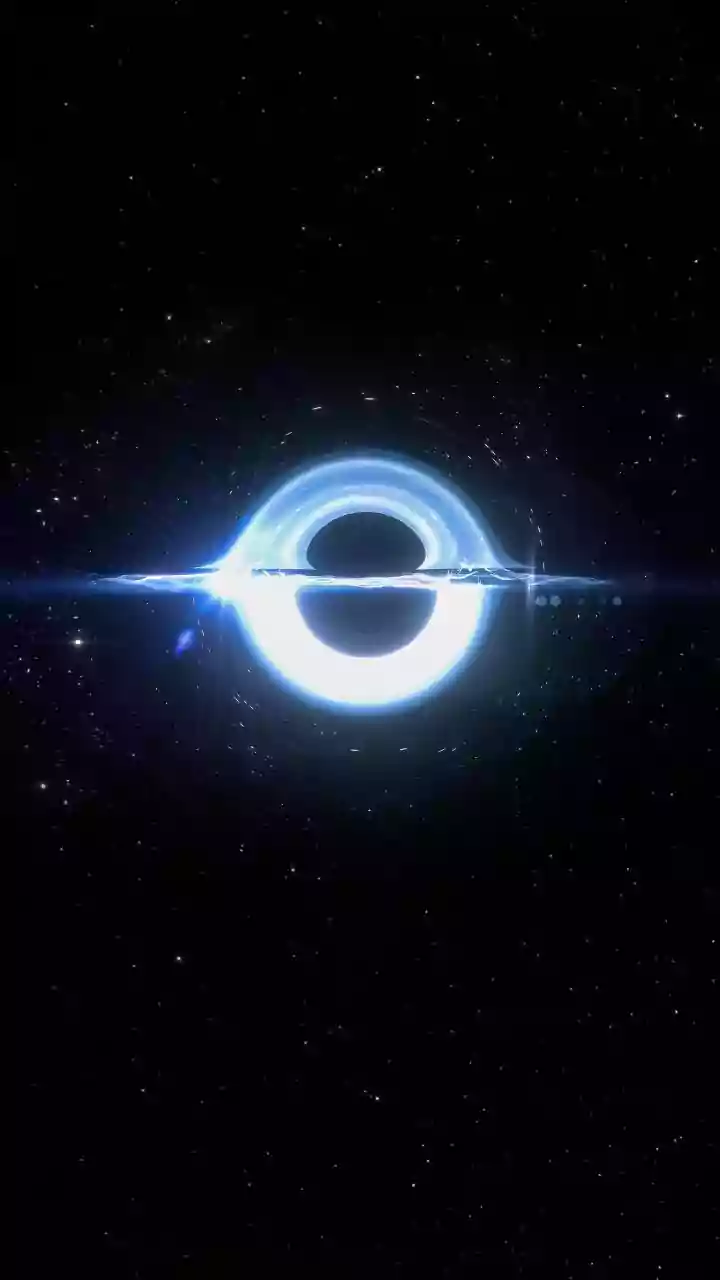
Black holes are, by their very nature, invisible. Because their gravitational pull is so immense that not even light can escape, astronomers must study them indirectly, observing their effects on nearby stars and gas. For decades, international collaborations
have launched powerful X-ray observatories like the European Space Agency's (ESA) XMM-Newton and NASA's Chandra, tasking them with staring into the void. These telescopes collect vast amounts of data, creating archives that hold secrets about how black holes feed, grow, and erupt. The headline-grabbing discoveries often happen in an instant, but the deepest insights come from the patient analysis of information gathered over many years.
Uncovering a Hidden Rhythm
One of the most significant breakthroughs from this long-term approach has been the discovery of quasi-periodic oscillations (QPOs) from a supermassive black hole. For a long time, these rhythmic pulses, which are like a cosmic heartbeat, were only seen in smaller, stellar-mass black holes within our own galaxy. Scientists suspected that supermassive black holes at the centers of other galaxies should behave similarly, but the signal was elusive. After a long search, data from ESA's XMM-Newton revealed a regular, hourly X-ray flicker from the center of a galaxy named RE J1034+396. This discovery was a revelation; it confirmed that the fundamental physics governing how black holes of all sizes consume matter are the same, providing a new tool to probe the environments just outside their event horizons.
The 'Cosmic Volcano' Awakens
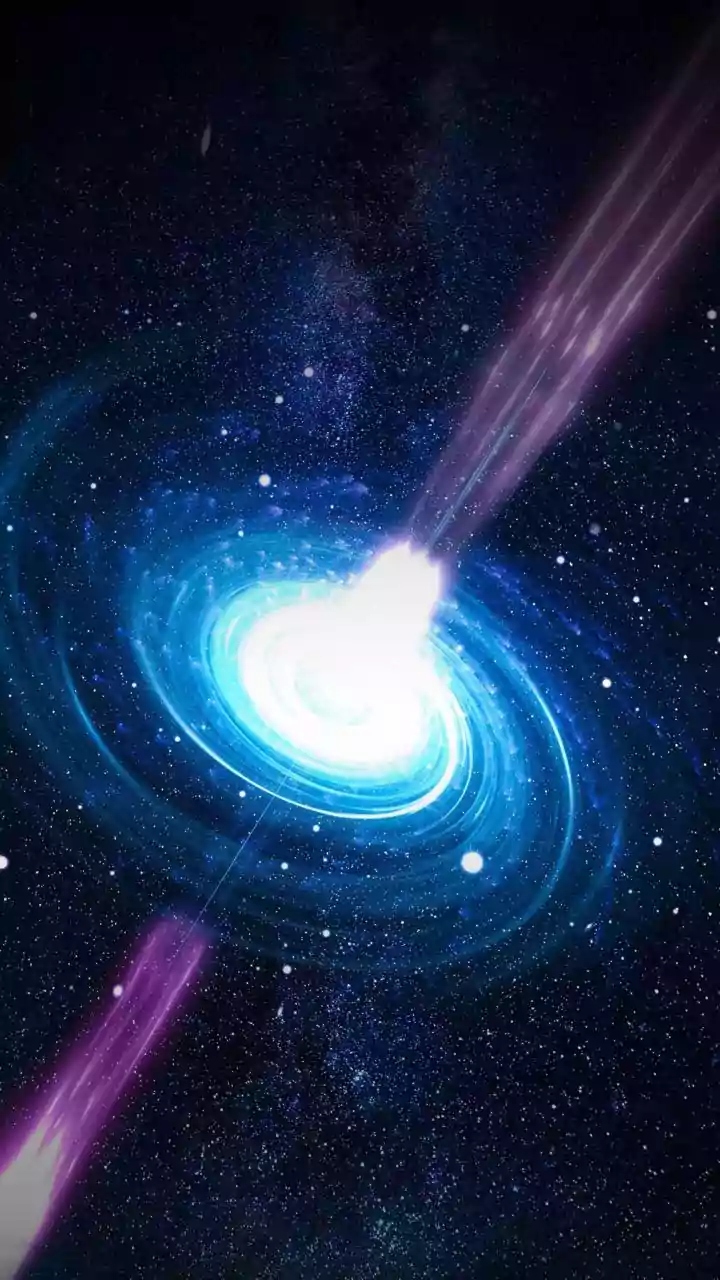
Sometimes, the secrets aren't faint whispers but thunderous roars that were simply missed. Recent analysis of radio telescope data has unveiled what some astronomers call a 'cosmic volcano'. In a galaxy known as J1007+3540, a supermassive black hole has roared back to life after nearly 100 million years of dormancy. International teams using observatories like the Low Frequency Array (LOFAR) in the Netherlands and India's Giant Metrewave Radio Telescope (uGMRT) captured images of fresh jets of plasma blasting out from the black hole. These new jets are crashing into the ghostly remnants of a previous, ancient eruption, creating a chaotic, distorted structure that stretches nearly a million light-years across space. Discoveries like this show that black holes can have lifecycles, switching between active and quiet phases, and that evidence of their past fury can linger for eons.
Catching an Eruption from the Start
Understanding what triggers a black hole eruption has been a persistent challenge, as the initial moments often pass before telescopes can be pointed in the right direction. However, by poring through data from NASA's Transiting Exoplanet Survey Satellite (TESS), which continuously monitors large patches of the sky, astronomers recently caught the very beginning of an outburst. In late 2019, TESS captured the earliest moments of a black hole system flaring up, before most ground-based observatories had even noticed. The data showed the eruption started near the black hole and spread outward through the surrounding disk of gas and dust. This 'inside-out' pattern provides crucial evidence that helps settle a long-standing debate about what initiates these violent events, demonstrating the power of persistent, wide-field observation.
Why These Secret Eruptions Matter
These discoveries, pieced together from years of archived data, are more than just cosmic curiosities. They fundamentally change our understanding of how galaxies evolve. The immense energy released during black hole eruptions can push gas around, either triggering bursts of new star formation or blowing away the raw material needed for it. By uncovering the frequency, triggers, and nature of these 'secret' eruptions, scientists can build more accurate models of the universe's structure. It reveals a complex feedback loop where the monstrous black holes at the hearts of galaxies are not just passive eaters, but active engines that continuously reshape their cosmic homes.