




The Wisdom of the Ghani
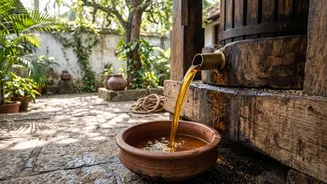
Before industrial factories became the norm, oil was extracted in villages using a simple but effective tool: the Ghani. Known as 'Kachi Ghani' or 'Chekku', this system consists of a large mortar and pestle, traditionally made of wood. In the past, this pestle was turned
by a bullock walking in slow, steady circles. Today, many artisans use a motor that mimics this same slow, low-RPM (rotations per minute) action. The principle remains unchanged: seeds like sesame are slowly crushed, not aggressively ground. This gentle process generates very little heat, which is the secret to preserving the oil's quality. Unlike modern methods that can generate high temperatures, the Ghani process naturally keeps the oil cool, typically below 40-50°C.
Understanding Essential Fatty Acids in Sesame Oil
Sesame oil is a powerhouse of healthy fats. Its composition is a balanced mix of monounsaturated and polyunsaturated fats, primarily oleic acid (an omega-9) and linoleic acid (an omega-6). Linoleic acid is an 'essential' fatty acid, meaning our bodies cannot produce it, so we must get it from our diet. These fatty acids are crucial for maintaining heart health, supporting brain function, and keeping our cells in good condition. However, the chemical structure of polyunsaturated fats like linoleic acid makes them delicate and susceptible to damage from heat. This is where the extraction method becomes critically important.
Why Heat Is the Enemy of Healthy Fats
Modern commercial oil extraction often involves high heat and chemical solvents to get the maximum yield from the seeds. While efficient, this process can be destructive to the oil's nutritional profile. When exposed to high temperatures, the delicate double bonds in polyunsaturated fatty acids can break, leading to oxidation. This process not only degrades the nutritional value but can also create harmful compounds. Furthermore, refining strips the oil of its natural antioxidants, such as vitamin E and unique compounds in sesame called sesamin and sesamolin, which naturally protect the oil from going rancid. The result is a bland, nutrient-poor oil that has a long shelf life but offers few health benefits.
The Ghani Advantage: Gentle, Safe, and Pure
The Ghani system protects the essential fatty acid structure precisely because it avoids heat. By slowly crushing the seeds, the oil is released without its temperature rising significantly. This preserves the integrity of the oleic and linoleic acids, ensuring you get them in their natural, undamaged state. The use of a wooden press is also key; wood is a poor conductor of heat, which means any friction generated doesn't spread and warm the oil. Because this method is purely mechanical and doesn't use chemicals, the final product is an unrefined, pure oil. It retains its natural flavour, aroma, and, most importantly, its full spectrum of antioxidants and vitamins. These natural antioxidants not only provide health benefits but also give the oil its inherent stability.