




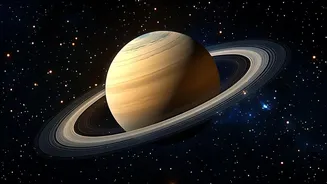
Why August is Prime Time for Saturn
August is an excellent month for budding astronomers to find Saturn. Throughout the month, the planet will be rising earlier and earlier in the evening, making it more accessible for viewing before midnight. Early in August, you can expect it to appear
in the eastern sky around 11 p.m. local time, but by the end of the month, it will be rising as early as 9 p.m. The planet is also steadily brightening as it moves toward its "opposition" in early October. Opposition is when Earth passes directly between Saturn and the sun, placing the planet at its closest and brightest for the year, so August offers a fantastic preview as it approaches its peak.
Gearing Up: What You Really Need
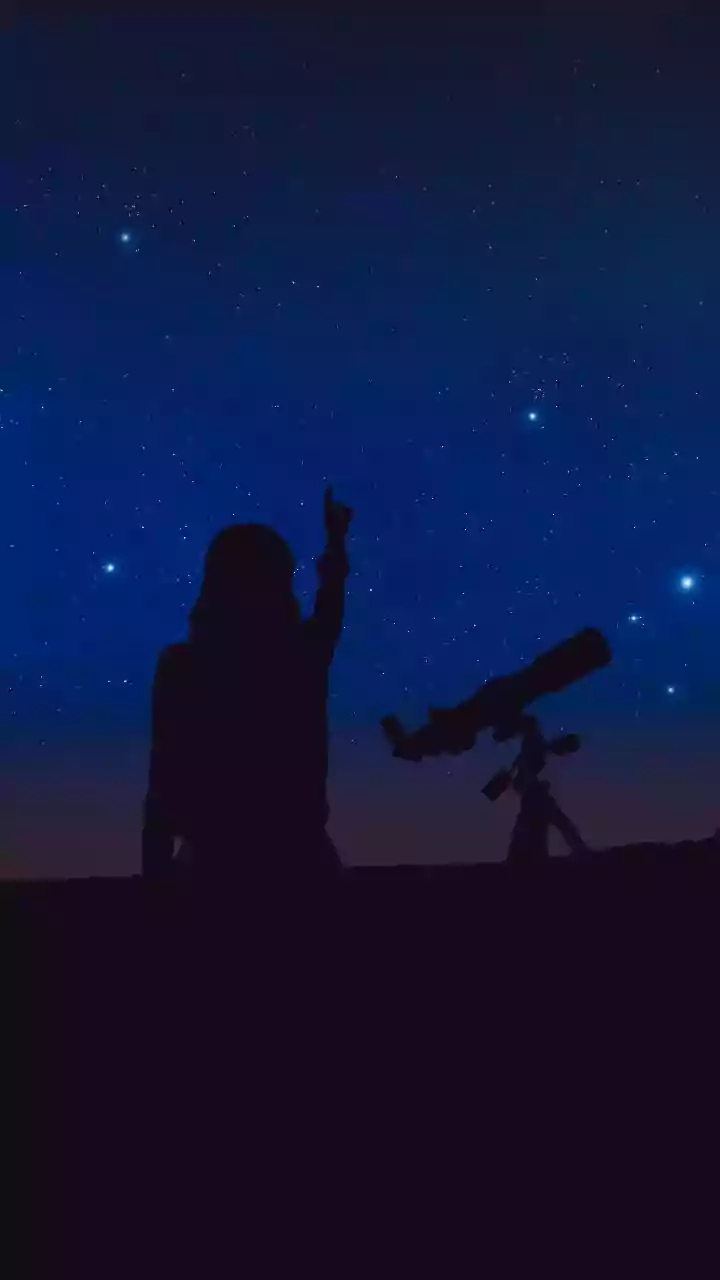
The best part about this celestial treasure hunt is that you can start with the most basic tool: your own eyes. Saturn is one of the five planets visible to the naked eye from Earth. The most important things you need are a clear night and a location away from the bright glare of city lights. Give your eyes at least 20 minutes to fully adjust to the darkness; you'll be amazed at how much more you can see. If you want a digital assistant, consider a free stargazing app for your phone. Apps like Star Walk 2 or SkyView use your phone's location to show you a map of the sky, making it easy to identify planets and constellations.
Finding Your Spot: When and Where to Look
To find Saturn, you'll want to look toward the eastern horizon. The planet will be located in the constellation Pisces, a region of the sky that doesn't have many bright stars. This is actually a bonus for beginners, as Saturn's steady, yellowish light will stand out more easily against the fainter stellar background. While it rises in the evening, the best views are often after midnight, when Saturn has climbed higher into the sky, away from the turbulent air near the horizon. A handy alignment of six planets will also stretch across the pre-dawn sky around August 12th, with Saturn being one of the easiest to spot in the lineup.
Use the Moon as Your Cosmic Signpost
For an almost foolproof way to find Saturn, let the Moon be your guide. On two occasions this month, the Moon will pass very close to the ringed planet, acting as a convenient marker. The first opportunity comes on the nights of August 3rd and 4th, when Saturn will appear as a bright point of light near the waning gibbous Moon. If you miss that, you have another chance at the end of the month. Overnight from August 30th to 31st, the Moon will once again have a close encounter with Saturn, making it incredibly simple to identify. Just find the Moon, and you'll find Saturn nearby.
The Twinkle Test: Planet or Star?
Once you're looking in the right direction, you might wonder which of the many bright dots is actually Saturn. Here's a simple trick: look for the object that isn't twinkling. Stars are so incredibly far away that their light comes to us as a single point, which is easily distorted by Earth's atmosphere, causing that familiar twinkling effect. Planets, being much closer, appear as tiny discs of light. This makes their glow far more stable and steady. Look for a moderately bright, yellowish 'star' that holds a constant, unwavering light—that will be Saturn.
Taking a Closer Look
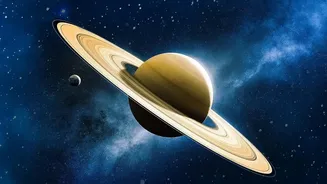
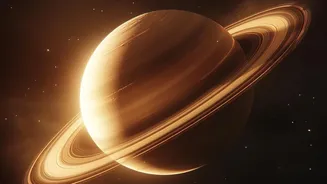
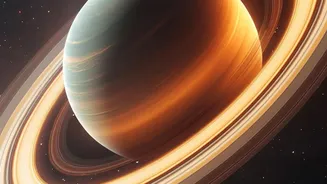
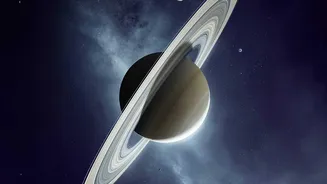
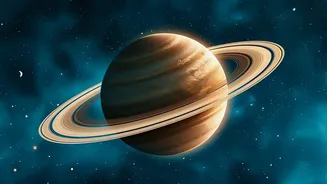
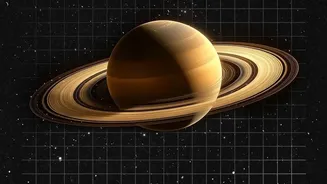
While Saturn is impressive to the naked eye, even a simple pair of binoculars will enhance the view, making its color more apparent and setting it apart from the background stars. If you have access to a small telescope, you're in for a real treat. A telescope will reveal what makes Saturn famous: its magnificent rings. This year, the rings are tilted at a fairly narrow angle toward us, but they are still clearly visible. With a telescope, you might also be able to spot Titan, Saturn's largest moon, appearing as a tiny, star-like point of light very close to the planet.