



Why is Kolkata often called the ‘London of India’? This intriguing label points to a shared history rooted in the British Empire, visible in the city's grand architecture, cultural institutions, and its very foundation as a seat of power.
The Capital of British India
The comparison
begins with Kolkata's former status as the capital of British India from 1772 until 1911. During this period, the city, then known as Calcutta, was the second most important city in the British Empire after London itself. It served as the administrative, commercial, and political epicentre of British rule in the subcontinent. This long tenure as the imperial capital meant that the British invested heavily in shaping the city's infrastructure to reflect European standards, creating a landscape that mirrored their own capital in ambition and design.
Architectural Echoes of an Empire
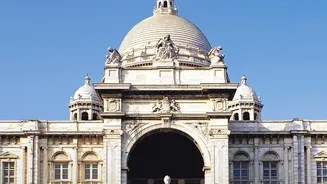
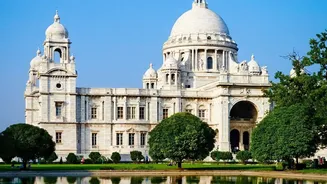
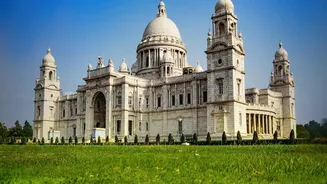
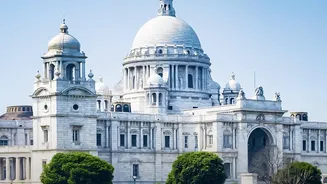
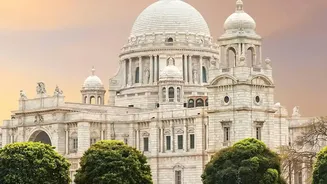
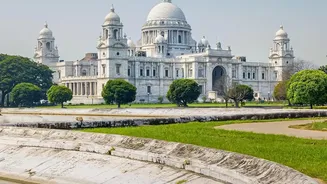
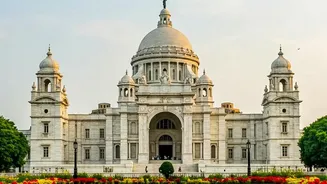
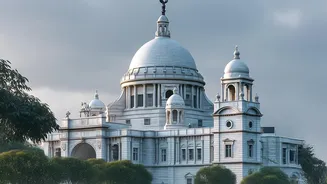
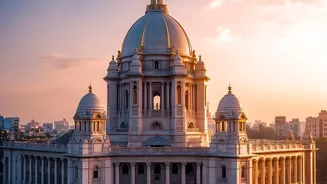
Walk through central Kolkata, and the comparison to London becomes strikingly clear. The city is a treasure trove of colonial-era architecture, featuring a mix of Neoclassical, Gothic Revival, and Victorian styles that were popular in Britain. The magnificent Victoria Memorial, a grand marble monument to Queen Victoria, blends British and Mughal design elements and is one of the city's most famous landmarks. Other iconic structures like the St. Paul's Cathedral, with its Indo-Gothic style, the Calcutta High Court, and the Writers' Building all contribute to this architectural kinship with London. For decades, these imposing structures led to Kolkata being known as the 'City of Palaces'.
A Tale of Two Rivers
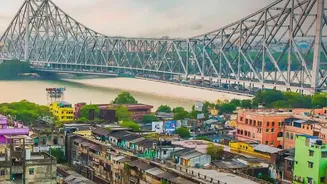
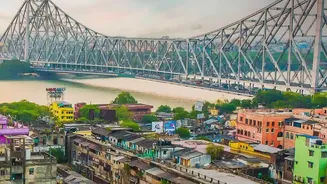
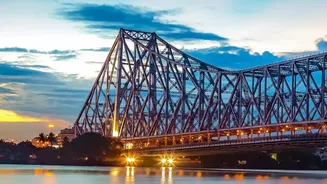
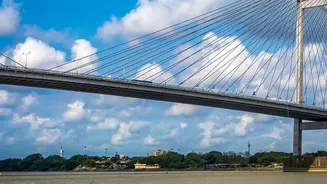
Just as London was built on the banks of the Thames, Kolkata's development is intrinsically linked to the Hooghly River, a major distributary of the Ganges. The Hooghly served as a vital channel for trade and communication, connecting the colonial capital to the rest of the world and cementing its role as a commercial powerhouse. The riverfronts of both cities, lined with ghats, promenades, and significant buildings, share a similar visual and functional importance. The iconic Howrah Bridge, a bustling cantilever bridge, is to Kolkata what Tower Bridge is to London—a symbol of the city's engineering prowess and its connection to the river that sustains it.
The Intellectual and Cultural Connection
Beyond bricks and mortar, the 'London of India' label also speaks to a shared intellectual and cultural vibrancy. Kolkata was the heart of the Bengal Renaissance, a period of profound artistic, social, and intellectual awakening. Like London, it became a hub for literature, art, philosophy, and political debate. The city's abundance of universities, libraries, and cultural institutions established during the colonial era fostered a spirit of intellectualism that persists to this day. Furthermore, the city's numerous gentlemen's clubs, many of which date back to the British Raj, are another anglophile remnant that echoes London's club culture.
A Nickname for a Bygone Era?
While the historical connections are undeniable, the 'London of India' moniker is viewed today with a mix of nostalgia and debate. For some, it's a reminder of a grand imperial past, but for many others, it's a colonial label that the city has outgrown. In 2001, the official name was changed from Calcutta back to the Bengali pronunciation, Kolkata, as part of a broader movement to reclaim a post-colonial identity. Today, the city is perhaps more famously known as the 'City of Joy', a name popularised by Dominique Lapierre's 1985 novel, which captures the resilient and vibrant spirit of its people.