


The universe is brimming with secrets, hidden within an ocean of data too vast for professional astronomers to navigate alone. Enter the citizen scientist: an army of curious volunteers helping to make groundbreaking discoveries from their own homes.
A Universe of Data
Modern telescopes, both on the ground and in space, are technological marvels. They scan the skies with incredible precision, generating more data in a single night than was produced in decades past. This information holds clues to the universe's greatest mysteries, from undiscovered planets to the elusive black holes that pepper our galaxy. The challenge, however, is a human one. There are simply not enough astronomers to sift through every image and every data point. This 'data deluge' means that incredible discoveries could be hiding in plain sight, waiting to be noticed. To solve this, scientists are increasingly turning to a powerful and enthusiastic resource: the public.
Global Armies of Star Gazers
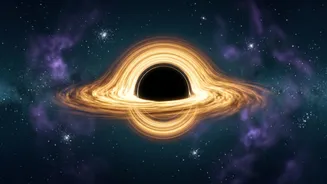
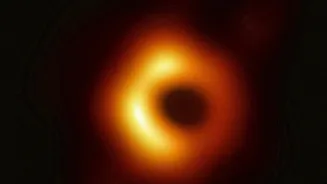
Projects hosted on platforms like Zooniverse have formalized this collaboration. One prominent example is 'Black Hole Hunters', a UK-led initiative that asks volunteers to search for the hidden black holes of our Milky Way galaxy. While our galaxy may contain over 100 million stellar-mass black holes, only about 70 have been located. That's because most are 'quiet', meaning they aren't actively feeding on nearby material and don't emit tell-tale X-rays. The project asks volunteers to look at graphs of star brightness from NASA's TESS satellite. They hunt for a specific pattern: a sudden, sharp brightening caused by 'gravitational microlensing'. This occurs when a black hole passes in front of its companion star, its immense gravity bending and magnifying the starlight for a brief moment. While AI struggles to distinguish these signals from other stellar variations, the human eye is exceptionally good at this kind of pattern recognition.
India's Homegrown Discovery Engine
This global movement has a powerful and pioneering counterpart in India. The RAD@home Astronomy Collaboratory is the country's first citizen-science research platform in astronomy. Founded in 2013 by Dr. Ananda Hota, it focuses on understanding the co-evolution of galaxies and supermassive black holes, using data from world-class facilities like India's own Giant Metrewave Radio Telescope (GMRT). Instead of just data classification, RAD@home operates as a nationwide collaboratory, training undergraduate students and citizens to become 'e-astronomers' and 'i-astronomers' through workshops and discovery camps. This model has successfully created a network of over a thousand trained citizen scientists across India, democratizing access to high-level astronomical research.
A Landmark Find: The 'Bow and Arrow' Galaxy
The success of this approach was stunningly demonstrated with a recent discovery. During a weekend online class in 2025, a RAD@home citizen scientist spotted something truly unique in the data: a galaxy shaped like a bow and arrow. Named BAARG (Bow_and_Arrow_shaped Radio Galaxy), the object features a massive arc on one side and a twisting, S_shaped tail on the other. Scientists believe this extraordinary structure, never clearly seen before, was formed as the galaxy sped through a dense cluster of other galaxies at supersonic speeds. The discovery, published in a prestigious scientific journal, highlights the incredible value of the trained human eye. An automated algorithm might have missed the unusual shape, but a curious participant, trained to see patterns, made a historic find.
You Can Be a Discoverer, Too
What makes these initiatives so compelling is their accessibility. To join the Black Hole Hunters project, you don't need a degree in astrophysics—just a computer and a willingness to learn how to spot a pattern. The project's interface is designed to be simple, showing you what to look for. Similarly, RAD@home actively recruits and trains newcomers through its workshops, empowering them with the skills to analyse complex data and create the false-'colour images needed for discovery. These projects are proving that science is not a closed-'off club. It is an field where passion and curiosity can lead to real contributions, regardless of your background. Every volunteer who joins could be the person who finds the next big cosmic secret.