

The Ground Rules of Fasting
Before diving into the diversity, it’s helpful to know the common thread. Navratri fasting, or 'vrat', generally involves abstaining from grains like wheat and rice, lentils, onions, garlic, and non-vegetarian food. Instead, a specific pantry of ingredients
is permitted. This includes 'vrat' flours like buckwheat (kuttu ka atta), water chestnut (singhare ka atta), and amaranth (rajgira ka atta). Pseudo-grains such as barnyard millet (sama ke chawal) and tapioca pearls (sabudana) become staples. Fruits, most vegetables, nuts, and dairy products are widely consumed, and regular table salt is swapped for rock salt (sendha namak). These rules create a 'sattvic' diet, meant to be light and pure to aid in spiritual focus.
North India's Hearty Platters
In North India, the fast is often strict, but the food is anything but bland. The cooler climate and local produce influence a menu that is hearty and energy-giving. Dishes like Kuttu ki Puri (deep-fried buckwheat bread) served with a simple potato curry (Aloo ki Sabzi) made without onion or garlic are iconic. You'll also find Singhare ka Halwa, a dense, sweet pudding, and creamy desserts like Makhane ki Kheer, made from puffed lotus seeds. The focus is on creating satisfying meals from the permitted flours and root vegetables, turning the fast into a feast of its own kind.
Western India's 'Faral' Favourites
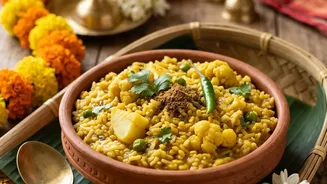
Travel west to Maharashtra and Gujarat, and the Navratri menu is dominated by 'faral' dishes. Sabudana is the undisputed star here. Sabudana Khichdi, a savoury mix of soaked tapioca pearls, roasted peanuts, potatoes, and mild spices, is a beloved breakfast and meal. Another popular snack is the crispy Sabudana Vada, perfect with a side of yoghurt. Maharashtrians also prepare 'thalipeeth', a savoury pancake, using fasting flours like rajgira or a special 'upvas bhajani' mix. The use of peanuts, both whole and powdered, is a signature of this region, adding texture and richness.
Southern Subtleties and Offerings
In South India, the approach to Navratri fasting can be quite different. While some observe the strict grain-free diet, many others simply adopt a vegetarian diet, avoiding onion and garlic. The festival, often celebrated as Golu, involves creating elaborate displays of dolls. The quintessential Navratri food here is 'Sundal'. It's a simple and nutritious dish made from different boiled legumes like chickpeas or peanuts, lightly tempered with mustard seeds, curry leaves, and fresh coconut. A different type of sundal is prepared each of the nine days as an offering (prasadam) before being distributed.
East India's Festive Feasting
In Eastern India, particularly West Bengal, the nine days of Navratri are celebrated as Durga Puja, a grand festival of community, art, and food. Fasting in the North Indian sense is less common. Many people stick to a vegetarian diet, excluding onion and garlic, especially in the food offered as 'bhog' to the goddess. This bhog typically includes Khichuri (a rice and lentil dish), Labra (a mixed vegetable curry), and Beguni (eggplant fritters). Outside of the 'bhog', Durga Puja is a time for feasting, with pandal-hopping fuelled by Kolkata's famous street food, from rolls to phuchka.
The Final Ingredient: Family Tradition
Beyond the broad regional patterns, the most significant variations often happen at the family level. Customs passed down through generations dictate the finer points: one family might include tomatoes and ginger in their cooking, while another avoids them. Some might have a single meal a day, while others eat multiple 'vrat-approved' snacks. Health conditions and modern lifestyles also play a role in how individuals adapt the fast. These personal touches and family-specific rules are what make each household's Navratri menu truly unique, showcasing a beautiful blend of faith, culture, and personal history on a single plate.