



A Cosmic Monster Awakens
In a galaxy 300 million light-years away, something unprecedented is happening. The galaxy, known as SDSS1335+0728, was for years an unremarkable and quiet cosmic neighbor. But in late 2019, automated sky surveys detected a dramatic change: its core began
to shine brighter than ever before. This wasn't a fleeting explosion like a supernova. The galaxy has continued to brighten for years, radiating immense energy across ultraviolet, optical, and infrared wavelengths. After years of careful observation, an international team of astronomers has concluded they are likely witnessing the awakening of the supermassive black hole at its center, an event never before observed as it unfolds.
From Dormant Giant to Active Feeder
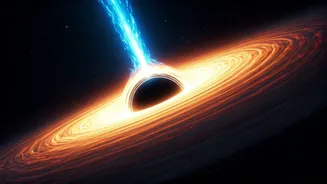
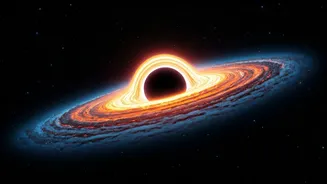
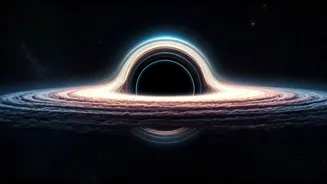
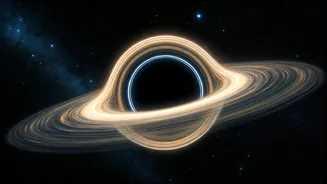
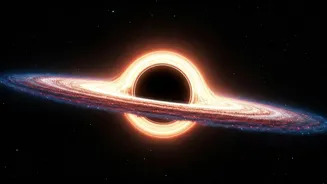
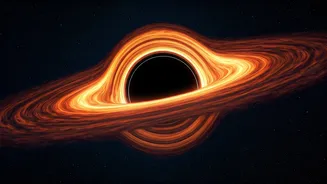
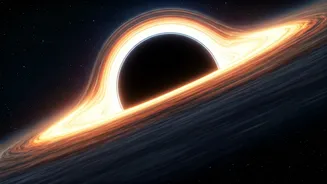
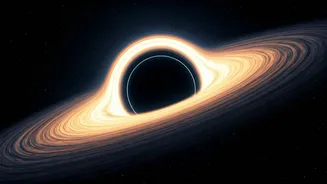
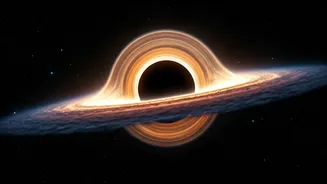
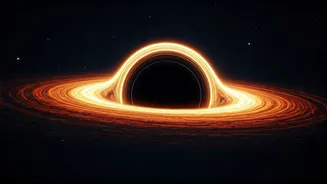
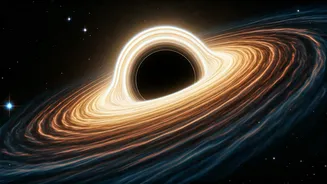
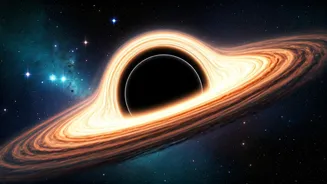
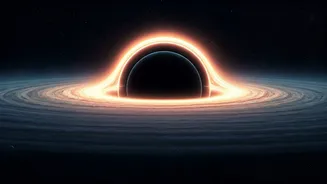
Most large galaxies, including our own Milky Way, host a supermassive black hole at their core, with masses exceeding a hundred thousand times that of our Sun. These giants are usually 'sleeping' or dormant, making them difficult to see directly. They only become visible when they actively pull in, or 'feed' on, vast amounts of surrounding gas and dust. This process creates an incredibly bright, compact region known as an Active Galactic Nucleus (AGN). The material forms a swirling accretion disk around the black hole, heating up to extreme temperatures and glowing intensely as it’s devoured. What astronomers are seeing in SDSS1335+0728 is the 'turning on' of this process—a black hole starting its meal.
A Uniquely Human Timescale
Cosmic evolution typically plays out over millions or billions of years, far too slow for human observation. While astronomers had seen galaxies that were already active and others that were quiet, the transition between these states was theoretical. Other transient events that cause a galaxy to light up, such as a star being torn apart by a black hole (a tidal disruption event), last for a few hundred days at most. The activity in SDSS1335+0728, however, has been ongoing for more than four years and is still intensifying. This sustained brightening provides the first-ever opportunity for scientists to study the activation of a supermassive black hole in what is effectively real time, offering a live view of a fundamental cosmic process.
Unraveling Long-Standing Mysteries
This real-time observation is a goldmine for understanding how black holes impact their galactic homes. A key lesson is learning how the 'waking up' process physically works. How does the accretion disk form and stabilize? How quickly does the black hole's immense gravitational influence begin to reshape its immediate environment? The data gathered helps test and refine theories about black hole growth and the lifecycle of galaxies. Scientists can study the changing light signatures to understand the physics of the infalling gas and the initial eruption of energy, filling a critical gap in our knowledge of how quiescent galaxies transform into blazing quasars.
The Global Hunt for Clues
Confirming and studying this event has been a global effort. The initial alert came from the Zwicky Transient Facility in California. Following that, astronomers used an array of powerful instruments to get a closer look. The European Southern Observatory’s Very Large Telescope (VLT) in Chile provided crucial data, alongside space-based observatories like NASA's Neil Gehrels Swift Observatory, which eventually detected the emergence of X-rays from the galaxy's core in early 2024. This multi-wavelength approach, combining data from different telescopes that see different types of light, is essential to building a complete picture of this rare and complex phenomenon.