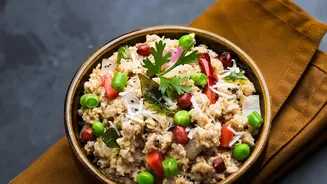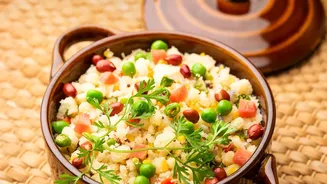

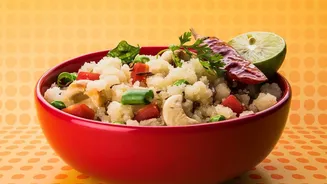
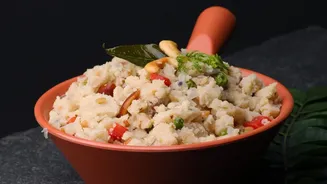
It’s the simple, comforting breakfast found on tables across India, but have you ever wondered what makes one plate of Upma taste so different from another? The secret lies in a fleeting, fragrant step: the tempering, or 'tadka'.
The Science of Sizzle
Before we travel across
the country, let's understand the magic behind tempering. Known as 'tadka', 'oggarane', or 'thalipu' in different regions, tempering is the brief frying of whole spices in hot fat like oil or ghee. This isn't just for show; it's a flavour explosion rooted in science. Most of the aromatic compounds in spices are fat-soluble, meaning they dissolve in oil, not water. When spices like mustard seeds or cumin hit hot ghee, the heat ruptures their cell walls, releasing the volatile essential oils that carry their distinct aroma and taste. The hot fat then acts as a perfect vehicle, distributing these complex flavours evenly throughout the entire dish. The pop of mustard seeds is the audible signal that this flavour extraction is happening perfectly.
Karnataka's Khara Bath
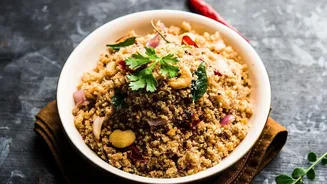
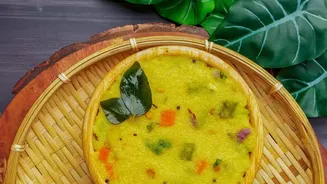
In Karnataka, Upma often takes the form of 'Khara Bath'. The name itself, where 'khara' means spicy, hints at a bolder flavour profile. The tempering, or 'oggarane', is foundational. It typically starts with mustard seeds, urad dal (split black gram), and chana dal (split Bengal gram). The dals are fried until golden, adding a delightful nutty crunch. Curry leaves, green chillies, and ginger follow, infusing the oil with fresh, pungent notes. What often sets Khara Bath apart is the addition of a special spice powder, like a Vangi Bath or Bisi Bele Bath powder, which contains aromatic spices like coriander seeds, cinnamon, and cloves. This powder is added with the vegetables and water, creating a deeply aromatic and savoury Upma that is a meal in itself.
The Tamil Nadu Classic
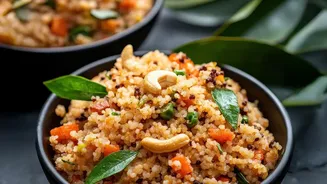
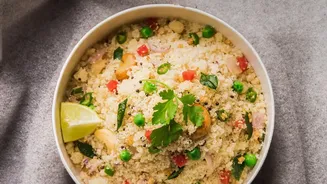
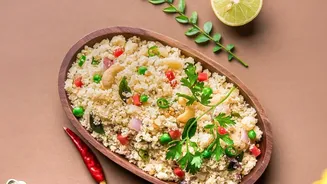
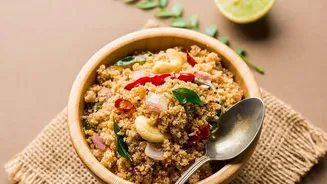
Travel to Tamil Nadu, and you'll find an Upma that is often celebrated for its classic, comforting simplicity. The tempering, or 'thalithal', follows a familiar pattern but with its own subtle nuances. Like its neighbours, mustard seeds, urad dal, and curry leaves form the core of the flavour base. It's common to find cashews added to the tempering, fried in ghee until golden, which lends a rich crunch to the final dish. Onions, ginger, and green chillies are almost always present. While some versions include vegetables like carrots and peas, many households pride themselves on a minimalist version where the flavour of the perfectly executed tempering shines through. A final squeeze of lemon juice is a common finishing touch, adding a bright, tangy note that lifts the entire dish.
Maharashtra's Savoury Sanja
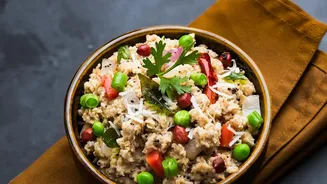
In Maharashtra, the dish is known as 'Sanja' or 'Tikhta Sanja'. While it shares its semolina base with its southern cousins, the tempering, or 'phodni', has a distinct character. Along with mustard and cumin seeds, the inclusion of turmeric powder is a key differentiator, giving Sanja its signature pale yellow hue. Onions are a must, sautéed until soft and translucent to provide a sweet foundation. Raw peanuts are often fried along with the tempering spices, adding a satisfying crunch. Some recipes also call for buttermilk or curd to be added along with the water, lending a subtle tanginess that makes the Maharashtrian version unique. Often served with a garnish of freshly grated coconut, it's a breakfast staple with a comforting, homely flavour.
Mastering Your Own Upma
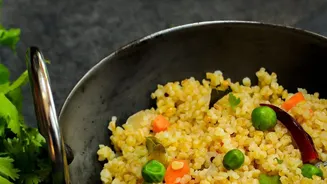
Beyond these regional stars, countless variations exist. Some use different grains like vermicelli ('semiya upma') or broken wheat, while others add a medley of vegetables for a more substantial meal. But the principle remains the same: the tempering sets the stage. The order in which you add spices matters. Hardy seeds like mustard go in first to pop, while delicate items like curry leaves are added later to prevent burning. Roasting the rava (semolina) properly before cooking is another crucial step to ensure a fluffy, non-sticky texture. The true beauty of Upma is its versatility. It's a culinary canvas that tells a story of its origin through the simple, yet profound, art of tempering.