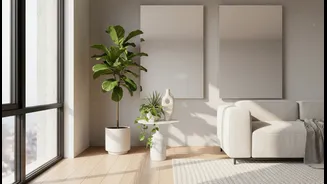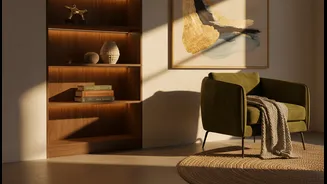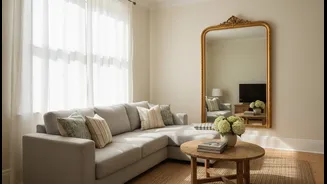






The Science of a Warm Welcome
When interior designers talk about 'warm light', they’re referring to the colour temperature of a bulb, measured in Kelvin (K). Warm light typically falls between 2700K and 3000K, emitting a soft, yellowish glow reminiscent of a candle or a sunset. This
is in contrast to 'cool light', which is over 4000K and has a harsher, bluish tone more suited for workspaces or commercial environments. The psychological impact of this choice is significant. Warm light is known to promote feelings of comfort, intimacy, and relaxation. It can help lower stress and create a more social, engaging atmosphere where conversation flows easily, making it the perfect ingredient for a living room that’s ready for company.
Layering Light for Depth and Ambiance
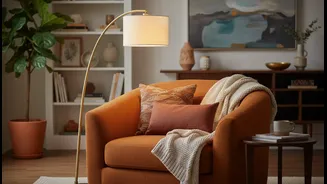
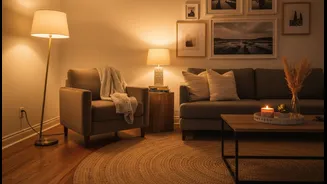
The single biggest mistake in living room lighting is relying on one harsh overhead fixture. Professional designers think in terms of layers, and it’s a simple concept to apply at home. Every well-lit room should have a combination of three types of lighting. First is ambient light, the general, overall illumination. Instead of a bright ceiling light, this could be the combined glow from several well-placed lamps. Second is task lighting, which is focused light for activities like reading. This might be a floor lamp angled over an armchair. Third is accent lighting, which draws attention to features like artwork or architectural details. A small lamp on a bookshelf can serve this purpose perfectly. Using warm lamps across these three layers creates a rich, dynamic, and inviting environment.
Choosing the Right Fixtures
With the principles understood, choosing the actual lamps becomes a creative exercise. The goal is to have a variety of light sources at different heights. Floor lamps are excellent for illuminating dark corners or sitting next to a sofa. Table lamps on side tables, consoles, and mantels create pools of intimate light. The material of the lamp and its shade are just as important as the bulb. Fabric shades, whether linen, cotton, or even pleated paper, diffuse light beautifully, casting a soft, even glow. Ceramic or wooden bases add a natural, tactile element that complements the warmth of the light itself. Don't be afraid to mix and match styles, but keep the light they cast consistent for a cohesive feel.
Strategic Placement for Maximum Effect
Where you place your lamps is crucial. Think about creating ‘zones’ of light within the room. A common designer trick is to create a 'triangle of light', placing three lamps in a triangular formation around the room to ensure balanced illumination. This draws the eye around the space and prevents any one area from feeling dark or neglected. Place a lamp in every corner where people gather, such as next to each end of the sofa or beside a favourite chair. Consider using dimmers wherever possible; they are non-negotiable for creating atmosphere, allowing you to adjust the intensity of the light to suit the time of day and the mood you want to create. The ability to soften the lights as an evening with guests winds down is the final touch in creating a truly welcoming space.