








A New Space Policy for a New Era
The landscape of India's space sector has been fundamentally reshaped by the Indian Space Policy 2023. This policy marked a pivotal shift, formally opening the doors for private companies to participate in end-to-end space activities, from building launch
vehicles and satellites to providing space-based services. The goal is to transition the Indian Space Research Organisation (ISRO) to focus more on research and development of advanced technologies, while non-government entities (NGEs) drive the commercial space economy. At the heart of this change is the Indian National Space Promotion and Authorisation Centre (IN-SPACe), established as a single-window agency to promote, authorise, and supervise the activities of these private players. This has spurred massive growth, with the number of space startups soaring from just a handful in the early 2020s to over 400 today, transforming India into a burgeoning 'full-stack space economy'.
Skyroot Aerospace: India's Private Rocket Pioneer
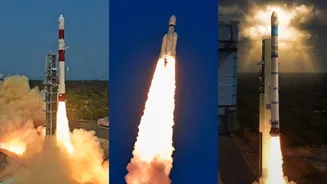
Hyderabad-based Skyroot Aerospace has become a poster child for this new era. Founded by former ISRO scientists, the company made history in July 2026 by successfully launching its Vikram-1 rocket, placing payloads into orbit. This achievement made India only the third country, after the United States and China, to have a private company with orbital launch capabilities. Skyroot’s journey began earlier with the successful suborbital launch of the Vikram-S in 2022. The company's Vikram series of rockets is designed to provide cost-effective and reliable launch services for the small satellite market. By de-risking and validating their technology through these launches, Skyroot is aiming to make space access more frequent and affordable, positioning itself as a key player in the global launch market. Their success has also made them India's first space-tech unicorn, a testament to growing investor confidence in the sector.
Agnikul Cosmos: Printing the Future of Launch
Chennai-based Agnikul Cosmos, an IIT Madras-incubated startup, is taking a different but equally innovative approach to rocket science. Their key innovation is the Agnilet engine, the world's first single-piece 3D-printed rocket engine. This groundbreaking manufacturing technique, for which they hold a US patent, avoids the complexities and potential failure points of assembling hundreds of individual components. Their launch vehicle, named 'Agnibaan', is designed for on-demand, customizable missions to deliver small satellites to low Earth orbit. In May 2024, Agnikul achieved a significant milestone by launching a sub-orbital technology demonstrator from India's first-ever private launchpad, which they established themselves. The mission tested their semi-cryogenic engine and proprietary flight control systems, proving the viability of their unique, home-grown technologies.
Pixxel: Eyes in the Sky Like Never Before
While Skyroot and Agnikul focus on getting to space, Pixxel is revolutionizing what we can see from there. Pixxel is building a constellation of the world's highest-resolution hyperspectral imaging satellites. Unlike standard satellites that see in a few bands of light, Pixxel's satellites capture data across more than 150 spectral bands. This allows them to detect the chemical signatures of objects on Earth's surface, providing incredibly detailed insights. This technology has powerful applications in agriculture for monitoring crop health, in the energy sector for detecting gas leaks, and for tracking climate change indicators like deforestation and pollution. The company has already launched its first commercial 'Firefly' satellites and recently raised $100 million to expand its constellation and build out its AI-powered data platform, Aurora. With contracts from NASA and the National Reconnaissance Office, Pixxel is already a global contender in the Earth observation market.
The Challenges and the Cosmos Ahead
Despite these incredible successes, the path for India's private space startups is not without challenges. Access to late-stage domestic capital remains a significant hurdle, forcing many to look for international investment. Navigating the new regulatory framework, scaling manufacturing, and developing a robust domestic supply chain are other critical areas of focus. There are also growing pains within the ecosystem, with some retired ISRO scientists raising concerns about the expanding role of the regulator, IN-SPACe. However, the momentum is undeniable. India's space economy is projected to grow from around $9 billion to over $40 billion in the next decade. The rise of companies like Skyroot, Agnikul, and Pixxel signifies more than just commercial success; it represents a strategic shift towards a self-reliant and globally competitive space industry, built on Indian innovation.