






Decoding the Semicryogenic Buzzword
At its core, a rocket engine needs fuel and an oxidiser to generate thrust. ISRO's existing rockets use various combinations, including solid propellants and cryogenic engines, which use super-cooled liquid hydrogen and liquid oxygen. A semicryogenic
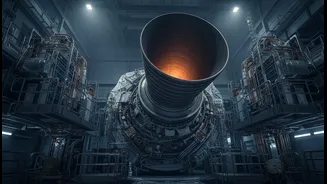
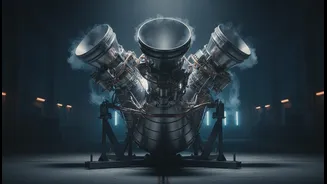
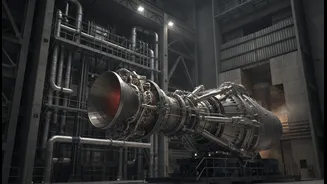
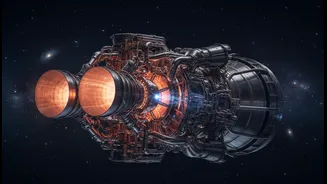
engine, like the new SCE-2000, offers a powerful hybrid approach. It uses liquid oxygen as the oxidiser, which must be kept extremely cold, but pairs it with a refined kerosene called 'Isrosene' which is stable at normal temperatures. This 'semi' approach simplifies handling and storage compared to fully cryogenic systems, where both components are at extreme low temperatures. It's a technology mastered by only a few nations, marking a significant step in indigenous capability.
The Power and the Promise
The main advantage of the semicryogenic engine is its blend of power and practicality. Kerosene is denser than liquid hydrogen, allowing for more fuel to be packed into a smaller tank, and it is significantly cheaper and safer to handle. This combination results in higher thrust. The SCE-2000 engine is being designed to produce 2,000 kilonewtons (kN) of thrust, making it far more powerful than the engines it will replace. This power boost is crucial for ISRO's ambitions. It will allow India's workhorse rocket, the LVM3, to carry heavier satellites into orbit, thereby enhancing its capacity for commercial launches and complex deep-space missions.
A Milestone, Not the Finish Line
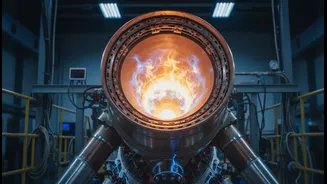
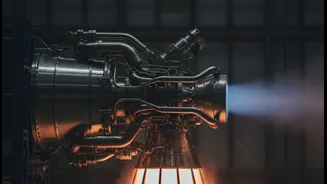
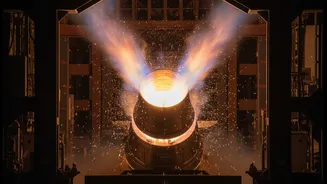
Recent news celebrated a successful hot test of the engine's Power Head Test Article (PHTA), a critical component assembly. During a test on June 24, 2026, the PHTA was successfully fired at a thrust level of 175 tonnes, which is about 88% of its full capacity. This was the eighth in a series of tests that progressively pushed the engine's limits, giving ISRO confidence to proceed towards a full-thrust demonstration at 200 tonnes. While a huge achievement, this is a single step in a long qualification process. Rocket engine development is an exacting science of testing, analysis, and refinement. A single successful component test, however important, is not the same as a flight-ready engine.
The Long Road to Liftoff
The journey from a successful ground test to an actual launch is long and fraught with challenges. The SCE-2000 engine still needs to complete its full-thrust tests. Afterwards, it must be integrated into a full stage, the SC120, which will also undergo its own rigorous series of ground qualifications. Early tests of rocket components can sometimes reveal unexpected issues, as seen in a 2023 test that was terminated early after an unanticipated pressure spike. These are normal parts of development that lead to a more robust final product. However, they underscore that patience is required. The engine must prove its reliability over many tests before ISRO can confidently mount it on a multi-crore launch vehicle.
What's the End Game?
The ultimate goal for the SCE-2000 is to replace the L110 liquid core stage of the LVM3 rocket. This single upgrade is expected to increase the LVM3's payload capacity to Geostationary Transfer Orbit (GTO) from about 4 tonnes to over 5 tonnes. This makes the rocket much more competitive in the global commercial launch market and more capable of launching future modules for the planned Bharatiya Antariksha Station. In the long run, this engine technology is also a stepping stone for ISRO's Next Generation Launch Vehicle (NGLV), which may feature reusable stages. Therefore, the semicryogenic project isn't just about one engine; it's about building a foundation for the next several decades of India's space exploration.