






A New Frontier for Indian Talent
The dream of working in space is no longer a distant one for India's tech professionals. What was once the exclusive domain of the Indian Space Research Organisation (ISRO) has transformed into a bustling commercial industry. Today, over 400 private startups
are working on everything from building rockets and satellites to analysing space-derived data. This shift is creating a vibrant ecosystem that promises to generate thousands of high-value jobs and position India as a global hub for space technology. The Indian space economy, valued at around $8.4 billion, is projected to surge to $44 billion by 2033, signalling a golden age for those looking to build a career in the final frontier.
The Policy That Opened the Skies
This transformation was catalysed by a landmark government decision in June 2020 to open the space sector to private participation. The subsequent Indian Space Policy 2023 provided a clear roadmap, allowing non-government entities to engage in end-to-end space activities. A crucial element of this reform was the creation of the Indian National Space Promotion and Authorisation Centre (IN-SPACe). IN-SPACe acts as a single-window agency, facilitating, authorising, and supervising private sector activities, from sharing ISRO's infrastructure to helping startups get the necessary clearances. This policy has effectively shifted ISRO's role towards research and deep space exploration, while allowing private players to drive commercial manufacturing and services.
Meet the New Trailblazers
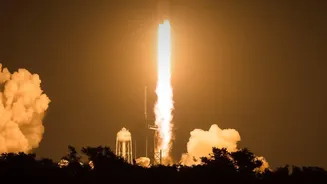
A new breed of startups is leading India's charge into the commercial space race. Hyderabad-based Skyroot Aerospace made history by launching India's first privately developed rocket. Another key player, Agnikul Cosmos, has distinguished itself by establishing its own launchpad and a facility for 3D-printing rocket engines. In the satellite domain, companies like Pixxel are deploying constellations of hyperspectral imaging satellites to provide valuable data for sectors like agriculture and climate monitoring. These companies, along with others like Dhruva Space and Bellatrix Aerospace, are not just building hardware; they are creating a new economic engine and attracting significant global investment.
The In-Demand Skills of Tomorrow
The career opportunities in this new space age extend far beyond traditional aerospace engineering. While rocket scientists and propulsion experts are in high demand, so are professionals with a wide range of tech skills. Data scientists and geospatial analysts are needed to interpret the vast amounts of information sent back by earth observation satellites. Software engineers are crucial for developing the ground systems, mission control software, and onboard flight systems. Furthermore, the increasing complexity of space systems requires specialists in AI and machine learning, robotics, and cybersecurity to manage autonomous systems and protect space assets from threats. Even roles in law are emerging, with a demand for experts in the growing field of space law.
Building the Broader Ecosystem
The impact of the private space boom isn't confined to high-tech labs. It's fostering a wider industrial ecosystem. The 'Make in India' initiative is getting a major boost as the demand for satellite components, launch vehicle parts, and ground station equipment grows, creating jobs in precision manufacturing and supply chain management. This expansion is also prompting a talent migration, with experienced scientists and engineers moving from ISRO to the more agile and often better-paying private sector, transferring valuable expertise. While this creates challenges for the national agency, it enriches the overall domestic talent pool, accelerating innovation across the board. States like Tamil Nadu and Karnataka are also establishing dedicated 'Space Bays' and industrial policies to attract investment and create a cluster of space-tech companies.