



The Goal Defines the Measurements
The fundamental difference between measuring for a rental and for a tailored garment comes down to the end goal. A rental company aims to find the best possible match for you from its existing inventory of standard sizes. They use a few key data points
to slot you into a pre-made garment that will fit reasonably well for a short period. In contrast, a tailor’s goal is to alter an existing garment or create a new one to fit your specific body perfectly. This requires a far more detailed and nuanced set of measurements, as there is no standard size—you are the standard.
What Rental Companies Need to Know
For rental services, efficiency is key. They need a handful of core measurements to identify the right size jacket, trousers, and shirt. These typically include your height and weight, chest, waist, outseam (the length from your waist to the bottom of your shoe), neck, and shirt sleeve length. Some online services even use algorithms based on just height, weight, and age to predict your size. These measurements are designed to be broad enough to fit a wide range of body types into a limited set of sizes (e.g., Small, Medium, Long). The aim is a 'good enough' fit that looks presentable for an event. They are matching you to a suit, not making a suit for you.
The Precision of a Tailor
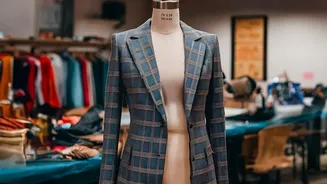
A tailor, on the other hand, is a craftsperson dedicated to creating a second skin. Their measurement process is significantly more exhaustive because they are accounting for every unique aspect of your body. Beyond the basics, a tailor will measure shoulder width, bicep, wrist, the fullest part of your seat, inseam, and rise (the distance from the crotch to the waistband). For a truly bespoke piece, they may take 15 or more measurements. They also assess things that can't be measured with a tape, like your posture, the slope of your shoulders, or how you stand. This level of detail ensures the garment hangs correctly, provides comfort, and flatters your specific shape.
Why You Can't Mix and Match
Using your rental measurements for a tailor would leave them with insufficient information to create a truly fitted garment. The result would likely be a piece that’s too generic and lacks the refined fit you’re paying for. Conversely, providing a tailor’s full suite of detailed measurements to a rental company would be overkill; their system isn't designed to use that level of specificity. They would simply ignore the extra data and revert to their core metrics to find the closest standard size. The key difference is that clothing measurements taken by a tailor include 'ease'—the extra room built into a garment for comfort and style—while body measurements are just the raw numbers of your physique.
How to Get Accurate Measurements Every Time
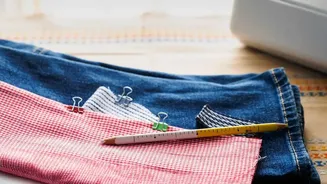
Regardless of the purpose, accuracy is vital. Always use a flexible, soft measuring tape. Take measurements over thin, fitted clothing or undergarments to avoid distortion from bulky layers. When measuring, stand in a relaxed, natural posture—don't suck in your stomach or puff out your chest. For chest, waist, and hip measurements, ensure the tape is snug but not tight and parallel to the floor. If possible, have someone else measure you, as twisting and turning to see the numbers can throw them off. Finally, it never hurts to measure twice to confirm your numbers are correct and consistent.