


The Sweet Soul of Pujo
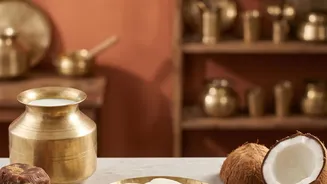
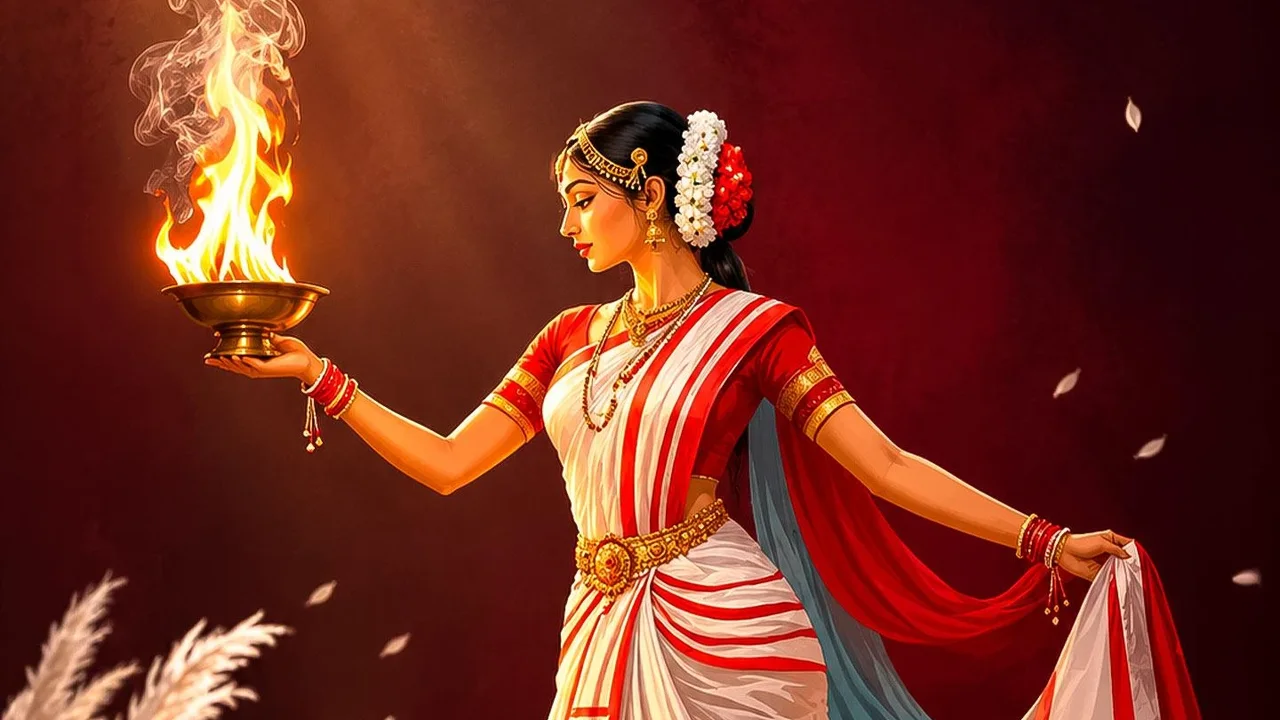
In Bengal, Durga Puja is an emotion that sweeps through every home and heart, and at its core lies 'mishti' (sweets). More than just dessert, these confections are an inseparable part of the five-day extravaganza. They are offered to the Goddess as 'bhog',
shared among friends and family as a symbol of joyous connection, and savoured after pandal-hopping. The celebration culminates with 'Bijoya Dashami', when a morsel of a sweet, or 'mishti mukh', seals the bonds of community and marks a sweet farewell to the Goddess. This deep-rooted connection between spirituality and sweets makes the 'mishtir dokan' (sweet shop) a temple of taste during the festivities.
The Holy Trinity of Chhena
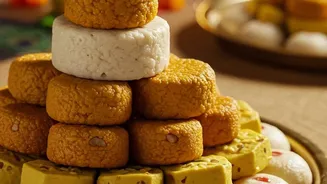
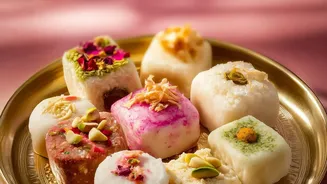
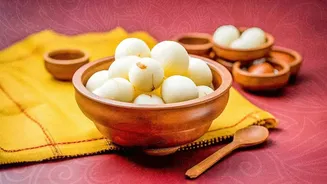
While the variety of Bengali mithai is vast, a few iconic creations made from 'chhena' (freshly curdled cottage cheese) form the heart of Puja offerings. The delicate Sandesh, arguably the most revered, is a testament to minimalist mastery. It begins with preparing the perfect chhena, which is then kneaded until smooth and cooked gently with sugar or the prized 'nolen gur' (date palm jaggery). From the simple 'kora paak' (hard-cooked) to the legendary 'Jolbhora' with its liquid-jaggery centre, each Sandesh is a work of art. Then there is the Rosogolla, soft, spongy orbs of chhena soaked in a light sugar syrup, a sweet so iconic it has become a symbol of Bengal itself. Another star is the Chomchom, an oblong sweet often garnished with coconut flakes, showcasing a delightful, milky texture.
The Karigars: Keepers of a Sweet Legacy
Behind every perfect Sandesh or Rosogolla is a 'karigar', a skilled artisan whose hands hold generations of knowledge. These sweetmakers are the unsung heroes of Durga Puja, working tirelessly in the weeks leading up to the festival. The process is demanding and requires immense intuition. The quality of the milk, the precise moment to add the curdling agent, and the exact consistency of the chhena are all judged by touch and experience, not by machines. In legendary establishments, some of which are over a century old, these karigars often come from families who have been in the trade for generations. They work in hot, humid kitchens, often sleeping in the workshops to meet the colossal demand, their pride and dedication infused into every sweet they shape.
Tradition in a Changing World
The heritage sweet shops of Kolkata, like Bhim Chandra Nag (established in 1826) and Girish Chandra Dey & Nakur Chandra Nandy, are more than just businesses; they are cultural institutions. They have preserved Bengal's confectionery heritage through periods of immense change. While the classic recipes remain sacred, many of these shops are not stuck in the past. To cater to modern palates, some have introduced innovations like baked Rosogollas, chocolate-infused Sandesh, and other fusion sweets. This delicate balance of honouring tradition while embracing innovation allows them to thrive. They manage to scale up production to incredible volumes for Puja without sacrificing the handmade quality that defines their legacy, ensuring that the taste of nostalgia is available for a new generation.