






The Promise of the Perfect Appliance
We’ve all seen them: the gleaming air fryer that promises the crispiest fries, the multi-cooker with a dozen functions, or the high-speed blender that can pulverize anything. These trendy appliances are marketed as revolutionary shortcuts to culinary
greatness. While they can certainly be useful and fun, they often solve a specific problem without addressing the fundamental experience of cooking. They might cook your chicken faster or blend a smoother soup, but they don't help you find the peeler, the whisk, or the correct measuring spoon when you’re halfway through a recipe. The rush to buy the next big thing overlooks a far more common obstacle for the home cook: a disorganised workspace that creates low-grade stress before the oven is even preheated.
The Hidden Stress of Kitchen Chaos
Think about the last time you cooked a meal. How much time did you spend searching for a specific utensil in a tangled drawer? Or clearing a patch of counter space just to put down your cutting board? This is what psychologists call cognitive load or visual noise. A cluttered environment constantly sends distracting signals to your brain, creating a sense of being overwhelmed and making it difficult to focus. When you can’t find what you need, cooking feels frantic and reactive instead of calm and creative. This constant, low-level friction saps your energy and motivation, making you less likely to cook at all. Studies have even shown that organised environments help reduce stress and improve focus, making the process of preparing food more enjoyable.
The Chef’s Secret: 'Mise en Place'
Professional chefs have a secret weapon against kitchen chaos, and it isn't a fancy appliance. It’s a French philosophy called ‘mise en place’, which translates to “everything in its place”. Before any heat is turned on, chefs prepare every single element of a dish—chopping vegetables, measuring spices, and laying out all the necessary tools. This practice separates preparation from execution, allowing for a smooth, intentional flow once the cooking actually starts. For home cooks, this might sound overly formal, but the core principle is transformative. Knowing exactly where your tools are is the first step. You can't have 'mise en place' if your spatula is hiding under a pile of other gadgets. An organised kitchen makes this philosophy possible.
The Humble Organiser: Your First Step to Flow
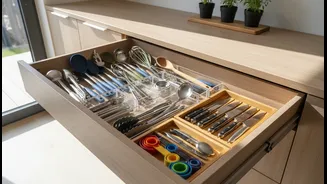
This is where the humble drawer organiser shines. It’s not just a plastic or bamboo tray; it's a system. By giving every spoon, spatula, and can opener its own dedicated home, you eliminate the need to search. You can simply open the drawer and grab what you need without thinking. This small act of creating order has a ripple effect. It reduces decision fatigue and makes the entire process of meal prep faster and more fluid. With dividers, you can group tools by function: baking items in one section, prep tools in another. Suddenly, your drawers are no longer a source of frustration but a foundation for efficiency. This simple tool is the starting point for bringing the calming, powerful principle of 'mise en place' into your own home.
From Organised Drawers to an Organised Mind
Starting with a single drawer often inspires a larger shift in mindset. Once you experience the calm of an organised utensil drawer, you might find yourself creating logical zones for other parts of your kitchen—a baking station, a coffee corner, or a prep area near the sink. This isn’t about achieving a picture-perfect kitchen, but about creating a space that works with you, not against you. An organised kitchen can even encourage healthier eating habits, as meal preparation feels less daunting and more inviting. The satisfaction comes not from owning the latest gadget, but from the feeling of control and ease in your own space. The flow you create makes cooking a more mindful and enjoyable ritual rather than a daily chore.