






The Unforgiving Coastline
India's eastern seaboard, spanning states from West Bengal to Tamil Nadu, exists under the constant threat of cyclones. Each year, powerful storms brew in the Bay of Bengal, unleashing destructive winds and massive storm surges that inundate coastal villages,
turn agricultural fields saline, and devastate local livelihoods. For the millions of people living in these low-lying areas, the question is not if the next big storm will hit, but when. For decades, the primary defence has been concrete embankments, but a more resilient and sustainable solution has been there all along, rooted deep in the coastal soil.
Nature’s Living Sea Wall
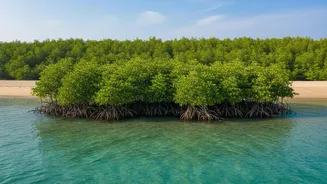
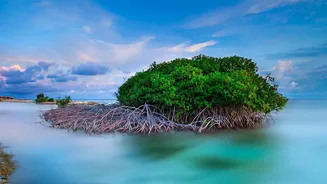
Enter the mangroves—unique, salt-tolerant trees that thrive in the brackish water where rivers meet the sea. Their dense, tangled root systems act as a natural and formidable barrier. When a storm surge barrels towards the coast, these forests work to dissipate the wave's energy, dramatically reducing its height and destructive power. Scientific studies and real-world events have shown that a healthy mangrove forest can reduce surge amplitudes by 40-50 cm per kilometre, acting as a life-saving buffer for the communities sheltered behind them. They are, in essence, a living, self-repairing sea wall that protects the land from the fury of the ocean.
From Degradation to Regeneration
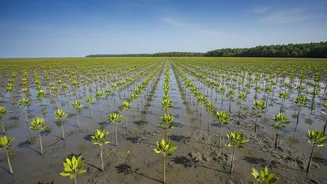
Despite their critical importance, vast stretches of these vital ecosystems were lost over the years to urbanization, aquaculture, and agriculture. Recognizing the immense risk this posed, a concerted effort is now underway to bring them back. Across the eastern coast, government agencies, non-profit organisations, and corporate partners are spearheading ambitious restoration projects. Initiatives like the national MISHTI (Mangrove Initiative for Shoreline Habitats and Tangible Incomes) scheme aim to restore hundreds of square kilometres of mangrove cover. In Odisha, community-led projects have successfully transformed degraded lands into thriving young forests, demonstrating that recovery is possible when science and local wisdom combine.
Community at the Core of Conservation
The success of these restoration efforts hinges on the involvement of local communities. In coastal villages in Odisha and West Bengal, residents are at the forefront of the movement. Women, in particular, have emerged as powerful stewards of these ecosystems, managing nurseries, planting saplings, and patrolling the newly forested areas. These initiatives are not just about planting trees; they are about empowerment. Community involvement ensures long-term stewardship and also provides vital employment, creating new, sustainable livelihoods linked directly to the health of the mangroves. In Balasore, Odisha, a restoration project has created jobs for over 70 people, with women making up around 80% of the workforce.
More Than Just a Shield
The benefits of mangrove restoration extend far beyond storm protection. These forests are biodiversity hotspots, serving as critical nursery grounds for countless species of fish, crabs, and shrimp. This directly supports local fisheries, a cornerstone of the coastal economy. Mangroves also improve water quality and are incredibly effective carbon sinks, capturing and storing up to five times more carbon than terrestrial forests, making them a crucial tool in the fight against climate change. Furthermore, they provide timber, honey, and fodder, creating a diversified and resilient local economy where ecological health and human prosperity go hand in hand.