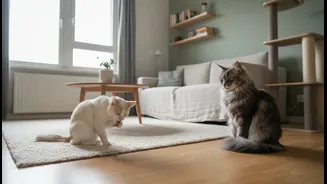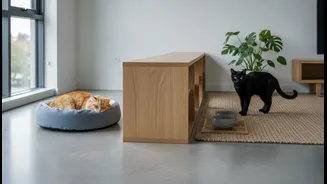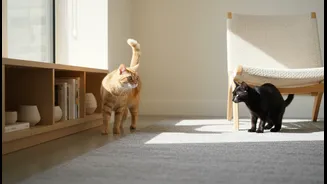









Understanding the Feline Mindset
To a cat, territory is everything. It’s not about greed, but survival and well-being. Their domain is a mental map of where they can find food, water, safe places to rest, and a secure spot for their litter box. In a small apartment, these resources are
naturally closer together, which can increase a cat's anxiety. A new cat isn't just a potential friend; it's a competitor for these essential resources. By instinct, a resident cat may feel their secure world is under threat, while the newcomer feels vulnerable and exposed in an unknown area. This is why simply putting two cats together and hoping for the best often backfires, leading to hissing, fighting, or stress-induced behaviors like hiding or urine marking. A thoughtful introduction is not about forcing a friendship, but about communicating to both cats that the home has enough resources and security for everyone.
The Unique Needs of a Rescue Cat
Rescue cats often come with an unknown past. They may have experienced life as a stray, a stressful shelter environment, or a previous home that wasn't a good fit. This history can make them more sensitive to change and territorial stress. Your new cat needs time to decompress and learn that your home is a safe, stable place. Throwing them into a direct confrontation with a resident cat can reinforce past traumas and fears. Likewise, your resident cat’s stable world is being disrupted. Proper territory management honors the emotional needs of both the established pet and the new arrival, creating a foundation of trust rather than fear.
Phase 1: The Separation Sanctuary
The introduction process begins before the cats ever see each other. Your new cat must have their own separate, secure room for at least the first few days, and sometimes up to a few weeks. A spare bedroom or even a bathroom will work perfectly. This room is not a punishment; it’s a 'base camp.' Equip it with its own food, water, litter box, toys, and a cozy bed. This allows the new cat to acclimate to the general sounds and smells of your home from a safe distance, while also establishing a space that smells strongly of them. This initial confinement gives them a chance to relax and feel secure before facing the challenge of meeting another feline.
Phase 2: The Power of Scent
Cats communicate heavily through scent, and it's your most powerful tool for a peaceful introduction. After a day or two, begin 'scent swapping.' Take a blanket or soft toy the new cat has been sleeping on and place it in the resident cat’s area. Do the same for the resident cat, bringing their scented items into the newcomer’s room. You can also use clean socks to gently rub each cat’s cheeks and then leave the sock for the other to investigate. This allows them to get used to each other's existence without the threat of a face-to-face encounter. Positive association is key, so try feeding each cat their favorite treats while they investigate the new scent.
Phase 3: Controlled Visual Contact
Once both cats are calm and curious about each other's scents, it's time for them to see each other. This should be done through a barrier. You can use two stacked baby gates in a doorway or simply crack the door open just enough for a peek, but not enough for a paw to get through. Keep these initial visual meetings very short—just a few minutes at a time. Associate these moments with positive things, like a special treat or a favorite toy, so they learn that seeing the other cat predicts something good. If you notice any hissing, growling, or flattened ears, calmly end the session and go back to scent swapping for another few days. Let the cats’ behavior dictate the pace.
Phase 4: Expanding Territory in Small Spaces
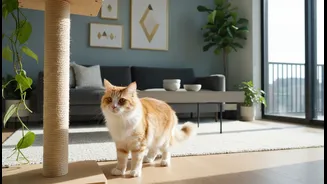
When visual meetings are consistently calm, you can allow short, supervised explorations of the shared living space. A crucial element for harmony in small homes is maximizing vertical territory. Cats see their world in three dimensions, not just floor space. Installing cat trees, wall shelves, or window perches effectively doubles or triples their available territory. This allows them to create space and avoid conflict by moving upwards. Ensure there are multiple high-up resting spots, scratching posts, and at least one more litter box than you have cats. These extra resources signal abundance, reducing competition and helping both cats feel secure in their shared home.