




A Tale of Two Plumes
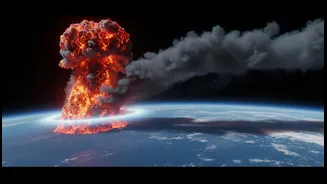
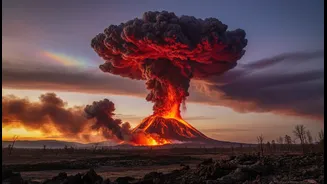
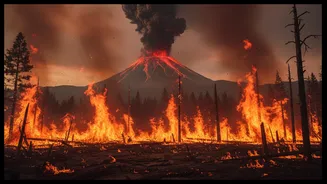
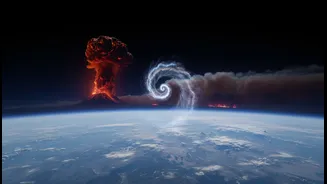
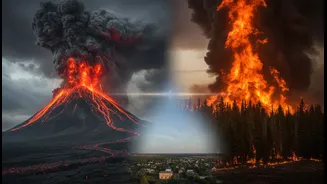
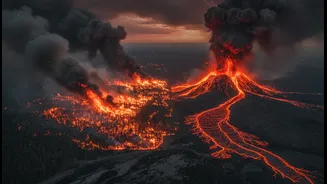
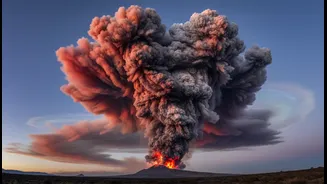
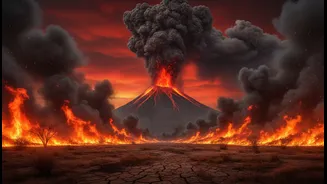
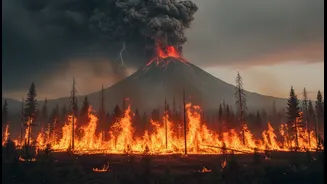
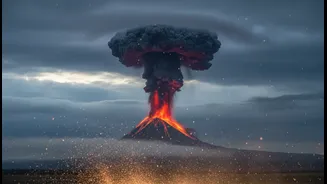
The primary connection between these two phenomena lies in their plumes—the vast columns of material they thrust into the atmosphere. While chemically different, the movement of smoke from a wildfire and the 'vog' (volcanic smog) from an eruption are
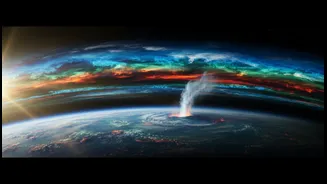
governed by similar physics. Intense heat from the ground generates powerful updrafts, carrying particles like smoke, ash, and gases high into the atmosphere. Scientists have long studied how volcanic eruptions can affect weather, but a new body of evidence shows that massive wildfires can produce effects on a scale comparable to a moderate volcanic eruption. Extreme wildfires can create their own thunderclouds, known as pyrocumulonimbus clouds, which are powerful enough to inject smoke particles deep into the stratosphere, an atmospheric layer usually only reached by major volcanic events.
The Evidence: More Lightning, Altered Atmosphere
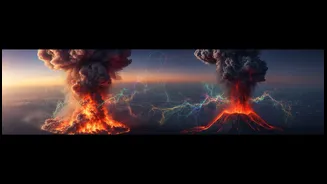
The most compelling evidence for this interaction comes from atmospheric electricity. Studies have noted that the presence of ash and smoke particles can make lightning more likely. For example, research around Italy's Mount Etna found a distinct clustering of lightning strikes near the peak, where volcanic ash plumes are frequent. These particles can increase electrical conductivity, especially in humid conditions, creating a more favorable path for lightning discharges. The same principle applies to the immense smoke plumes from mega-fires. These fire-fueled thunderstorms can generate intense turbulence and lightning. Beyond lightning, scientists have detected significant changes in atmospheric temperatures linked to both events. The 2019-2020 Australian wildfires injected so much smoke into the stratosphere that they caused a measurable warming effect in that layer, a phenomenon previously associated mainly with volcanic aerosols. One study concluded that the mass of smoke aerosol from a single, extreme wildfire event was comparable to a moderate volcanic eruption.
The Opportunity: A Natural Laboratory
This growing overlap between the impacts of wildfires and volcanoes presents a unique scientific opportunity. Studying the two phenomena in tandem allows researchers to transfer knowledge about plume dynamics and atmospheric physics from one field to the other. For instance, advancements in modeling wildfire smoke have been successfully applied to create more accurate forecasts for volcanic vog, improving air quality predictions. Furthermore, understanding how huge injections of particles—whether from smoke or ash—affect the atmosphere is crucial for refining climate models. Wildfire plumes, which are becoming more frequent and intense, provide a new and vital data source. In the past, scientists might have mistaken atmospheric layers of smoke for volcanic aerosols. Recognizing the powerful impact of fire-generated storms allows for a more accurate historical record and better predictions of how these events influence weather, air quality, and the planet's overall energy balance.
Knowing The Limits
Despite these advances, our understanding is still in its early stages. Scientists caution that the link is complex and not fully understood. While both events inject massive amounts of particles into the atmosphere, the particles themselves are different. Volcanic eruptions often release large quantities of sulfur dioxide, which can have a cooling effect, while dark, carbon-rich smoke particles from wildfires are efficient at absorbing solar radiation, causing warming in the stratosphere. Predicting exactly how high a plume will rise and where it will travel remains a significant challenge for both wildfire and volcano modelers. Small errors in estimating this injection height can lead to wildly inaccurate forecasts for downwind pollution. The science is also limited by the sheer difficulty of studying these events. They are often dangerous and unpredictable, making data collection a major hurdle. As a result, while the evidence points to a clear connection, many of the precise mechanisms and long-term consequences are still subjects of active and vital research.