






Start With an Ergonomic Foundation
Your posture is the first line of defence against desk-related strain. A proper ergonomic setup isn't a luxury; it's essential for preventing pain in your neck, shoulders, and back. Start with your chair. Adjust the height so your feet rest flat on the floor
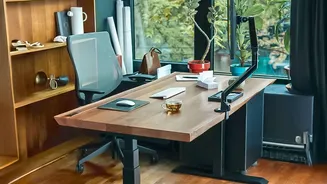
with your knees at or slightly below hip level. There should be a small gap of about two to three fingers' width between the back of your knees and the edge of the seat. Your back should be fully supported, so adjust the lumbar support to fit the natural curve of your lower back. Next, your monitor. The top of the screen should be at or just below your eye level, and it should be about an arm's length away. This prevents you from craning your neck up or hunching down. Finally, position your keyboard and mouse at a height that allows your elbows to be bent at roughly a 90-degree angle, with your wrists straight and neutral while typing.
Embrace Intentional Movement
Even the most perfectly ergonomic chair can't counteract the effects of being stationary for too long. The key is to integrate regular movement into your day. Health experts recommend getting up at least once every hour. However, more frequent, shorter breaks might be even more beneficial. Set a timer to stand up, stretch, or walk around for a few minutes every 30 to 45 minutes. This doesn't have to be disruptive. You can stand up during a phone call, take a quick walk to get water, or do simple desk stretches like rolling your shoulders or gently turning your neck. These brief activity breaks increase blood flow to the brain, which can help sharpen focus and prevent mental fatigue. They also help prevent your muscles from becoming stiff and tight.
Give Your Eyes a Break
Digital eye strain is a common complaint for desk workers, leading to headaches, dry eyes, and blurred vision. To combat this, practice the 20-20-20 rule. Every 20 minutes, take a 20-second break to look at something at least 20 feet away. This simple habit gives your eye muscles a chance to relax from the constant focus on a close-up screen. In addition to these micro-breaks, ensure your monitor is positioned to avoid glare from windows or overhead lights. You can also adjust your screen's brightness and contrast settings to a comfortable level to further reduce strain. If you frequently use the phone, using a headset can prevent you from cradling a receiver between your head and shoulder, a common cause of neck pain.
Hydrate and Fuel Mindfully
It’s easy to forget to drink water when you’re deep in concentration, but staying hydrated is crucial for maintaining energy and focus. Keep a water bottle on your desk as a visual reminder to sip throughout the day. Getting up to refill it is also another excellent excuse for a movement break. What you eat also plays a significant role in how you feel. Planning your meals and snacks can help you avoid the temptation of less healthy convenience foods. Eating a nutritious lunch away from your desk gives your mind a true break and helps prevent the mid-afternoon energy slump that often follows a heavy, processed meal.
Create a Clutter-Free Zone
Your physical environment has a direct impact on your mental state. A cluttered, disorganized desk can contribute to a feeling of being overwhelmed and unfocused. Take a few minutes each day to tidy up your workspace, getting rid of unneeded papers and organizing your essential items. Keep frequently used tools like your pen, notepad, or headset within easy arm's reach to avoid unnecessary stretching and straining. Wiping down your desk, keyboard, and mouse regularly also helps maintain a clean and healthy environment. Personalizing your space with a plant or a photo can make it a more pleasant and mentally refreshing place to be.