




So, What Exactly Is It?
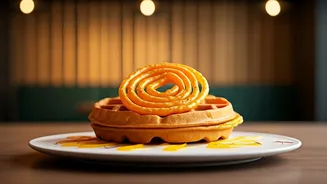
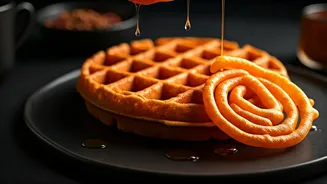
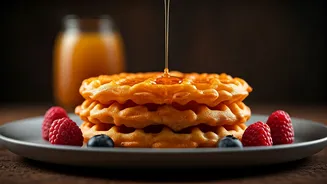
The Jalebi Waffle isn't just one single creation; it's a concept with a few delicious interpretations. In its most common form, it involves preparing a standard, fluffy Belgian waffle and then drenching it in a jalebi-style sugar syrup, often infused
with saffron and cardamom. It’s then garnished with pistachios, almonds, and sometimes a dollop of creamy rabri to complete the decadent transformation. Another, more ambitious version sees chefs and home cooks attempting to create the waffle itself using a fermented batter similar to that of a jalebi, pressing it in a waffle iron to create a unique hybrid that is crispy, chewy, and airy all at once. The result, in either case, is a dish that sits at the crossroads of a beloved Indian mithai and a classic Western breakfast, offering a flavour profile that is both nostalgic and novel.
Made for the Social Media Age
A huge part of the Jalebi Waffle’s rise can be attributed to its undeniable photogenic quality. In an era where we eat with our eyes first, this dish is a visual masterpiece. The deep golden hue of the waffle, the glistening syrup, the vibrant green of the pistachios, and the contrasting white of the rabri create a stunning picture that begs to be shared. Food bloggers and cafes have been quick to capitalise on this, with videos of syrup being poured in slow-motion or cross-sections revealing a perfect texture racking up hundreds of thousands of views. It has the 'surprise' factor that algorithms love, prompting comments that range from 'I need this in my life!' to 'What have they done to my precious jalebi?'. This built-in conversation-starter makes it the perfect fuel for online engagement.
Genius Fusion or Culinary Confusion?
Like any bold fusion dish, the Jalebi Waffle has its passionate supporters and its equally vocal critics. Proponents see it as a brilliant example of culinary creativity. They argue it’s a playful and delicious way to reimagine traditional flavours for a modern palate, blending the comforting sweetness of jalebi with the satisfying texture of a waffle. For them, it’s not about replacing the original but about creating a new experience that honours both its inspirations. On the other hand, purists are often less convinced. Some argue that the delicate, crispy-yet-chewy texture of a real jalebi, fresh from the hot oil, is impossible to replicate in waffle form. They see it as a gimmick, another example of a food trend that prioritises novelty and Instagrammability over authentic flavour and culinary integrity. The debate itself is part of the fun, turning a simple dessert into a topic of cultural conversation.
Part of a Bigger Trend
The Jalebi Waffle didn't appear in a vacuum. It’s the latest in a long line of Indian fusion foods that have captured the public's imagination. From Gulab Jamun Cheesecake and Motichoor Ladoo Parfaits to Naanizzas (naan pizzas) and Butter Chicken Pasta, Indian cuisine has become a vibrant playground for experimentation. This trend reflects a new confidence in the Indian culinary scene. Chefs are no longer just recreating traditional recipes; they are deconstructing them, reinterpreting them, and presenting them in global formats. This creative wave is driven by a generation of diners who are both deeply connected to their culinary roots and curious about global food trends. The Jalebi Waffle is simply the dish of the moment, representing a larger movement of playful, boundary-pushing food innovation.