




The Great Monsoon Myth
It’s a common belief: if you can’t see the sun, it can’t harm you. This is fundamentally untrue. While thick, grey clouds do reduce the intensity of visible light and can block a significant portion of UVB rays (the kind that cause immediate sunburn),
they are far less effective against UVA rays. Up to 80% of UVA radiation can penetrate cloud cover. These longer-wavelength rays are responsible for deep-skin damage, contributing to premature ageing, wrinkles, and pigmentation. Data shows that even during the peak monsoon months of July and August, the UV index in India remains in the 'High' category, posing a significant risk to unprotected skin. This means that even on the most overcast day, your skin is still vulnerable.
Indian Skin is Not Immune
Another pervasive myth is that higher melanin levels in Indian skin provide complete protection from the sun. While it’s true that melanin offers some natural defence, equivalent to a low SPF, it is not sufficient to prevent damage. In fact, this natural protection creates a different set of problems. Indian skin is highly reactive and more prone to hyperpigmentation, tanning, and uneven skin tone as a response to sun exposure. Instead of turning red like lighter skin tones, sun damage on Indian skin often manifests as stubborn dark patches and premature ageing. This means that skipping sunscreen doesn't just risk a tan; it invites long-term issues like melasma and loss of elasticity.
The Skincare User's Dilemma
For those invested in a dedicated skincare routine, forgoing sunscreen during the monsoon can actively sabotage their efforts. Many popular active ingredients, such as retinoids, AHAs, BHAs, and even Vitamin C, can make the skin more sensitive to the sun. Exposing your skin to UV radiation after using these ingredients can lead to increased irritation and inflammation. Furthermore, sun exposure is a primary trigger for post-inflammatory hyperpigmentation (PIH), the dark marks left behind by acne. By not using sunscreen, you are making it harder for those acne spots to fade, regardless of the other products in your routine. Dermatologists stress that sun protection is a non-negotiable final step in any morning skincare regimen, all year round.
Choosing Your Monsoon Armour
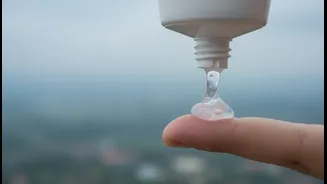
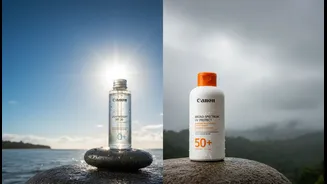
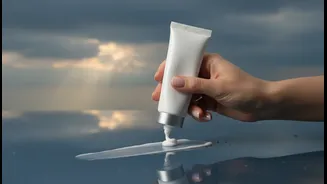
The stickiness and sweat of humid monsoon weather can make applying traditional, thick sunscreens an unpleasant experience. This is a major reason why many people skip this crucial step. However, modern formulations offer excellent alternatives. Dermatologists recommend opting for lightweight, gel-based, or fluid sunscreens that absorb quickly without leaving a greasy residue. Look for products labelled 'water-resistant', as they are formulated to adhere to the skin for longer periods, even through sweat and rain. An SPF of 30 to 50 with a high PA rating (like PA+++ or PA++++) is essential for broad-spectrum protection against both UVB and UVA rays.
A Commuter's Survival Guide
For daily commuters, protection goes beyond just what you put on your face. The brief walk to the bus stop, the wait for a train, or navigating a waterlogged street all add up to significant cumulative sun exposure. An umbrella, a monsoon staple, serves a dual purpose by shielding you from both rain and UV rays. Wearing full-sleeved clothing made from breathable fabrics like cotton can also offer a physical barrier against the sun without causing you to overheat. Reapplication of sunscreen is key, especially if you've been sweating. Sunscreen sticks are a convenient, mess-free option for touch-ups on the go, especially for areas like the nose, ears, and back of the neck.