







The Galle Firecracker
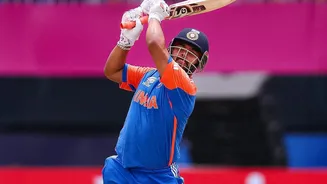
When Rishabh Pant walks to the crease, an electric buzz fills the stadium. It was no different in the recent Test against Sri Lanka at Galle. With the match in the balance, Pant unleashed a barrage of strokes that dismantled the opposition's plans. His
quick-fire half-century wasn't just about scoring runs; it was a statement. This wasn't his first time decimating a Sri Lankan attack, either. Fans will recall his record-breaking fifty off just 28 balls against them in 2022, the fastest ever by an Indian in Test cricket. That knock broke a 40-year-old record held by the legendary Kapil Dev. This ability to attack regardless of the format or situation has become Pant’s calling card, a high-risk, high-reward style that keeps fans on the edge of their seats and has fundamentally altered the momentum of countless matches.
The Blueprint of an Entertainer
This brand of cricket, often dubbed 'Pant-ball', is not reckless abandon but a calculated aggression designed to put pressure back on the bowlers. In an era of data-driven, risk-averse strategies, Pant is a throwback to a more instinctive time. He is an entertainer in the truest sense, a player you pay to watch, as Australian great Ricky Ponting once noted. Yet, this fearless approach hasn't come without criticism. For every match-winning cameo, there have been dismissals that left experts and fans frustrated. But to ask Pant to change his style is to misunderstand what makes him special. His value lies in his unique ability to change the game in a single session, a quality that can't be coached out of a player. The key to understanding his approach lies not just in his talent, but in the heroes who inspired him.
An Idol from Down Under
While many assume MS Dhoni would be his natural idol, Pant has consistently named another game-changing wicketkeeper-batsman as his primary inspiration: Australian legend Adam Gilchrist. Pant has said that while he didn't watch a lot of cricket as a child, he was captivated by Gilchrist's approach to the game. The parallels are impossible to ignore. Both are left-handed, aggressive batsmen who completely redefined the role of a wicketkeeper. Before Gilchrist, keepers were chosen for their glovework, with their batting seen as a bonus. Gilchrist turned that notion on its head, becoming a devastating batsman who could turn a match on its head from number seven. Former players like Yuvraj Singh and Ricky Ponting have directly compared Pant to Gilchrist, seeing the same match-winning potential and fearlessness.
Following in Gilchrist's Footsteps
Adam Gilchrist's impact was profound. In 96 Tests, he scored over 5,500 runs at a staggering strike rate for a middle-order player. He was a key part of the dominant Australian team that won three consecutive World Cups. Gilchrist proved that a wicketkeeper could be a frontline attacker, a player who instilled fear in the opposition. Pant is carving a similar path. His counter-attacking hundreds in tough overseas conditions in Australia, England, and South Africa are modern-day classics. Like Gilchrist, he doesn't just score runs; he dictates terms. As former England coach David Lloyd noted, Pant's role is to wrest the initiative back, a task he shares with his idol. He is fulfilling the modern blueprint that Gilchrist created: the wicketkeeper as an all-out aggressor.
The Dhoni Connection
The comparisons to MS Dhoni are, of course, inevitable and valid. As Pant’s predecessor behind the stumps for India, Dhoni has been a crucial mentor. Pant has often spoken about his close relationship with Dhoni, referring to him as a mentor from whom he has learned a great deal about handling pressure and staying patient. Early in his career, the pressure of being 'the next Dhoni' was immense, but the two have fostered a strong bond. However, their roles are distinct. While Dhoni was the master finisher and calm strategist, Pant is the explosive disruptor. The relationship is best understood as one of idol versus mentor. Gilchrist provided the template for Pant's aggressive style, while Dhoni provided the guidance on how to navigate the immense pressures of international cricket for India.