





The Sci-Fi Dream of Taming the Weather
In an era of accelerating climate anxiety, the idea of exerting control over the weather is incredibly seductive. Recently, conversations around geoengineering—large-scale intervention in Earth's climate systems—have grown louder. Some of these discussions
have floated the ambitious, almost science-fiction-like notion of taming the El Niño-Southern Oscillation (ENSO), a primary driver of weather chaos globally. Proposals, though mostly theoretical, include ideas like 'marine cloud brightening', which involves spraying sea salt into clouds to make them more reflective, or strategically cooling vast surfaces of the ocean. While this sounds like a proactive solution to a massive problem, scientists urge extreme caution, warning that our understanding of such complex systems is far from complete and the risk of unintended consequences is enormous.
So, What Exactly Is El Niño?
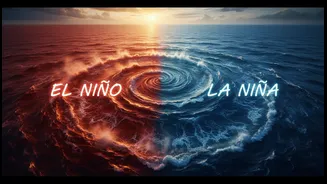
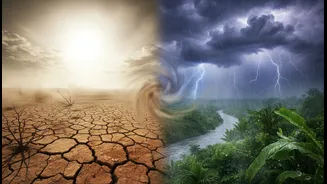
Before we can talk about controlling it, we need to understand what it is. El Niño is not a storm; it's a massive, naturally occurring climate pattern. It's the warm phase of the ENSO cycle. Normally, strong trade winds blow from east to west across the Pacific Ocean, pushing warm surface water towards Asia and Australia. During an El Niño event, which happens irregularly every two to seven years, these winds weaken. This allows the massive pool of warm water to slosh back eastward, toward the coast of South America. This shift in ocean heat is so enormous that it alters atmospheric circulation, disrupting weather patterns across the globe—from droughts in Australia to floods in Peru and, crucially, a disturbed monsoon in India.
The Critical Indian Connection
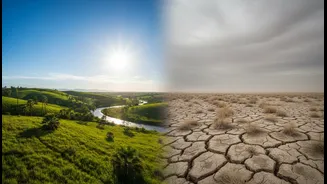
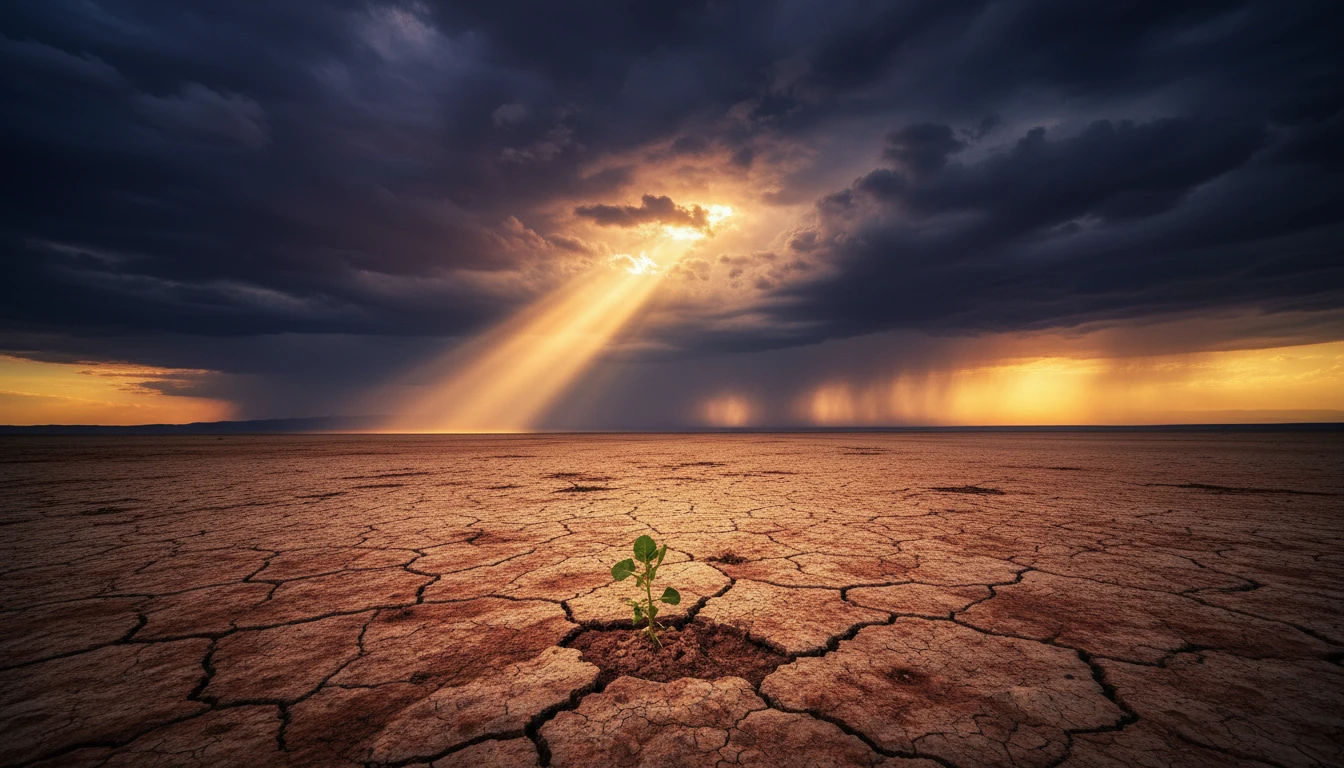
For India, El Niño is not a distant phenomenon in the Pacific; its effects are felt acutely at home. The Indian monsoon is the lifeline for the country's agriculture-driven economy, and El Niño has a well-documented history of disrupting it. The warming of the Pacific and the resulting atmospheric changes tend to weaken the low-pressure system over the subcontinent that draws in moisture-laden monsoon winds. This frequently leads to deficient rainfall, particularly in central and peninsular India, increasing the risk of widespread drought. A weak monsoon affects crop yields, depletes reservoir levels, strains drinking water supplies, and can fuel food price inflation. While not every El Niño year results in a drought—other factors like the Indian Ocean Dipole can sometimes offset the impact—the correlation is strong enough to make it a major concern for farmers and policymakers alike.
The Sheer Scale and Folly of 'Control'
This brings us back to the idea of control. The amount of energy involved in an El Niño event is staggering, far beyond anything humans can generate. The World Meteorological Organization has been clear that it is impossible to create or suppress large weather systems. Attempting to artificially cool a patch of ocean large enough to disrupt an El Niño would be an unprecedented undertaking with a high chance of failure and catastrophic side effects. Climate models have shown that some geoengineering proposals, like marine cloud brightening in the Pacific, could dramatically disrupt or weaken the entire ENSO cycle, with unpredictable and potentially disastrous ramifications for global weather. Shifting rainfall patterns in one part of the world could inadvertently trigger devastating droughts or floods in another, leading to geopolitical conflict over water and resources.
Adaptation and Mitigation: The Real Work
The scientific consensus is that our energy is better spent not on fantastical control schemes, but on practical strategies of adaptation and mitigation. This means investing in what we know works. Better forecasting allows for earlier warnings, giving farmers and governments time to prepare. Developing drought-resistant crop varieties, improving water management and irrigation efficiency, and strengthening social safety nets can help cushion the blow of a weak monsoon. Most importantly, the increasing intensity of extreme weather events is amplified by human-induced climate change. While El Niño is a natural cycle, it now occurs in a warmer world, which can make its impacts more severe. The most meaningful 'control' we can exert is to reduce global greenhouse gas emissions, tackling the root cause rather than gambling on risky, large-scale symptomatic cures.