

One Plant, Many Worlds
From the robust black teas of Assam to delicate Chinese white teas, it’s remarkable that nearly every 'true' tea originates from a single plant: Camellia sinensis. The incredible diversity in colour, flavour, and aroma comes down to terroir—the climate
and soil where the plant is grown—and, most importantly, how the leaves are processed after being picked. The key difference lies in the level of oxidation, a natural process where the leaves are exposed to air, causing them to darken and their flavour profile to change. By controlling this step, tea masters create the distinct categories we know and love.
Black Tea: Bold and Fully Oxidised
Black tea is what most of us picture when we think of a classic cup. It is fully oxidised, which gives the leaves their dark colour and produces a deep, rich, and often malty flavour. Well-known varieties include Assam and Darjeeling from India. To brew, use water that is at or near boiling (around 93–100°C) and steep for 3 to 5 minutes. For a stronger brew, it's better to add more tea leaves rather than steeping for longer, which can introduce bitterness.
Green Tea: Fresh and Vegetal
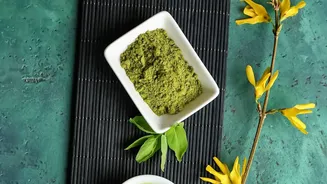
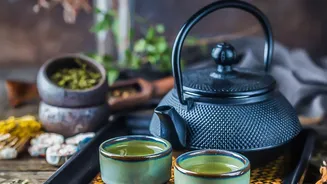
To create green tea, the leaves are heated shortly after harvesting—either by pan-firing or steaming—to prevent oxidation entirely. This preserves their green colour and fresh, grassy, and sometimes nutty flavours. Because it’s more delicate, green tea requires a gentler touch. Brew with water that has cooled from a boil to about 70–85°C. Steeping for just 1 to 3 minutes is usually sufficient; any longer and it can easily become bitter.
Oolong Tea: The Complex In-Between
Oolong is a masterclass in complexity, falling somewhere between green and black tea. It is partially oxidised, a process that can range from as little as 10% to over 80%. This creates an incredible spectrum of flavours, from light and floral to deep, roasted, and fruity. Brewing oolong is also a balancing act. Use water between 85–96°C and steep for 3 to 5 minutes, depending on the specific type and your personal preference. Many oolongs are suitable for multiple short infusions.
White Tea: Subtle and Delicate
As the least processed of all teas, white tea is prized for its subtlety. Made from the youngest buds and leaves of the tea plant, it is simply withered and dried with minimal handling, resulting in very little oxidation. This gentle process yields a pale brew with delicate, often floral and sweet notes. To protect its nuanced flavour, brew white tea with water around 80–90°C for a slightly longer time, typically 4 to 6 minutes.
How to Host Your Tea Tasting
Now for the fun part: sharing the experience. Hosting a tasting is about exploration, not expertise. Start by selecting three to five different teas. A great first flight could compare different types, like a black, green, and oolong, to highlight the major flavour differences. You can also choose a theme, such as teas from a single region. Plan to serve them in an order from lightest to strongest to avoid overwhelming the palate—typically white, then green, oolong, and finally black tea.
Setting the Stage
You don’t need much equipment. Gather a kettle, a timer, and enough small cups for each guest to have one for each tea (or you can simply rinse cups between tastings). White or clear cups are ideal for observing the tea’s colour. Providing note cards and pens is a nice touch, allowing guests to jot down their impressions of the aroma and taste. You can even create a simple worksheet listing the teas and leaving space for notes.
The Art of Tasting
Follow a simple four-step process for each tea. First, observe the dry leaves, noting their shape and aroma. Second, as the tea steeps, observe the colour of the brewed liquid. Third, before sipping, take a moment to smell the aroma of the warm brew. Finally, taste. Professionals often use a loud slurp, which aerates the tea and spreads it across your entire palate, revealing more nuanced flavours. Encourage discussion about what everyone smells and tastes—there are no wrong answers!
Palate Cleansers and Pairings
Since tea is the star, food should play a supporting role. To cleanse the palate between different teas, offer neutral snacks like plain water crackers or simple biscuits. If you want to serve more substantial food, do it after the main tasting. Classic pairings like small, crustless sandwiches (cucumber and cream cheese are traditional), mini quiches, scones, and fresh fruit work beautifully and won't overpower the delicate tea flavours.