




Why Bodyweight Training Works
Before jumping into the exercises, it's important to understand why they are so effective. Bodyweight training uses your own mass as resistance. This approach removes common barriers like cost and access to a gym, making it easier to stay consistent.
For beginners, these exercises are perfect for building a solid foundation of strength, stability, and coordination. They target major muscle groups across your entire body, helping you develop functional fitness that translates to everyday activities, like lifting groceries or playing with your kids. The key is focusing on proper form over the number of repetitions. Mastering the movement correctly ensures you activate the right muscles and prevent injury, setting you up for long-term success.
Lower Body Foundation: Bodyweight Squats
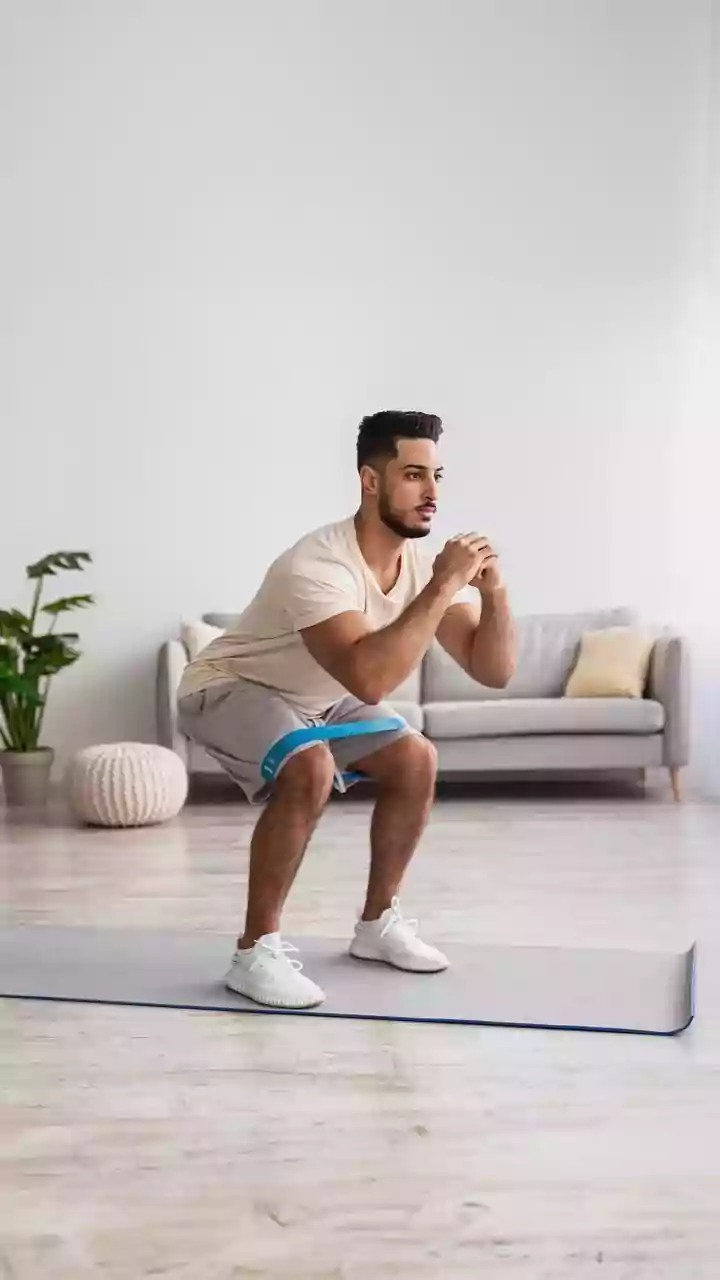
The squat is a fundamental movement that strengthens your legs, glutes, and core. Proper form is crucial. Stand with your feet slightly wider than your hips, with your toes pointing slightly outward. Keep your chest up and your back straight. Initiate the movement by pushing your hips back as if you're about to sit in a chair, then bend your knees. Lower yourself until your thighs are parallel to the floor, or as low as you can comfortably go while keeping your heels on the ground. Push through your heels to return to the starting position. Aim for 2 sets of 10-15 reps.
Upper Body Strength: Push-Up Variations
Push-ups are a powerhouse exercise for the chest, shoulders, and triceps. If a standard push-up is too difficult, start with an easier variation. Wall push-ups are the most accessible: stand facing a wall, place your palms on it, and perform the push-up motion. The next step is a kneeling push-up. From a hands and knees position, keep your body in a straight line from your head to your knees and lower your chest toward the floor. For a standard push-up, your body should form a straight line from head to heels. In all variations, keep your elbows at roughly a 45-degree angle to your body as you lower down. Try 2 sets of as many reps as you can manage with good form.
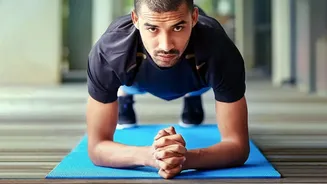
Core Stability: The Plank
A strong core is the foundation of almost every movement and helps protect your lower back. The plank is a simple but challenging exercise to build core strength and endurance. To perform a plank, place your forearms on the floor with your elbows directly under your shoulders. Extend your legs back, resting on your toes. Your body should form a straight, rigid line from your head to your heels—avoid letting your hips sag or rise too high. Engage your abdominal muscles by imagining you're bracing for a punch to the stomach. Hold this position for 20-30 seconds, rest, and repeat 2-3 times.
Posterior Power: Glute Bridges
Many of us spend our days sitting, which can lead to underactive glute muscles. The glute bridge targets your glutes and hamstrings, helping to improve posture and alleviate back strain. Lie on your back with your knees bent and feet flat on the floor, about hip-width apart. Place your arms by your sides. Squeeze your glutes and lift your hips off the floor until your body forms a straight line from your shoulders to your knees. Hold for a second at the top before slowly lowering back down. Perform 2 sets of 12-15 reps.
Cardio Burst: Jumping Jacks
Finally, it's great to include some cardiovascular work. Jumping jacks are a fantastic full-body exercise that elevates your heart rate while working your legs, shoulders, and core. Stand with your feet together and your arms at your sides. Simultaneously jump your feet out to the sides while raising your arms overhead. Immediately reverse the motion to return to the starting position. It’s a simple movement that improves coordination, builds stamina, and can even help strengthen bones. Incorporate them as a warm-up or do a few sets of 30-45 seconds to get your blood pumping.