





The Problem with the Chair
The human body is built for movement. When we spend the majority of our day in a seated position, we create a series of muscular imbalances that can lead to discomfort and long-term issues. Sitting causes certain muscles to shorten and tighten while others
become weak and inactive from lack of use. This process, sometimes called reciprocal inhibition, is where tight muscles on one side of a joint prevent the opposing muscles from activating properly. This is the root cause of many common aches and pains experienced by office workers.
Key Muscles in Crisis
Prolonged sitting primarily affects a few key areas. Your hip flexors, the muscles at the front of your hips, become short and tight from being in a constant state of flexion. In response, their opposing muscles, the glutes, essentially 'switch off' or become dormant, a condition sometimes called 'gluteal amnesia'. This forces other muscles, like those in your lower back and hamstrings, to compensate, leading to strain and pain. Meanwhile, as you lean towards your screen, your chest muscles tighten and your upper back muscles weaken, causing that familiar hunched posture and neck stiffness.
Fight Back with These 5 Desk Exercises
The good news is that you can counteract these effects with simple, quick movements throughout your day. Taking short breaks to stretch and activate underused muscles can make a significant difference. Aim to perform these exercises a few times a day to break the cycle of stillness and wake your body up.
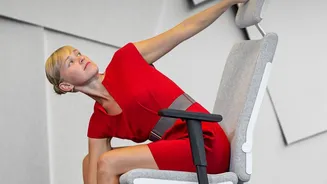
1. Seated Torso Twist
This stretch targets the thoracic spine, the part of your back that gets stiff and rounded from hunching. Sit tall at the edge of your chair with your feet flat on the floor. Place your left hand on your right knee and gently twist your upper body to the right, using the chair for support if needed. Hold for 20-30 seconds, breathing deeply, and then switch sides. This rotation helps restore mobility to your mid-back, relieving pressure on your neck and lower back.
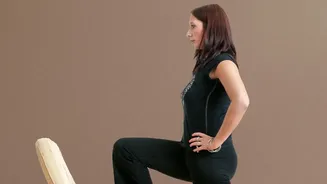
2. Standing Hip Flexor Stretch
To undo the shortening of your hip flexors, you need to stand up. Kneel on one knee (placing a towel underneath for comfort if needed) with your other foot flat on the floor in front of you, creating a 90-degree angle. Keeping your back straight, gently push your hips forward until you feel a stretch in the front of the hip of your kneeling leg. Hold for 20-30 seconds and repeat on the other side. This directly counteracts the hip tightness from sitting.
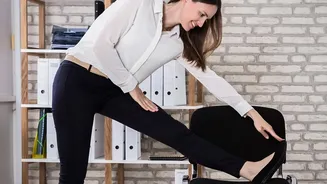
3. Seated Glute Stretch
To wake up dormant glutes, try this simple seated stretch. While sitting, cross your right ankle over your left knee. Sit up straight and gently lean forward at your hips, pressing down lightly on your right knee until you feel a stretch in your right glute. Hold the position for 20-30 seconds, making sure to keep your spine long. Switch legs and repeat. This helps improve hip mobility and reminds your glute muscles to activate.
4. Chest Opener Stretch
To combat slumped shoulders, this stretch opens up the chest. You can do this either sitting or standing. Clasp your hands behind your back, straighten your arms, and gently squeeze your shoulder blades together while lifting your chest. You should feel a stretch across the front of your shoulders and chest. Hold for 20-30 seconds while breathing normally. This helps pull your shoulders back and improves your overall posture.
5. Desk Plank or Push-Up
A desk plank is an excellent way to engage your core and upper body. Stand a few feet from your desk and place your hands on the edge, slightly wider than your shoulders. Walk your feet back until your body forms a straight line from your head to your heels. Engage your core and glutes and hold this plank position for 30 seconds. For an added challenge, perform 10-15 slow push-ups by lowering your chest toward the desk and pushing back up.