


Makhan Mishri from the Heartland of Braj
No Janmashtami celebration is complete without Makhan Mishri, a tribute to Lord Krishna’s childhood in the Braj region of Uttar Pradesh. Known fondly as 'Makhan Chor' or the butter thief, Krishna’s love for freshly churned white butter is legendary. This
prasad is the simplest and most significant of offerings, combining unsalted white butter with the delicate sweetness of rock sugar (mishri). The creamy texture of the butter paired with the slight crunch of the mishri is a divine experience, symbolizing purity, love, and the playful innocence of Bal Krishna. It's more than a dish; it's an edible memory of Krishna's pastoral childhood.
Dhaniya Panjiri: A Fasting Favourite of North India
In many North Indian households, devotees observe a fast on Janmashtami, and Dhaniya Panjiri is a customary prasad made for the occasion. Unlike typical panjiri made with wheat flour, this version uses roasted and ground coriander seed powder, making it a unique, aromatic, and gluten-free preparation suitable for those fasting from grains. The coriander powder is roasted in ghee until fragrant and then mixed with powdered sugar, chopped nuts, lotus seeds (makhana), and grated coconut. This wholesome sweet is not only offered to the deity but also used to break the fast at midnight, providing nourishment and energy.
Gopalkala: A Savoury Blend from Maharashtra
From Maharashtra comes Gopalkala, a savoury dish that reflects the Dahi Handi celebrations associated with the festival, known there as Gokulashtami. This nutritious and easy-to-make prasad is a mix of soaked flattened rice (poha), yoghurt (dahi), chopped cucumber, fresh coconut, and pomegranate seeds. The mixture is seasoned with a tempering of ghee, cumin seeds, and green chillies. It is believed to incorporate many of Lord Krishna's favourite ingredients and represents the meal he shared with his cowherd friends. Its blend of textures and tangy, savoury flavour makes it a refreshing offering.
Taler Bora: Bengal's Sweet Palm Fritters
In West Bengal, Janmashtami coincides with the season of the sugar palm fruit (tal). This availability gives rise to Taler Bora, deep-fried sweet fritters that are a beloved festive delicacy. The pulp of the ripe sugar palm is extracted and mixed with rice flour, semolina, grated coconut, and jaggery or sugar to form a thick batter. Small portions of this batter are then deep-fried until they turn a deep golden brown, resulting in a fritter that is wonderfully crispy on the outside and soft and flavourful within. The unique, sweet aroma of the palm makes this an unmistakable Janmashtami treat in the region.
Seedai and Murukku: Crunchy Delights from the South
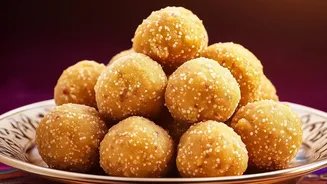
In South India, particularly Tamil Nadu, Krishna Jayanthi is celebrated with an array of crunchy, fried snacks. Two of the most important are Seedai and Murukku. Seedai are tiny, deep-fried balls made from rice flour. They come in two varieties: Uppu (salt) Seedai, which is savoury, and Vella (jaggery) Seedai, which is sweet. Making them is a cherished tradition, though it requires care as they can sometimes burst while frying. Murukku, another savoury snack, is made from a dough of rice flour and urad dal flour, which is pressed into spiral shapes and deep-fried to crispy perfection. These snacks, along with sweet poha preparations, are lovingly offered to Lord Krishna.