





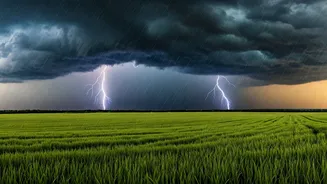



What's Happening and Where?
The IMD has issued alerts for several parts of North India, predicting thunderstorms accompanied by lightning and gusty winds. [5, 8] These pre-monsoon activities are expected to affect a wide area, including Delhi-NCR, Punjab, Haryana, Chandigarh, Rajasthan,
and Uttar Pradesh, through June 26th. [8, 14, 17] Wind speeds could reach 40-50 kmph, gusting up to 60 kmph in some areas. [8, 14] The alert extends to other states as well, including Jammu and Kashmir, Himachal Pradesh, and Uttarakhand, which may see intermittent rainfall. [5, 17] This weather pattern is influenced by a Western Disturbance interacting with moisture-laden winds, creating atmospheric instability. [9, 12]
Understanding the Risks
While the accompanying rain may provide a welcome respite from the recent high temperatures, the sudden and intense nature of these storms poses several dangers. [7, 13] Strong winds can uproot trees and damage infrastructure, leading to power outages and blocked roads. [19] Lightning remains a major weather-related hazard, particularly for those in open areas. [19] Commuters should also be prepared for potential traffic disruptions and waterlogging in low-lying areas, especially during peak storm hours. [7] In the past, similar weather events have caused significant disruption and damage, highlighting the need for caution. [19]
Safety Indoors: Your Home Checklist
When a thunderstorm warning is issued, the safest place to be is indoors. [23] However, there are still crucial precautions to take. Stay away from windows and doors. [20, 22] It's advisable to unplug non-essential electrical appliances, including computers and air conditioners, to protect them from potential power surges. [20, 22] Avoid using corded phones and any contact with water—this means no showering, washing dishes, or doing laundry, as lightning can travel through plumbing. [21, 22] Also, avoid leaning on concrete walls or lying on concrete floors, as the metal rebar within them can conduct electricity. [20, 24]
Staying Safe Outdoors and on the Road
If you are caught outside, seek shelter in a sturdy, enclosed building immediately. If that's not possible, a hard-top vehicle with the windows closed is the next best option. [23] Avoid taking shelter under isolated trees, in picnic areas, or in small sheds. [20] If you are in a completely open area, find a low spot and crouch down, making yourself the smallest target possible, but be mindful of potential flash flooding. [20] It is critical to get out of and away from bodies of water. [23] For those driving, be aware that heavy rain can reduce visibility and create dangerous road conditions. Never attempt to drive through flooded roads. [22]
How to Differentiate Between Alerts
It's helpful to understand the official terms used by weather agencies. A 'Severe Thunderstorm Watch' means that conditions are favorable for severe weather to develop. This is the time to prepare and review your safety plans. [23, 24] A 'Severe Thunderstorm Warning' means that a severe thunderstorm has been spotted or detected by radar, and you should take immediate action and seek shelter. [23, 24] Keeping these distinctions in mind can help you react appropriately.
Stay Informed with Official Sources
During rapidly changing weather events, it is crucial to rely on official and credible sources for information. Monitor updates from the India Meteorological Department (IMD) through their website and official social media handles. Local news channels and radio will also broadcast the latest warnings and public safety information. [22] Using weather apps that provide real-time nowcasts for localized updates can also be extremely helpful for planning your day and staying out of harm's way. [7]