





Start With a Ruthless Declutter
The first step to a minimalist closet has nothing to do with buying storage bins. It starts with reducing what you need to store. Empty your entire closet so you can see every single item you own. Create three piles: keep, donate, and discard. Be honest
and ruthless. If an item hasn't been worn in the last year, doesn't fit, or doesn't make you feel good, it's time to let it go. The goal is to curate a collection of clothes you genuinely love and use, which naturally makes organizing easier.
Think Vertically
When you can't build outwards, build upwards. Most small closets have underutilized vertical space. You can often double your hanging capacity by installing a second rod for shorter items like shirts and skirts, leaving the other for longer dresses and coats. Adding shelves that extend toward the ceiling is perfect for storing items you don't use daily, such as seasonal wear or special occasion accessories. Keep a small, foldable stepladder nearby to make sure these high-up items remain accessible.
Switch to Slim Hangers
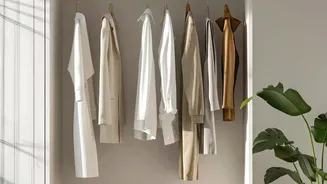
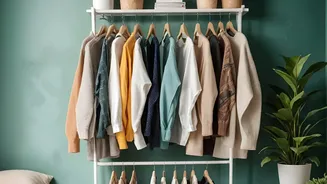
One of the quickest and most impactful changes you can make is swapping out your bulky, mismatched hangers. Invest in a uniform set of slim, non-slip hangers, like the popular velvet ones. Their slender profile takes up significantly less space on the rod, allowing you to fit more clothing without it being crammed together. This not only saves space but also creates a visually clean and cohesive look that is central to minimalist design.
Use the Power of Zoning
Once your items are decluttered, group them into logical categories. Put all your shirts together, your trousers together, and so on. Some people prefer to organize further by colour. This 'zoning' system makes it much faster to find what you're looking for and, just as importantly, easier to put things away. Your most frequently worn items should be in the most accessible, eye-level spots. This simple habit of grouping like with like is the foundation of a sustainable organization system.
Don't Forget the Door
The back of your closet door is prime real estate for storage. An over-the-door organizer with pockets or hooks can be a game-changer for holding shoes, scarves, belts, and other accessories that might otherwise end up in a messy pile on the floor. This keeps smaller items visible and within easy reach without taking up valuable shelf or hanging space.
Contain and Label Everything
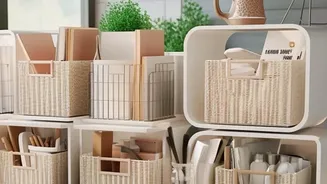
For folded items on shelves, use bins and baskets to prevent stacks from toppling over. Clear or wire-mesh containers are great because they let you see what's inside, reducing the need to pull everything out. Fabric or woven baskets can offer a softer aesthetic. For opaque bins, especially those on high shelves, use clear labels. This simple step transforms chaotic shelves into a tidy, easy-to-navigate library of your belongings.
Implement a Seasonal Rotation
Keep your daily-use closet from being overwhelmed by storing off-season items elsewhere. Bulky winter coats and sweaters don't need to take up prime space in the summer. Use vacuum-sealed bags to shrink down bulky items and store them under a bed or in another storage area. This seasonal swap not only frees up a significant amount of space but also forces you to review your wardrobe twice a year, providing a regular opportunity to declutter.