




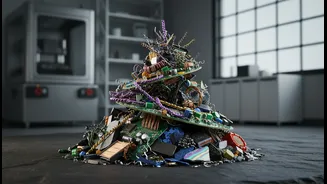


From Scrap Heap to Strategic Asset
Critical minerals like lithium, cobalt, nickel, and rare earth elements are the invisible bedrock of modern life, powering everything from smartphones and EV batteries to fighter jets. For India, which is 100% import-dependent for some of these key resources,
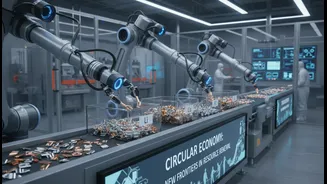
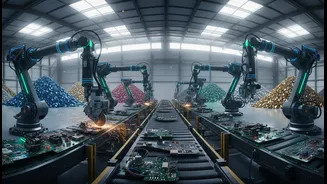
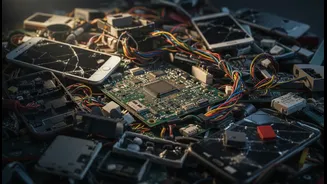
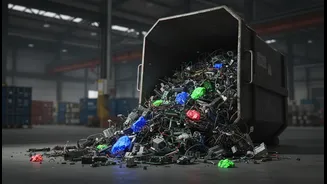
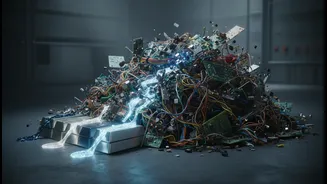
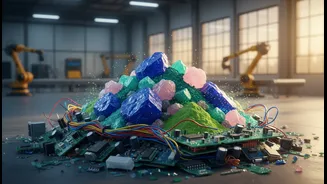
securing a stable supply is a matter of national and economic security. The government has identified 30 such critical minerals and is pursuing a multi-pronged strategy to achieve self-reliance. While new mining projects are one part of the plan, the most immediate opportunity lies in 'urban mining'—extracting these valuable materials from the country's massive and growing pile of e-waste. India, one of the world's top e-waste producers, generates nearly 1.75 million tonnes of it annually, a figure that is rapidly increasing. This waste is no longer just a disposal problem; it is now viewed as a rich, domestic source of strategically vital materials.
The Rise of Circular Economy Careers
The push to formalise e-waste recycling is fostering a new generation of green jobs that go far beyond basic scrap handling. The burgeoning circular economy requires a skilled workforce with expertise in diverse fields. New career tracks are emerging for process engineers who design and oversee extraction methods, and for chemists who specialise in battery materials and recycling technologies. Beyond the plant floor, the sector needs professionals in logistics and supply chain management to handle the collection of e-waste, as well as policy analysts and consultants to navigate complex regulations like the Extended Producer Responsibility (EPR) framework. As companies from startups to established players like Maruti Suzuki invest in circularity, roles in business development, sustainability regulation, and digital marketing are also opening up, creating a vibrant ecosystem of employment opportunities.
The Technical Hurdles of Extraction
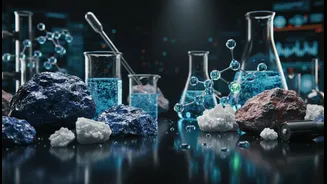
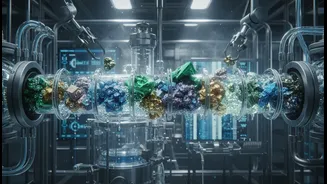
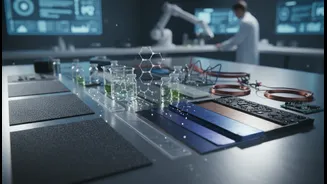
Extracting minerals from discarded electronics is a complex scientific challenge. Different products contain a mix of materials, and battery chemistry, in particular, dictates the recycling process. Lithium-ion batteries, which dominate the EV and electronics markets, come in various formulations like Lithium Iron Phosphate (LFP) and Nickel Manganese Cobalt (NMC). Each requires specific hydrometallurgical or pyrometallurgical processes to safely separate and recover high-purity lithium, cobalt, and nickel. Process engineers work on refining these techniques to maximise recovery rates, which can exceed 90% for metals like cobalt and nickel under optimal conditions. However, India still faces a gap in large-scale, low-impact technologies for this kind of advanced refining, which presents both a challenge and an opportunity for domestic R&D and innovation.
The Main Caveat: The Informal Sector's Shadow
The single biggest caveat to India's urban mining ambitions is the overwhelming dominance of the informal sector. Over 90% of e-waste is still collected and dismantled in informal workshops where primitive methods are used to extract easily saleable metals like copper and aluminium. These practices not only leave valuable critical minerals untapped but also pose severe health hazards to workers and cause significant environmental pollution. While formal recycling facilities exist, they often struggle with a reliable supply of feedstock because so much of it is diverted to the informal chain. Low collection rates for e-waste and batteries, often below 10%, further strain the formal sector. Government policies like the Battery Waste Management Rules and incentive schemes aim to formalise the industry, but bridging the gap between policy and on-ground implementation remains the core challenge.