What is a White Dwarf?
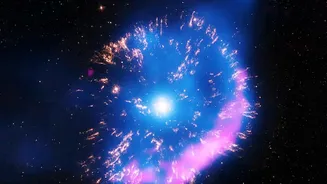
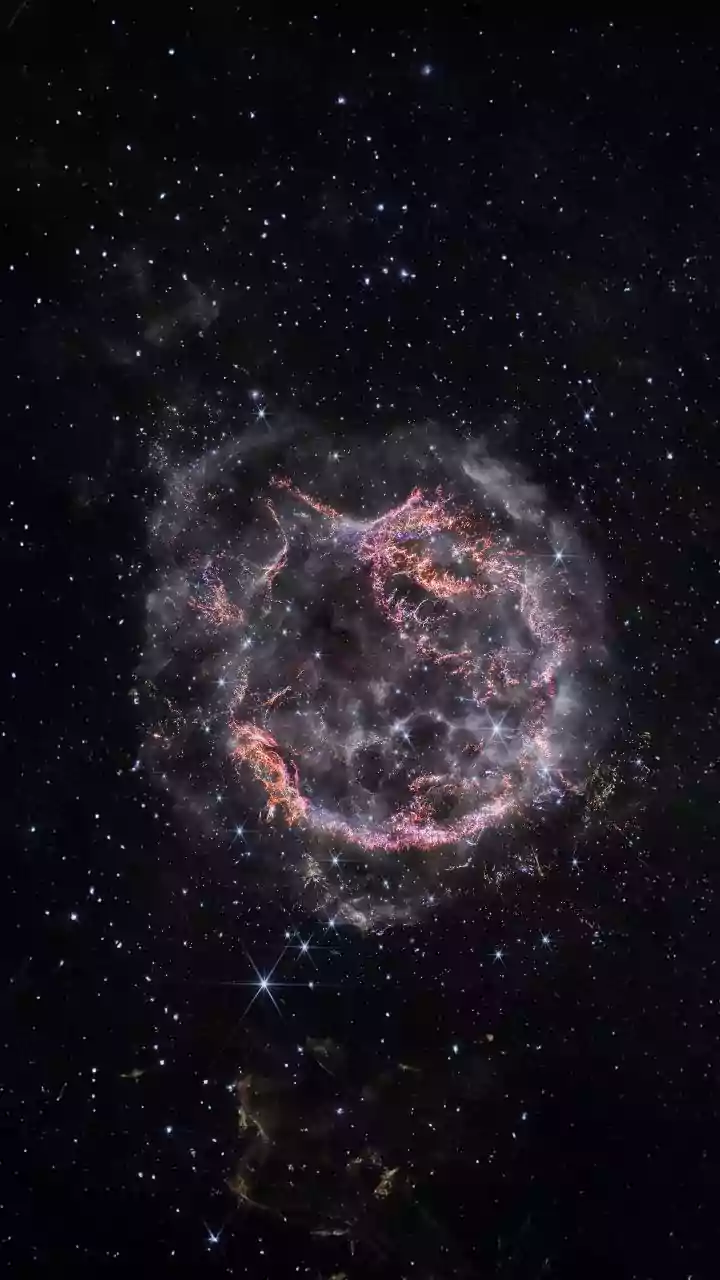
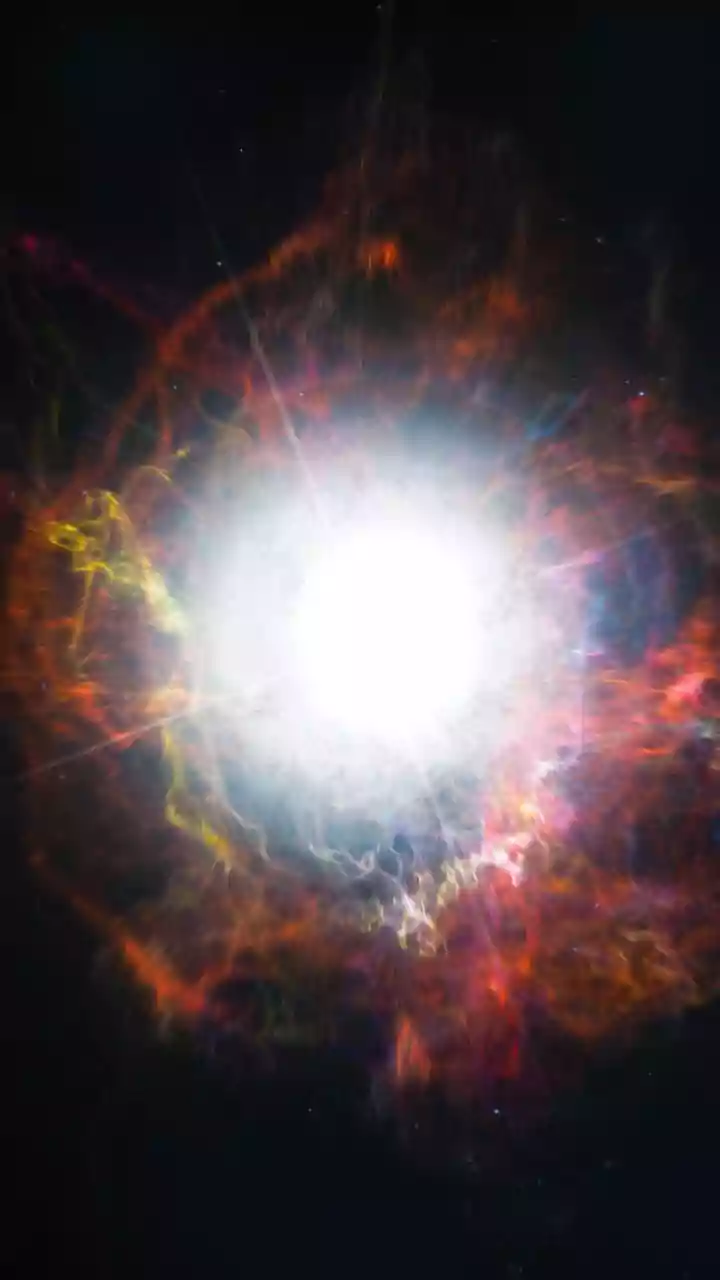
Imagine a star that has burned through all its fuel. After swelling into a massive red giant, a star like our sun will shed its outer layers, leaving behind its incredibly hot and dense core. This stellar remnant is a white dwarf. It no longer generates
heat through nuclear fusion but glows with leftover energy, slowly cooling over billions of years. A single teaspoon of its material would weigh as much as an elephant on Earth. This extreme environment is the final chapter in a star's life, and it was long thought to be an unlikely place to find surviving or new planets. The process of a star becoming a red giant is destructive, often engulfing and destroying any planets in close orbits.
First vs. Second-Generation Planets
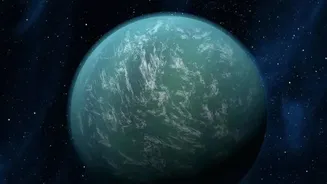
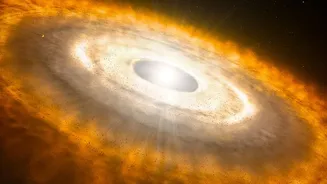
Planets in our solar system, including Earth, are 'first-generation' planets. They formed from the same disc of gas and dust that created our sun billions of years ago. Any such planets orbiting a star that becomes a white dwarf would have to survive the star's violent red giant phase. While some might survive if their orbit is wide enough, many are destroyed. A 'second-generation' planet is a different beast altogether. It's a world born from the ashes of the dead star. The theory is that after the star has shed its outer layers, a new disc of debris can form around the white dwarf, and from this material, a whole new planet can condense. Until recently, this was largely a theoretical concept.
The Trail of Indirect Clues
Astronomers cannot see this potential planet directly. Instead, the claim rests on interpreting clues hidden in the light from the white dwarf, a technique common in exoplanet science. In a recent discovery concerning the white dwarf HS 0209+0832, scientists re-examined data from the Hubble Space Telescope that was over two decades old. They found the white dwarf's atmosphere contained surprisingly high levels of unusual elements, including niobium, which is typically forged inside dying stars. The presence of such elements suggests the white dwarf is 'accreting' or feeding on material from an external source. The specific chemical signature does not match typical asteroids, leading to the hypothesis that it's raining down from an evaporating, newly formed giant planet.
Piecing the Evidence Together
The chemical clues provided a compelling 'why', but scientists still needed more. Further evidence came from NASA's Transiting Exoplanet Survey Satellite (TESS), which monitors stars for tiny, regular dips in brightness that can indicate an orbiting planet. TESS observations of HS 0209+0832 revealed a faint, repeating signal every 4.4 days. This periodicity is consistent with a Jupiter-sized gas giant orbiting extremely close to the hot white dwarf. The theory is that the intense radiation from the star is stripping material from the planet's atmosphere, creating a disc of gas and dust that is then pulled onto the white dwarf's surface. This is where the strange chemical signatures, like niobium, are thought to come from. It’s a complex chain of reasoning where one piece of indirect evidence supports another.
Why This Potential Discovery Matters
If confirmed, this would be the first evidence of a second-generation planet orbiting a white dwarf, proving that planetary systems can have a second act. It challenges our established ideas about when and where planets can form. It suggests that the end of a star's life might not be the end of planetary formation, but rather the beginning of a new, different chapter. This opens up the possibility that countless other white dwarfs in our galaxy could host these 'phoenix' worlds. While this specific candidate is a gas giant being blasted by radiation, the discovery raises intriguing possibilities. Scientists note that as a white dwarf cools, its habitable zone—the region where liquid water could exist—becomes stable for billions of years, potentially offering a long-term home for any rocky second-generation planets that might form there.