






The Great Monsoon Myth
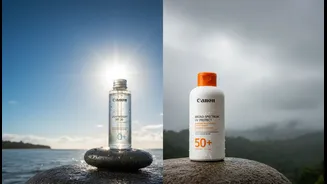
One of the most common and damaging skincare myths in India is that sunscreen is unnecessary on cloudy or rainy days. The cool, overcast weather creates a false sense of security. While clouds do block a significant amount of visible sunlight and heat,
they are far less effective at blocking harmful ultraviolet (UV) radiation. In fact, studies show that up to 80% of UV rays can penetrate through cloud cover, reaching your skin whether you're commuting to work or running errands between showers. This constant, low-level exposure is a primary driver of long-term skin concerns prevalent in India, such as pigmentation, tanning, and premature ageing.
Understanding the Invisible Threat: UVA vs. UVB
To understand why cloudy-day protection is so critical, it’s important to know the difference between the two main types of UV rays that reach us. UVB rays are the 'burning' rays; they have shorter wavelengths, cause sunburn, and are a primary cause of skin cancer. Clouds do block a good portion of these, which is why you're less likely to get a sunburn on an overcast day. UVA rays, however, are the 'ageing' rays. They have a longer wavelength that allows them to penetrate deeper into the skin, breaking down collagen and leading to wrinkles and dark spots. UVA rays make up about 95% of the UV radiation reaching Earth, and they pass through clouds and even window glass with ease. For Indian skin, which is often more prone to pigmentation, this year-round UVA exposure is a major concern.
Decoding Sunscreen Labels: SPF and PA+
When choosing a sunscreen, two ratings matter. SPF, or Sun Protection Factor, primarily measures protection against UVB (burning) rays. An SPF of 30 blocks about 97% of UVB rays, while SPF 50 blocks about 98%. But SPF tells you nothing about UVA protection. For that, you need to look for the PA rating, which stands for 'Protection Grade of UVA'. This system, denoted by plus signs (e.g., PA+, PA++, PA+++), is crucial for preventing tanning and pigmentation. For the intense Indian sun, even during monsoon, dermatologists recommend a 'broad-spectrum' sunscreen with at least SPF 30 and a rating of PA+++ or the highest available, PA++++. This ensures you're shielded from both types of damaging rays.
Choosing Your Monsoon Armour
The biggest complaint about sunscreen during the monsoon is that it feels heavy, sticky, and greasy in the high humidity. The key is to switch up your formula. Heavy cream-based sunscreens that worked in the dry winter will feel uncomfortable. Instead, opt for lightweight, non-comedogenic (won't clog pores) formulas. Gel-based, serum-style, or fluid sunscreens are excellent choices as they absorb quickly without leaving a greasy film. Look for products described as 'matte-finish' or 'oil-free'. Also, consider a water-resistant formula. While no sunscreen is truly waterproof, a water-resistant one will hold up better against sweat and the occasional splash of rain, though reapplication is still necessary.
Application and Reapplication Rules
How you apply sunscreen is just as important as which one you use. Apply a generous amount about 15-20 minutes before you step out to allow it to form a protective layer. The most crucial and often-forgotten step during the monsoon is reapplication. Rain, sweat, and simply wiping your face with a handkerchief can remove your sunscreen, compromising its effectiveness. The rule of thumb is to reapply every two to three hours if you are outdoors, sweating, or have been caught in the rain. If you're indoors most of the day but sit near a window, a single reapplication is a good idea. For touch-ups on the go or over makeup, sunscreen sticks and sprays can be a convenient option.