


The End of Painstaking Manual Labour
Not long ago, restoring a damaged photograph was a job for a skilled specialist. It involved hours of meticulous work in software like Adobe Photoshop, using tools like the clone stamp and healing brush to manually paint over scratches, tears, and spots,
pixel by painstaking pixel. This process required technical skill, artistic judgment, and a significant amount of time, often costing anywhere from a few hundred to several thousand rupees per photo depending on the damage. For anyone with a large family archive, restoring everything was simply unrealistic. Today, that barrier has all but vanished. The rise of AI-powered plugins and standalone apps has automated the most time-consuming parts of the process, making high-quality restoration accessible to anyone with a computer or smartphone.
How AI Actually Restores a Photograph
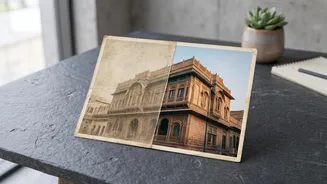
So, what is happening when you upload a faded scan and click ‘enhance’? These AI tools use deep learning models trained on millions of images—both damaged and pristine. This vast library teaches the AI to recognise patterns of damage, such as cracks, discolouration, and blurriness. When it analyses your photo, it doesn't just guess; it makes a highly educated prediction about what the missing or faded information should look like. Popular tools like Remini, Topaz Photo AI, and Adobe Photoshop's own Neural Filters use different AI models to de-noise, sharpen faces, repair scratches, and even plausibly colourise black-and-white images in seconds. The result is often a transformation that once required days of effort, now delivered in the time it takes to make a cup of tea.
Speed and Quality: The Irresistible Combination
For young creators, who value both efficiency and aesthetic quality, the appeal is obvious. The primary drivers are speed and cost. Instead of a week-long project, restoring a photo becomes an instantaneous, often one-click, activity. This allows them to tackle entire albums, not just one or two precious prints. Furthermore, the quality of modern AI restoration can be remarkable. These tools excel at fixing common issues like fading, minor scratches, and blur with a consistency that can be difficult for a novice human editor to achieve. While professionals still argue that manual retouching is superior for severely damaged photos with missing sections, AI provides results for moderately damaged images that are more than good enough for sharing on social media or creating new family prints.
Connecting with Heritage in the Digital Age
Beyond the technical prowess, there's a deeper cultural trend at play. Gen Z and Millennials are showing a profound interest in understanding their family history and identity. In an era of ephemeral digital content, the tangible connection to one's roots offers a sense of grounding. Restoring a grandparent's photograph is not just a technical exercise; it's an act of connection. It bridges a generational gap, turning a faded, distant ancestor into a relatable person. Young creators, as digital natives, are uniquely positioned to perform this service for their families, using their skills to preserve a legacy that might otherwise be lost to time.
The Creative and Ethical Questions
However, this powerful technology is not without its controversies. The line between restoration and fabrication can be thin. An AI might generate details that were never there, subtly altering a person's appearance to fit its training data, which often has a Western bias. This can lead to images that look cleaner but less authentic, potentially erasing the very character and history the user intended to preserve. Responsible users and archivists note that these AI-generated images should be seen as interpretations, not historical documents. The consensus is to enhance, but not erase; to restore, but not rewrite the truth of the original moment.