





The Core of the Matter: Stability vs. Power
The fundamental difference between these two activities lies in how they engage your core. Stand-up paddleboarding is a game of constant, subtle adjustments. Your abdominal muscles, lower back, and hips work nonstop to keep you balanced on an unstable
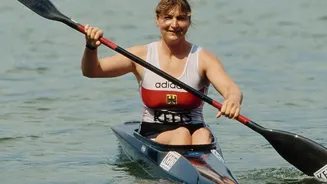
surface. This makes it a fantastic workout for building deep stabilizing strength and improving your posture. Kayaking, on the other hand, is about generating rotational power. While seated, a proper stroke involves twisting your torso to pull the double-bladed paddle through the water. This heavily targets your obliques and lats, building powerful, dynamic core strength rather than the isometric hold required for SUP.
Calorie Burn: Intensity Is Everything
Many people want to know which activity burns more calories, but the truth is, your effort level matters more than your equipment. For a 150-pound person, a leisurely hour of paddleboarding might burn around 430 calories, while a similar-paced kayaking session burns about 358. However, these numbers can change dramatically with intensity. A vigorous kayaking session can burn over 700 calories in an hour, while SUP in windy or wavy conditions can become a very high-intensity workout. Ultimately, a relaxed paddle with frequent breaks won't match an aggressive workout in either sport. Both offer excellent potential for cardiovascular exercise that raises your heart rate and improves endurance.
Upper Body Focus: A Tale of Two Strokes
This is where the two sports really diverge. Kayaking is a classic 'pull' exercise. Each stroke recruits the large muscles of your back (lats), shoulders, and biceps to pull the boat through the water. It's brilliant for building upper body and back strength. Stand-up paddleboarding provides a more balanced upper body workout. The stroke involves reaching forward, planting the paddle, and then pulling it back. This engages the lats and back, but also works the shoulders and triceps as you push down on the paddle handle. While kayaking is more focused on building pulling strength, SUP engages a slightly wider range of muscles through the entire motion.
Lower Body Engagement: A Clear Winner
If you're looking to work your lower body, stand-up paddleboarding is the undeniable champion. To stay balanced, your legs, glutes, and feet are constantly engaged in an isometric hold, with your knees slightly bent. This continuous activation provides a solid workout for your entire lower body and deep core stabilizers. In a kayak, your legs are far less involved. While they play a role in bracing and helping with torso rotation, they are mostly in a seated position and don't receive a significant strength workout. So, for a true full-body experience that includes the legs, SUP has a clear advantage.
Accessibility and Learning Curve
For many beginners, kayaking feels more intuitive and stable at first. Being seated with a low center of gravity makes it less intimidating, and most people can get moving with little instruction. Paddleboarding presents the initial challenge of balance, which can take a little practice. However, because you can also kneel or sit on a paddleboard, it offers versatility. Both are considered low-impact activities, making them gentle on the joints and suitable for a wide range of fitness levels.