




What is a Super-Earth?
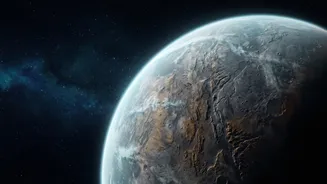
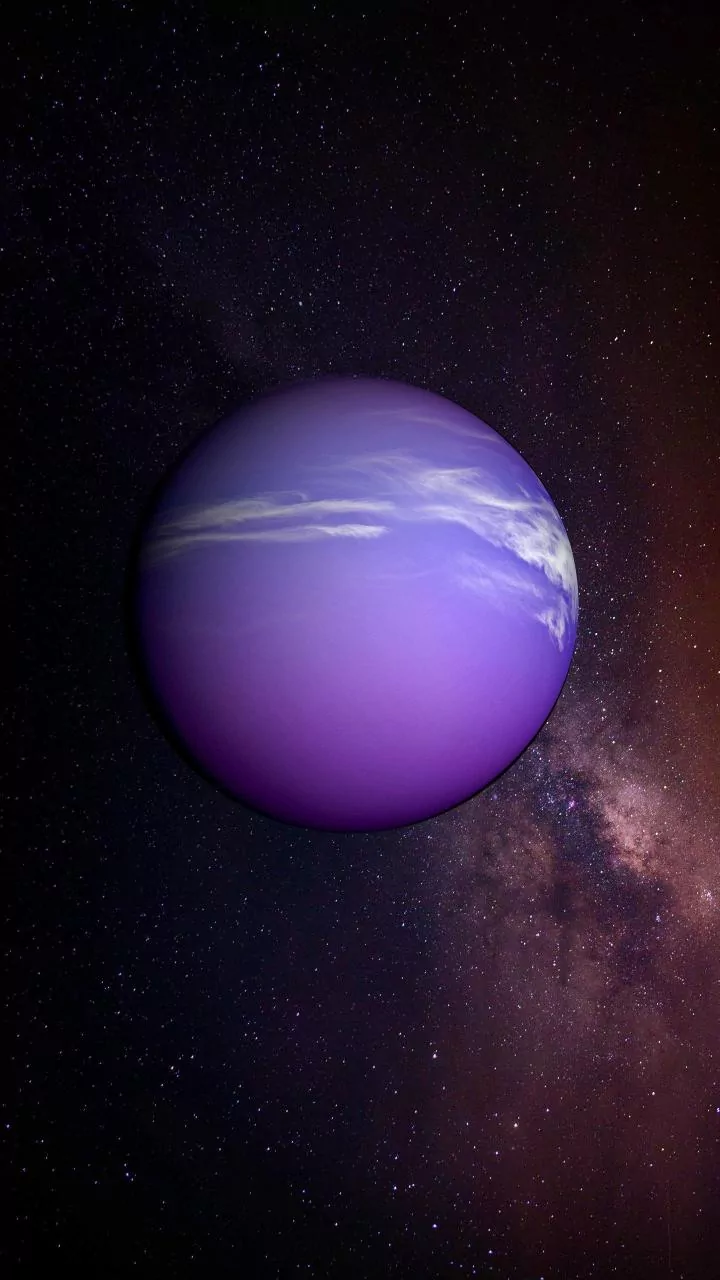
Before diving into the discovery, it helps to understand what scientists are looking at. A 'super-Earth' is a type of exoplanet—a planet outside our solar system—that is more massive than Earth but lighter than our ice giants like Neptune. These planets
are surprisingly common in our galaxy, but our own solar system doesn't have one. They can be made of rock, gas, or a combination, and the name refers only to their size and mass, not whether they are habitable. Because of their sheer variety, from scorching lava worlds to frozen ice balls, they represent a fascinating frontier in astronomy.
A Breakthrough Detection
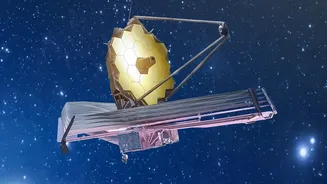
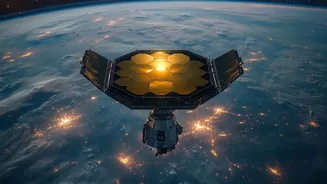
The latest buzz surrounds a rocky exoplanet named 55 Cancri e, located about 41 light-years away. Researchers using the James Webb Space Telescope (JWST) have found the best evidence to date of a substantial atmosphere around this super-Earth. The data indicates the presence of gases like carbon dioxide and, crucially, water vapour. This is a monumental achievement because detecting an atmosphere on a rocky planet outside our solar system has been a long-standing goal for astronomers. It proves that these planets, even those orbiting very close to their star, can hold onto a gaseous envelope, which is a key ingredient for potential habitability.
Not Water for Life, But Still Huge
It's important to temper expectations. 55 Cancri e is not a new Earth. The planet is incredibly hot, with surface temperatures estimated around 1540 degrees Celsius—hot enough to melt rock. So, the water vapour signal isn't from a pleasant, life-sustaining ocean. Instead, scientists believe the planet is covered in a global magma ocean. The atmosphere, including the water vapour and carbon dioxide, is likely being continuously replenished by gases bubbling out of this molten rock interior. This is known as a 'secondary atmosphere'. While this world is far too hot to be habitable, the discovery is critical. It provides a real-world laboratory for studying the complex interactions between a rocky planet's interior, surface, and atmosphere, offering clues to how Earth and Venus may have evolved in their fiery youth.
How Webb Decodes Alien Air
Detecting these gases from light-years away is a technological marvel. JWST uses a technique called spectroscopy. When a planet passes in front of its star, the starlight filters through the planet's atmosphere. Different gas molecules absorb specific wavelengths of light, leaving a unique chemical fingerprint in the light that reaches the telescope. In the case of 55 Cancri e, JWST also measured the planet's thermal emission—the heat it gives off. The dayside was cooler than expected for a bare rock world, suggesting an atmosphere was present to distribute the heat. By analysing these incredibly subtle signals, scientists can piece together the composition of a distant world's air.
The Path Forward in a New Era
The discovery at 55 Cancri e, along with similar tentative findings at other rocky worlds like GJ 486 b, represents a new chapter in exoplanet science. For years, these planets were just dots of data—mass, radius, and orbit. Now, with the power of JWST, we are beginning to understand their geology and climatology. The focus will now be on finding more rocky planets in the 'habitable zone'—the orbital range where liquid water could exist on a planet's surface—and pointing Webb's powerful mirror in their direction. Each detection, even on an inhospitable world, refines our understanding and hones the techniques needed for the ultimate prize: finding a rocky planet with an atmosphere that could support life.