


A Giant Awakens
At the center of most large galaxies, including our own Milky Way, lurks a supermassive black hole. For most of their lives, these behemoths are relatively quiet, their immense gravity simply holding court over orbiting stars. But sometimes, they 'activate'.
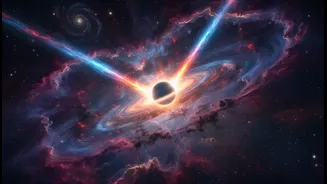
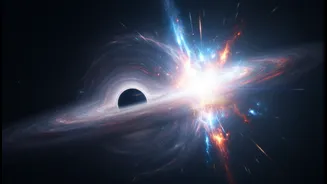
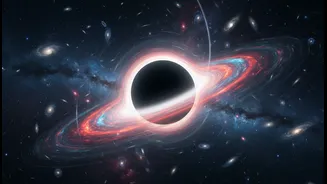
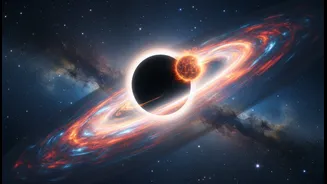
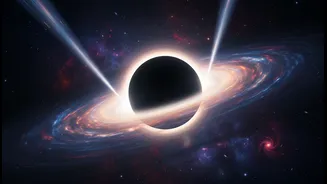
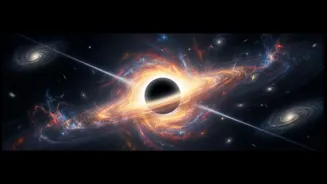
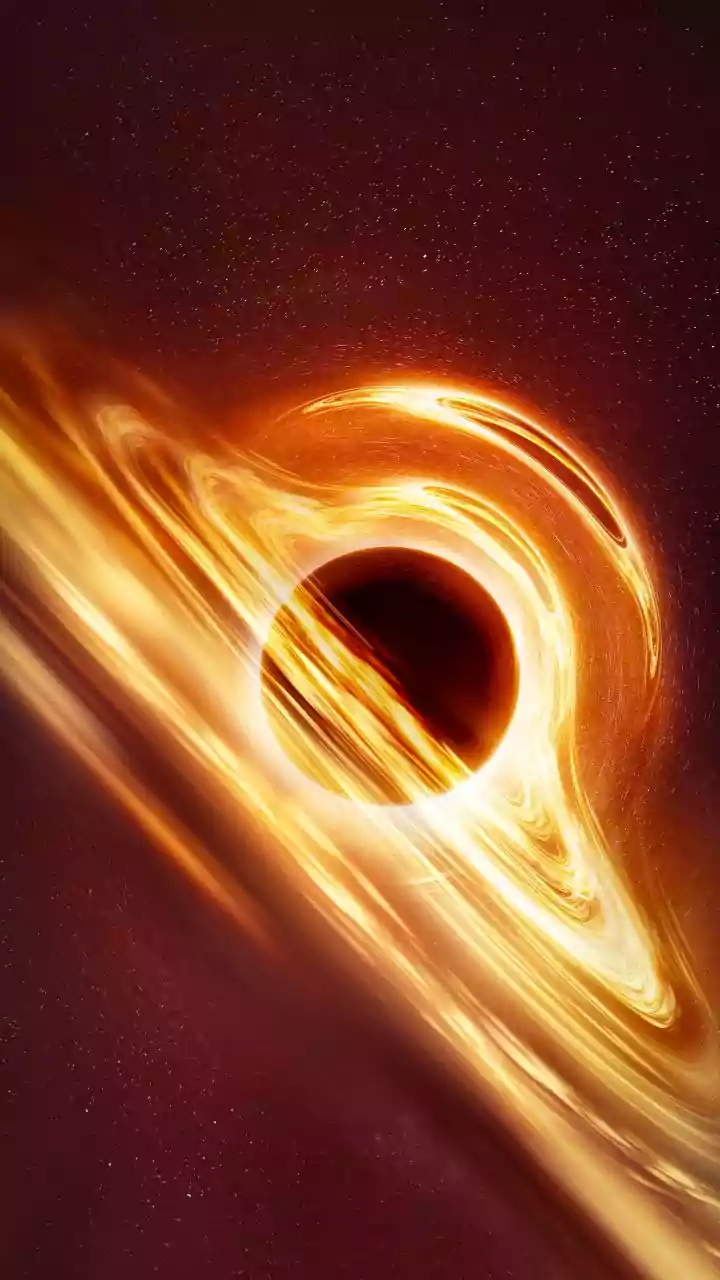
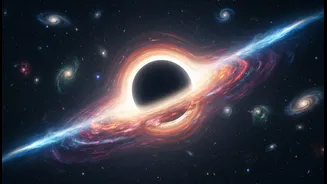
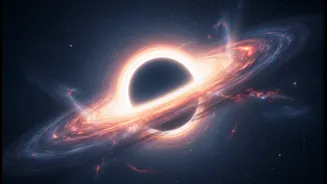
This happens when a star or a large cloud of gas strays too close and gets pulled in by the black hole's gravity. The material doesn't fall in directly but forms a swirling, superheated whirlpool called an accretion disk. Recently, a global team of astronomers watched this exact process unfold in a distant galaxy, a first-of-its-kind observation of a black hole's sudden awakening.
Seeing the Unseeable in Real Time
Black holes, by definition, don't emit light, so we can't see them directly. We observe them by the effects they have on their surroundings. In this case, as the unfortunate gas cloud was torn apart and began to spiral into the black hole, the accretion disk flared to life, glowing intensely across the electromagnetic spectrum, from radio waves to X-rays. What makes this event so revolutionary is the 'real-time' nature of the data. Using a coordinated network of telescopes on the ground and in space, scientists were able to capture the activation as it happened, rather than studying the aftermath years later. This is like switching from looking at old photographs to watching a live video feed of a cosmic phenomenon, providing a continuous stream of information as the event unfolded.
Solving the Galaxy Growth Puzzle
One of the great mysteries in cosmology is why massive galaxies seem to stop making new stars. The leading theory is a process called 'feedback', where the energetic output from an active black hole effectively sterilizes the host galaxy, blowing away or heating up the cold gas needed for star formation. Until now, this was just a model. The new real-time data shows this feedback mechanism in action. Astronomers could measure the immense blast of radiation and high-speed particles being ejected from the black hole's vicinity and correlate it with changes in the surrounding galactic environment. It's the first direct observational proof of how a black hole can act as a cosmic thermostat, regulating the growth of its entire galaxy.
The Engine of Cosmic Jets
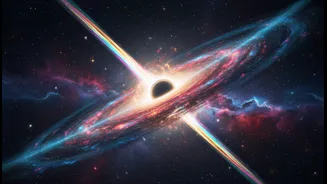
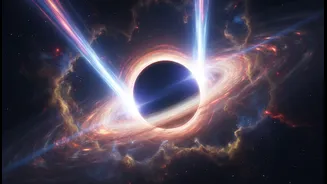
Another puzzle this observation helps clarify is the formation of colossal jets of plasma that shoot out from some active black holes at nearly the speed of light. These jets are thought to be launched by twisted magnetic fields in the inner region of the accretion disk, but the exact mechanism has been hard to pin down. By capturing the moment the accretion disk formed and the jet ignited, astronomers have a complete dataset of the magnetic field configuration, temperature, and material flow. This provides an unprecedented blueprint for how these powerful cosmic engines work, allowing scientists to test and refine their theoretical models with concrete, time-resolved data.
A Glimpse into the Dawn of Time
Observing this event also provides a window into the early universe. The first galaxies were lit up by intensely bright objects called quasars, which are powered by the most active supermassive black holes. These ancient quasars played a crucial role in the universe's evolution by reionizing the cosmic gas, making the universe transparent to light. By studying a newly activated black hole up close, astronomers get a local analogue for what might have happened on a grand scale billions of years ago. It helps them understand how the very first black holes grew so massive so quickly, a problem that has long puzzled cosmologists.