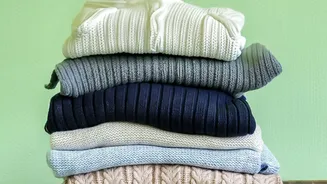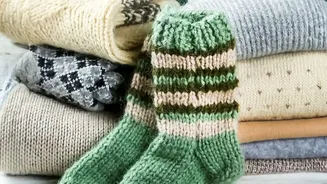

First, A Thorough Inspection
Before you do anything else, give your woollens a careful once-over in good light. You're primarily looking for any signs of damage from clothes moths. The culprits are the larvae, not the adult moths, which feed on natural fibres like wool. Look for small,
irregular holes, which can often be hidden under collars or in the seams. You might also spot silky, web-like threads or tiny, whitish cocoons attached to the fabric. These are signs of a past or present infestation that needs addressing. If you find small holes, they can often be repaired with a needle and thread, but it's crucial to do this before washing to prevent them from getting bigger. A thorough inspection sets the stage for all subsequent care and helps you decide if a garment needs mending, a simple refresh, or a deep clean.
Airing Out for Freshness
Often, woollens that have been stored correctly don't need a full wash. Wool is a natural fibre with self-cleaning properties, and simply airing it out can do wonders. If your garments smell a bit stale or musty—a common issue if they were stored in a humid space or put away with residual moisture—hang them outdoors in a shaded, dry area for several hours. Direct sunlight can cause colours to fade, so shade is always the safer option. This simple, non-invasive step allows odours to dissipate and can often be enough to make your sweaters and shawls feel fresh and ready to wear. For more stubborn musty smells, placing an open container of baking soda or activated charcoal near the airing garment can help absorb unwanted scents.
The Gentle Art of Washing
If airing isn't enough, a gentle wash is the next step. Always check the care label first. While some modern woollens are machine-washable on a dedicated wool cycle, hand-washing is almost always the safest method. Fill a basin with cool or lukewarm water—never hot, as it can cause wool to shrink or felt. Add a small amount of a pH-neutral, wool-specific detergent. Submerge the garment and gently squeeze the water through it. Avoid rubbing, twisting, or wringing the fabric, which can cause damage and stretching. Let it soak for about 10 minutes before rinsing thoroughly with water of the same temperature to avoid shocking the fibres. A final rinse in cool water can help close up the fibres.
Drying Wool Correctly
How you dry your woollens is just as important as how you wash them. Never hang a wet wool sweater or knit garment on a line or hanger. The weight of the water will stretch the fibres and pull it out of shape permanently. The correct method is to lay the garment flat to dry. First, gently squeeze out excess water without wringing it. Then, place the item on a clean, dry towel. Roll the towel up with the garment inside, like a swiss roll, and press gently to absorb more moisture. Finally, unroll it and lay the woollen flat on a fresh, dry towel or a mesh drying rack, reshaping it as needed. Keep it away from direct sunlight and heat sources to ensure it dries evenly and without damage.