









Why Thunder Is So Terrifying
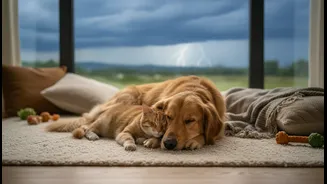
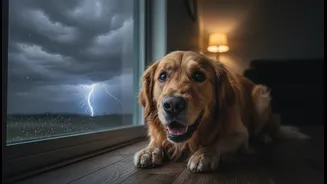
For many cats and dogs, a thunderstorm is not just background noise; it's a multi-sensory assault. Their hearing is far more acute than ours, making the low-frequency rumbles of thunder feel overwhelming and inescapable. Beyond the sound, pets can also
be sensitive to the changes in barometric pressure and static electricity that precede a storm, which can cause discomfort. This explains why your pet might start acting anxious long before you hear the first clap of thunder. Flashes of lightning can also be disorienting. This combination of loud noises, vibrations, and atmospheric changes triggers a fight-or-flight response, making them feel trapped and terrified in their own home.
Recognising the Silent Signs of Stress
Not all storm-related anxiety involves dramatic trembling or hiding under the bed. Many pets, especially cats, show their distress in more subtle ways. Quiet signs of stress in dogs can include excessive lip-licking, yawning out of context, panting even when not hot, and becoming unusually clingy. Cats might over-groom, leading to bald patches, hide in unusual places, vocalise more than usual, or even stop using their litter box. Other behavioural changes like a sudden loss of appetite, restlessness, or withdrawal from family interaction are also red flags that your pet is not coping well. Paying attention to these quieter cues is crucial for addressing their anxiety before it escalates.
How to Create a Monsoon Sanctuary
Your pet’s first instinct during a storm is to find a safe place to hide. You can help by creating a designated 'storm den' for them. The best location is a quiet, interior room with no windows, like a bathroom or a large closet, which helps muffle sound and block lightning flashes. Make this space comfortable and inviting with their favourite bed, blankets, and a few familiar toys. An item of your clothing can also be comforting due to its scent. If your dog is crate-trained, their crate can serve as a perfect sanctuary; partially covering it can increase their sense of security. The goal is to give them a predictable and secure spot where they feel they have control and can retreat whenever they feel scared.
Techniques for In-the-Moment Calming
When a storm is raging, your calm presence is one of the most powerful tools. Speak in a low, soothing voice and avoid showing any anxiety yourself, as pets are quick to pick up on our emotions. Distraction can be highly effective; engage your pet in a gentle indoor game or offer them a puzzle toy filled with treats to shift their focus. Drowning out the thunder with white noise or calming classical music can also help minimise the sensory overload. Another popular tool is a calming wrap or 'Thundershirt,' which applies gentle, constant pressure to your pet's torso, much like swaddling a baby, which can have a significant calming effect.
When to Consult a Veterinarian
While many cases of mild storm anxiety can be managed at home, severe fear requires professional guidance. If your pet's anxiety leads to destructive behaviour like chewing furniture, frantic scratching at doors, or self-injury, it's time to consult your veterinarian. Uncontrollable panic, loss of bladder control, or a refusal to eat are also signs that the phobia is severe. A vet can rule out any underlying medical issues and discuss a range of solutions, from behavioural modification strategies to anti-anxiety medications or natural supplements like melatonin or pheromone diffusers that can help your pet cope during storm season. Never give your pet medication without a vet's prescription.