




From Static to Dynamic Learning
For decades, the foundation of exam preparation in India has been the question bank—a fixed collection of problems covering a syllabus. Whether for board exams, JEE, or NEET, students would practise from the same set of questions. The limitation was obvious:
the material was one-size-fits-all. A student struggling with calculus received the same diet of questions as one who had already mastered it. This static approach often leads to wasted time, with advanced students getting bored and struggling students feeling overwhelmed. The goal was coverage, not comprehension. Today, technology is flipping this model on its head. Instead of a static book, imagine a living, breathing question bank that knows you, understands your weak points, and changes itself to help you improve.
How AI Becomes a Personal Tutor
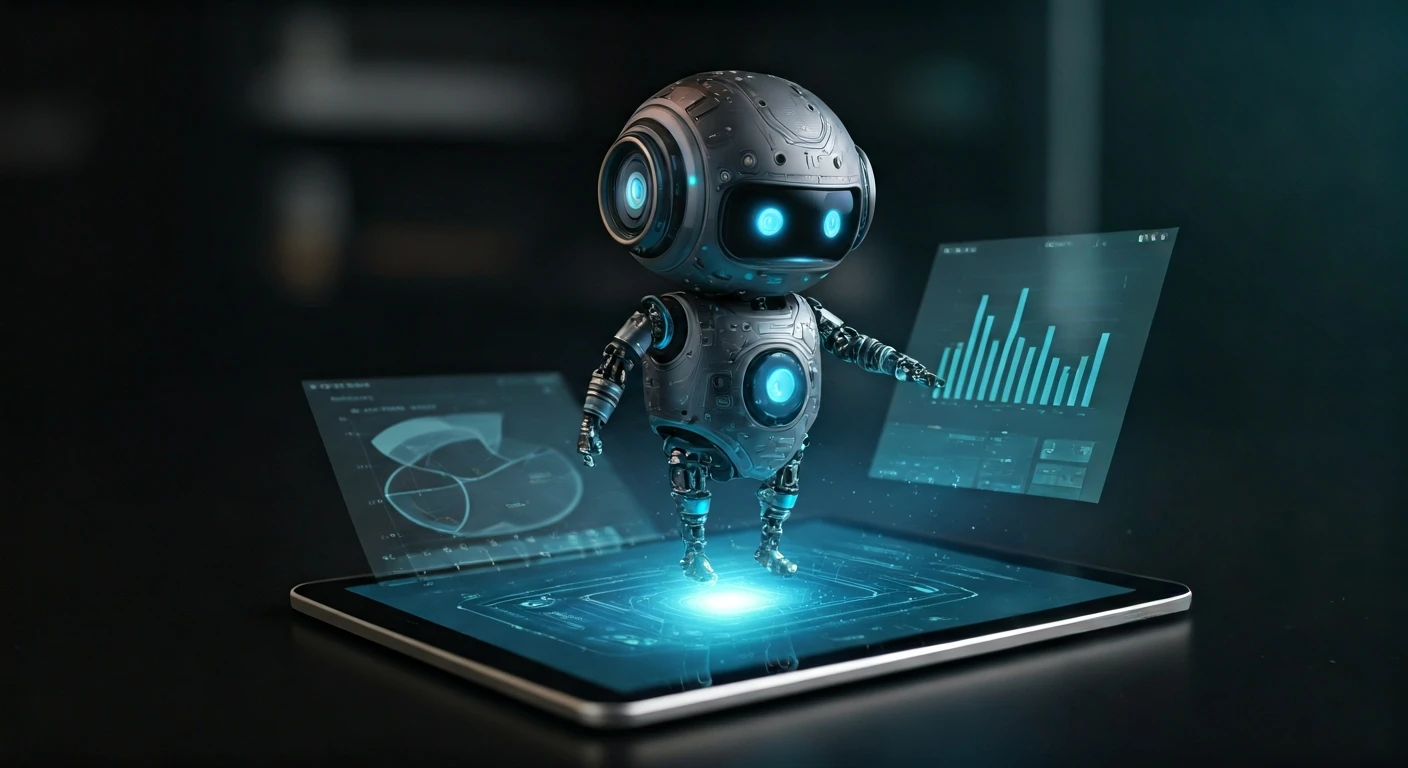
The magic behind this shift is artificial intelligence, specifically machine learning algorithms. When a student uses an AI-powered learning platform, the system doesn't just track right or wrong answers. It analyses patterns. For instance, if you consistently answer questions about Newton's Third Law incorrectly, the AI flags it as a weak area. It then adapts in real-time. The platform will start serving you more foundational questions on that topic, perhaps breaking the concept down into smaller, more digestible parts. As your accuracy improves, the AI gradually increases the difficulty, introducing more complex applications of the same principle. This process, known as adaptive learning, ensures that you are always challenged but never overwhelmed. It targets gaps in your knowledge with surgical precision, something a human tutor can do for one student but which AI can scale for millions.
Beyond Simple Multiple-Choice
Early versions of adaptive learning were limited to multiple-choice questions (MCQs), which are easy for a machine to grade. However, recent advances in Natural Language Processing (NLP)—the same technology that powers chatbots like ChatGPT—are changing the game. Modern AI can now generate a wider variety of questions, including fill-in-the-blanks and short descriptive answers. More impressively, it can understand and evaluate the responses. For example, an AI can generate a unique physics problem with different variables for every student, preventing rote memorization of answers. It can then analyse the student’s written explanation to see if the core concepts were correctly applied, even if the final numerical answer is wrong. This allows for a much deeper assessment of a student’s understanding, moving beyond simple recall to test critical thinking and problem-solving skills.
The Indian EdTech Boom
In India's hyper-competitive education market, this technology is no longer a futuristic concept; it's a key business differentiator. Major EdTech players like Byju's, Unacademy, and Vedantu have heavily invested in building sophisticated AI engines. Their platforms use adaptive question banks to prepare students for everything from Class 10 boards to the notoriously difficult UPSC exams. The promise of a personalized learning path is a powerful marketing tool for parents and students anxious for an edge. These companies collect vast amounts of data on student performance, which in turn feeds and improves their AI models, creating a powerful feedback loop. The more students use the platform, the smarter the AI gets, and the more effective its personalized recommendations become.
The Hurdles and Human Element
Despite the promise, the technology is not a panacea. A significant concern is algorithmic bias. If the initial data used to train the AI is skewed, the system might inadvertently favour certain learning styles or backgrounds. There are also valid concerns about data privacy and the amount of student information being collected. Furthermore, critics argue that an over-reliance on AI could diminish the role of human teachers and the crucial social-emotional learning that happens in a classroom. The best systems are not those that replace teachers, but those that empower them. AI can handle the repetitive task of generating practice questions and grading, freeing up a teacher's time to focus on mentoring, explaining complex nuances, and inspiring students—tasks that remain deeply human.