






A Marathon on Another World
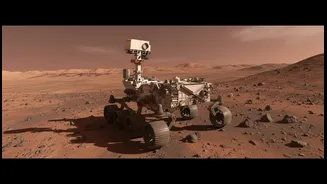
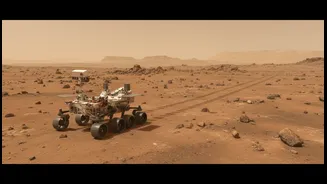
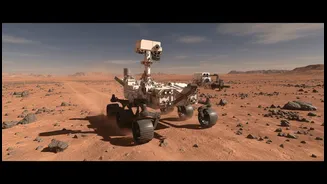
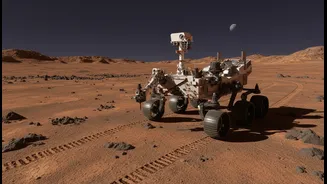
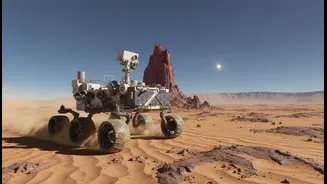
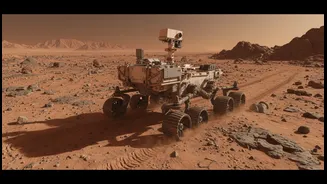
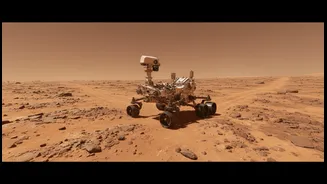
In June 2026, the Perseverance rover officially crossed the 26.2-mile (42.195-kilometer) mark, becoming only the second vehicle to complete a marathon on another planet. It accomplished this feat in just over five years, significantly faster than the Opportunity
rover, which took more than 11 years to cover the same ground. This impressive pace is a testament to Perseverance's advanced design, particularly its autonomous navigation system, called AutoNav. This system allows the rover to build 3D maps of its surroundings and make its own driving decisions to avoid hazards, enabling it to cover more ground safely. While its top speed is a mere 0.1 miles per hour, its ability to 'think while driving' is what makes these long-distance traverses possible.
The Inevitable Scars of Exploration
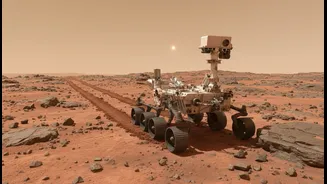
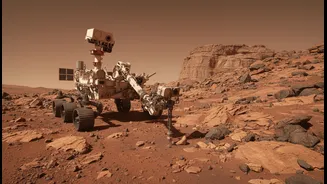
Traveling across the rugged Martian landscape takes a toll. The greatest risk to the rover's longevity is the state of its six aluminum wheels. Engineers learned hard lessons from the Curiosity rover, whose wheels suffered significant damage from unexpectedly sharp, wind-carved rocks known as 'ventifacts'. To counter this, Perseverance's wheels were designed to be more robust, with thicker skin and twice as many treads, or grousers. Despite these improvements, the constant pressure on the metal from rolling over rocks for years creates a risk of wear and tear. Rover drivers on Earth conduct regular inspections using the rover's own cameras to monitor for any new punctures, tears, or cracks, knowing that the wheels are a critical point of failure.
Charting a Safer Path
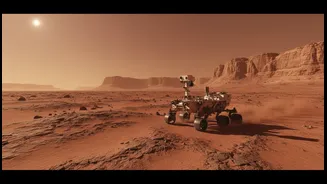
The secret to the rover's long life is less about speed and more about strategic caution. Every drive is meticulously planned by a team of engineers at NASA's Jet Propulsion Laboratory (JPL). They use high-resolution images from the Mars Reconnaissance Orbiter to create detailed risk maps of the terrain ahead. This allows them to identify and steer Perseverance away from potentially mission-ending hazards like fields of sharp rocks or deep sand traps, even if it means taking a much longer, less direct route to a scientific target. This process represents a fundamental shift in managing a long-duration mission: the primary goal is no longer just to get to the next destination, but to get there with the vehicle as healthy as possible.
Engineering From Millions of Miles Away
Managing the rover is a masterclass in remote problem-solving. Because radio signals can take over 20 minutes to travel between Earth and Mars, direct, real-time control is impossible. Engineers must act as strategists, not joystick operators. They rely on the rover's autonomous systems to handle moment-to-moment decisions. Recently, this has even included using generative AI to help plan safe and efficient routes, analyzing orbital imagery to pick out waypoints just as a human driver would. Furthermore, the team at JPL has an identical twin of the rover on Earth, nicknamed 'OPTIMISM', allowing them to test software patches and troubleshoot problems in a simulated environment before sending commands to the real rover on Mars.
The True Lesson: Managing a Graceful Decline
The marathon milestone is impressive, but the real engineering marvel is how the mission team is managing the rover's inevitable decline. Every machine has a finite lifespan, especially one operating in a harsh, alien environment. The focus for the Perseverance mission has subtly shifted from a sprint of discovery to a marathon of endurance. This involves making calculated trade-offs: choosing safer, longer routes; managing power consumption; and deciding which scientific instruments to use to preserve their longevity. The smart response to Perseverance's achievement is to look beyond the odometry and study the disciplined process of risk assessment, preventative maintenance, and strategic planning that keeps it exploring. It’s a story not of conquering Mars, but of expertly navigating its challenges.