


What Exactly Is Solar Weather?
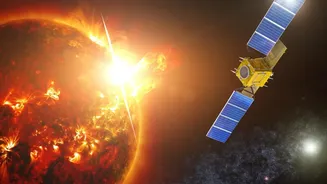
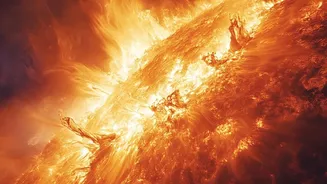
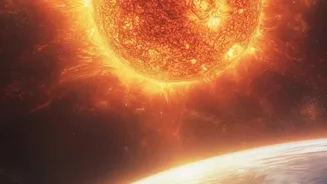
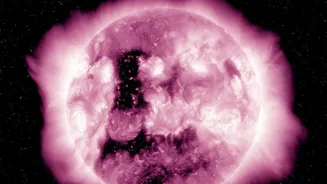
Just like Earth has weather, so does the sun. But instead of wind and rain, solar weather involves massive eruptions of energy and charged particles. The main events are solar flares, which are intense bursts of radiation, and coronal mass ejections (CMEs),
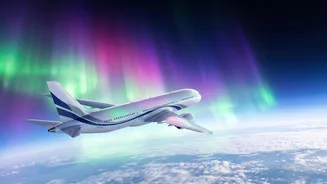
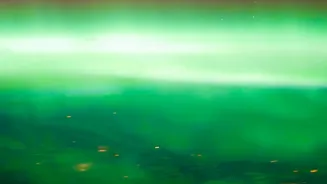
which are giant clouds of solar plasma hurled into space. When these phenomena are directed at Earth, they can interact with our planet's magnetic field and upper atmosphere, creating what are known as geomagnetic storms. While these storms can produce beautiful auroras, they also have the power to interfere with the technology we rely on daily, including systems crucial for modern aviation.
The Three Main Risks to Aviation
For the aviation industry, solar weather poses a threefold challenge: it can disrupt communications, interfere with navigation, and increase radiation exposure for those on board. Modern aircraft are heavily dependent on reliable communication with air traffic control and satellite-based navigation for precise routing. When a solar storm hits, the systems that pilots take for granted can become unreliable, increasing their workload and forcing them to switch to backup procedures. These disruptions are not just theoretical; aviation authorities like the FAA now consider space weather a regular part of pre-flight safety checks.
Communication Blackouts and GPS Glitches
The most common impact of a solar storm is on high-frequency (HF) radio communications. Flights over oceans and polar regions rely on HF radio to stay in contact with air traffic control. During a solar event, the Earth's ionosphere gets energized, which can absorb or scramble these radio signals, leading to a communications blackout. Similarly, the Global Navigation Satellite System (GNSS), which includes GPS, can be degraded. The charged particles distort the satellite signals as they travel to the aircraft's receiver, potentially causing positioning errors of several metres. While planes have backup navigation systems, the loss of primary GPS can force pilots to use less efficient procedures and maintain greater distances between aircraft.
The Polar Route Problem
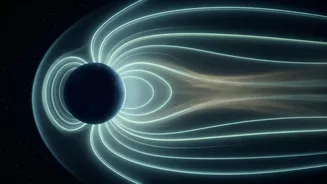
Flights that use polar routes—common for connecting North America and Europe with Asia—are particularly vulnerable. Earth's magnetic field, which normally shields us from solar radiation, is weakest at the poles, funneling charged particles down into the atmosphere where aircraft fly. This means communication blackouts and navigation issues are more frequent and intense in these regions. Furthermore, the radiation exposure for passengers and crew is highest on these routes during a solar event. While the radiation dose from a single flight is typically low, airlines are required to monitor exposure and may reroute or change a flight's altitude to mitigate the risk during a significant storm.
How We Stay Safe: Forecasting and Mitigation
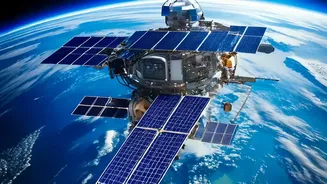
Fortunately, the threat of solar weather is not unmanaged. Scientists at organizations like the US Space Weather Prediction Center (SWPC) and the European Space Agency (ESA) monitor the sun 24/7. Using satellites and ground-based telescopes, they issue watches, warnings, and alerts for the aviation industry when they detect potentially disruptive solar activity. Airlines and flight dispatchers use these forecasts to make critical decisions. If a major solar radiation storm is predicted, they might reroute a flight away from the poles, adjust the cruising altitude, or even delay a flight to ensure the safety of everyone on board. This proactive approach means that while solar weather can be disruptive, its effects on flight safety are carefully managed behind the scenes.