
Why Venus is Such a Tough Nut to Crack
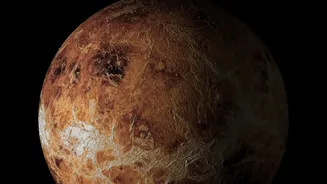
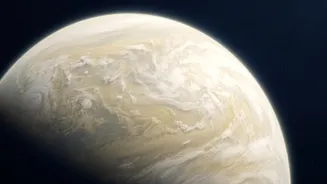
Venus is a planet of extremes. Its surface temperature is a scorching 460°C, hot enough to melt lead, and the atmospheric pressure is over 90 times that of Earth's. This inhospitable environment is created by a runaway greenhouse effect, driven by an atmosphere
that is 96% carbon dioxide. A thick, permanent blanket of sulfuric acid clouds completely hides the surface from view, making direct observation impossible. These factors make Venus incredibly challenging to study, but also a crucial subject. Understanding how and why Earth's so-called twin turned into a planetary furnace could offer vital lessons about climate change and planetary evolution.
The Mission to Map the Unseen
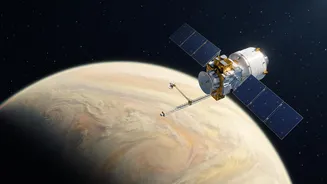
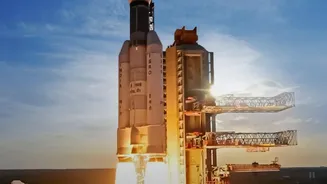
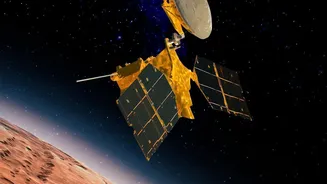
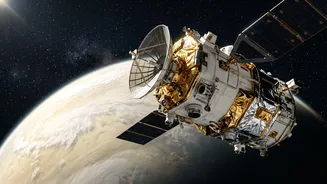
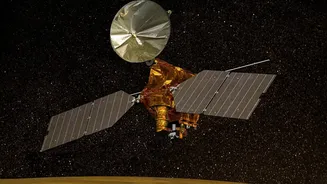
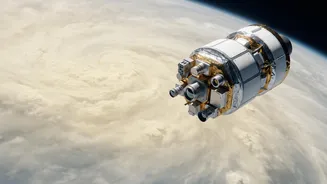
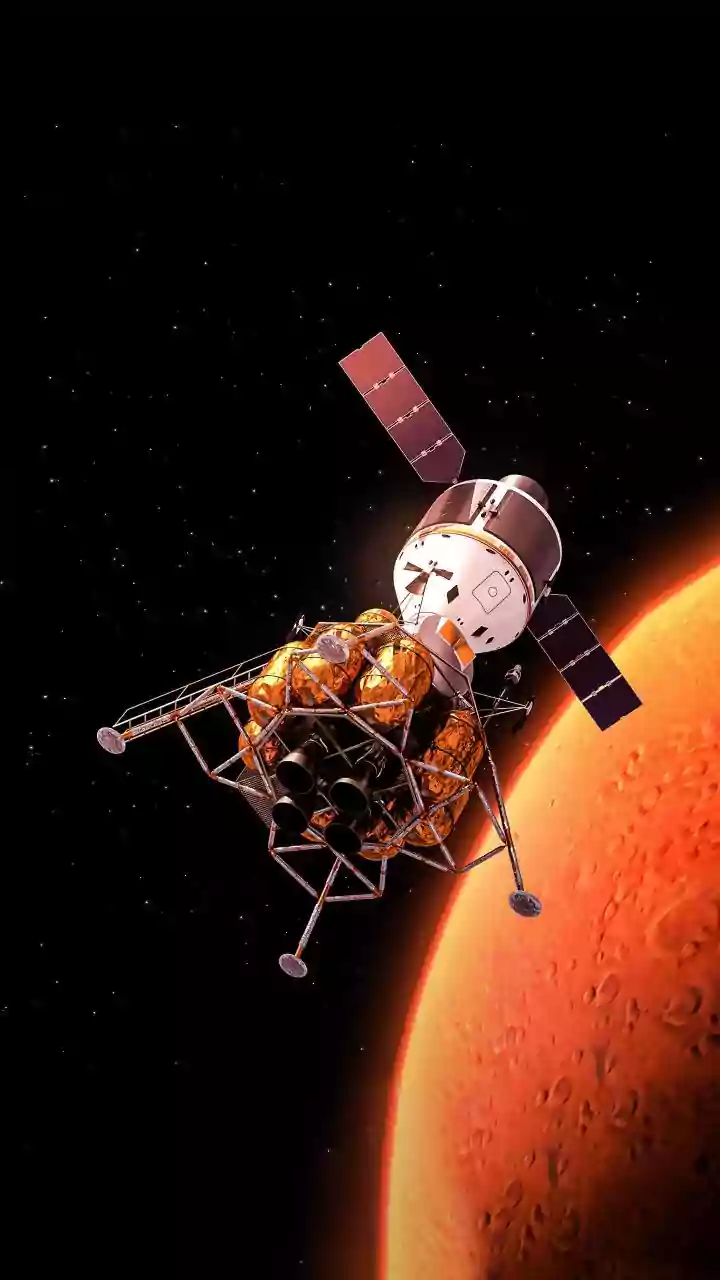
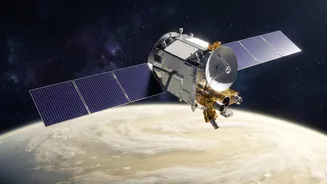
The primary goal of ISRO's Shukrayaan orbiter is to conduct a comprehensive investigation of Venus from above. The mission has three main areas of focus: mapping the planet's surface and subsurface geology, studying its complex atmospheric chemistry and dynamics, and analyzing how the solar wind interacts with the Venusian ionosphere. The mission, which was formally approved by the Union Cabinet in September 2024 with a planned launch in 2028, will place a 2,500 kg spacecraft into a highly elliptical orbit around Venus. This orbit will eventually be lowered using aerobraking—a technique of using the planet's own atmosphere to slow down—to get a closer look at our mysterious neighbor.
Peering Through the Veil with Radar
To see what lies beneath the thick clouds, Shukrayaan will rely on a powerful flagship instrument: a high-resolution Synthetic Aperture Radar (SAR). Unlike optical cameras, radar can penetrate cloud cover, darkness, and bad weather to create detailed maps of the ground below. ISRO's SAR is designed to have a resolution up to four times better than that of NASA's Magellan mission from the 1990s, allowing it to spot finer geological details. This will help scientists map volcanic flows, craters, and other surface features, searching for evidence of active geology. In a world-first for Venus exploration, the mission will also carry a ground-penetrating radar to study the planet's shallow subsurface stratigraphy, offering a look at the layers just below the surface.
Decoding the Atmospheric Chemistry
The core of the mission's atmospheric investigation lies in a suite of specialized spectrometers. One of the key payloads is VIRAL (Venus Infrared Atmospheric Gases Linker), an instrument co-developed with France and Russia. VIRAL will analyze the composition of the atmosphere by observing it in infrared light, detecting key gases like carbon dioxide and sulfur dioxide. Crucially, it will also search for signs of phosphine, a gas whose potential detection in 2020 sparked debate about the possibility of microbial life in the cooler upper atmosphere. Other instruments, like the Venus Cloud Monitoring Camera (VCMC), will study the cloud dynamics and even look for signs of lightning.
Understanding a World Without a Shield
Unlike Earth, Venus has a very weak magnetic field, leaving its upper atmosphere exposed to the constant barrage of the solar wind—a stream of charged particles from the Sun. Shukrayaan will carry instruments specifically designed to study this interaction. A payload developed in collaboration with Sweden and Germany, including the Venusian Neutrals Analyzer (VNA), will analyze how these solar particles strip away parts of the Venusian atmosphere. This research is vital for understanding why Venus lost its water and evolved so differently from Earth, despite their similar beginnings.