









1. The Empathetic Healer: Clinical Psychologist
While AI can process data and recognize patterns, it cannot replicate the nuanced empathy required for mental healthcare. Clinical psychologists build trust and navigate complex human emotions—skills that are foundational to therapeutic relationships.
An AI chatbot can offer suggestions, but it can't provide the attunement and shared human experience central to healing. The role involves interpreting subtle non-verbal cues, understanding cultural context, and making ethical judgments in moments of crisis, all of which are beyond the capabilities of current algorithms. This deep, human-to-human connection is why mental health professions are considered highly resistant to automation. In India, the demand for mental health professionals is growing, and salaries reflect this. An experienced clinical psychologist, particularly one with a doctorate or in private practice, can earn a significant income, with top professionals making upwards of ₹17 lakh annually.
2. The Strategic Orchestrator: Chief Human Resources Officer
In the age of AI, the role of a Chief Human Resources Officer (CHRO) has become more strategic, not less. Rather than being replaced, the CHRO is now tasked with orchestrating a hybrid workforce of humans and machines. This requires a sophisticated understanding of organisational culture, strategic vision, and complex interpersonal dynamics—abilities that AI cannot manage. A CHRO must navigate the ethical implementation of AI, build trust among employees, and design new career pathways as job roles evolve. They are responsible for fostering a culture that balances technological efficiency with human well-being, a task that relies on negotiation, influence, and emotional intelligence. As companies lean on AI for routine tasks, the CHRO's focus shifts to higher-value work: leadership development, change management, and building a resilient, adaptable workforce. This strategic importance is reflected in their compensation. In India, a CHRO at a large corporation can earn a base salary ranging from ₹60 lakh to ₹1.5 crore, with bonuses and incentives pushing total compensation even higher.
3. The Hands-On Expert: Specialist Surgeon
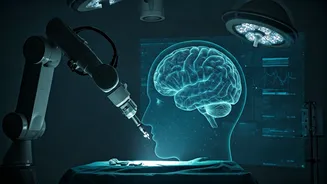
Surgery is a field where technology has long been an ally, but AI is unlikely to replace the surgeon at its center. While AI can assist with diagnostics and robotic tools can enhance precision, the core of surgery involves complex, real-time problem-solving in a highly unpredictable environment. A surgeon must combine years of training with fine motor skills and the ability to make critical judgments under pressure when unexpected complications arise. These decisions rely on a synthesis of clinical data, patient history, and physical feedback that is impossible to fully automate. Experts believe that AI will augment the surgeon's capabilities, acting as a sophisticated co-pilot rather than the pilot. The surgeon who uses AI will likely replace the one who doesn't, but the human will remain in control. The legal and ethical responsibility for a patient's life ultimately rests with a human, a burden AI is not equipped to carry. Super-specialist surgeons in India, such as neurosurgeons or cardiothoracic surgeons, are among the highest-paid professionals in any field, with potential earnings ranging from ₹50 lakh to over ₹2 crore annually.