


A New Class of Worlds
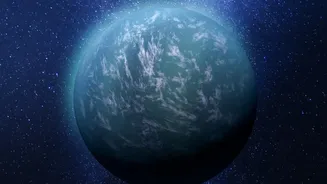
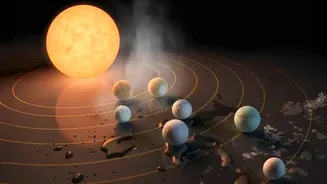
First, what exactly is a super-Earth? In simple terms, it's a planet more massive than Earth but lighter than our own ice giants like Neptune. They are one of the most common types of planets discovered in our galaxy, yet curiously, our solar system doesn't
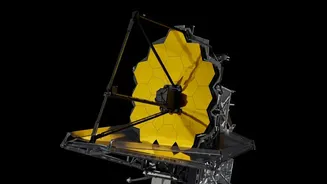
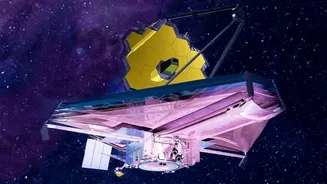
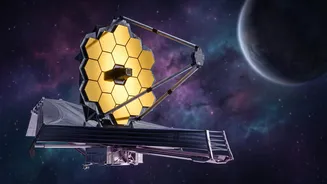
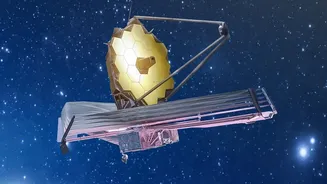
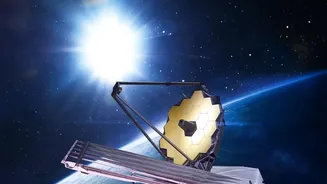
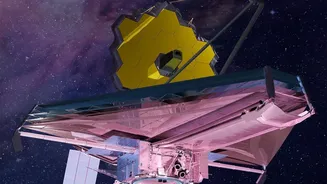
have one. This makes them a primary target for astronomers. These worlds can be rocky like Earth or have a composition we've yet to fully understand. The James Webb Space Telescope (JWST) is now giving us the tools to move beyond just detecting these planets and start understanding what they're actually like, particularly whether they have atmospheres—a key requirement for a habitable world.
The Planet in the Crosshairs: 55 Cancri e
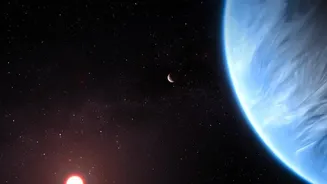
One of the most compelling recent studies focuses on a super-Earth named 55 Cancri e, located about 41 light-years away. This isn't a paradise by any stretch; it orbits its star so closely that its surface is likely a bubbling ocean of molten magma, with temperatures reaching around 1,540 degrees Celsius. For years, scientists debated whether a planet under such intense heat and radiation could even hold onto an atmosphere. Previous observations were inconclusive, but new data from Webb’s infrared instruments provides the best evidence to date that 55 Cancri e is, in fact, shrouded in a substantial atmosphere, likely rich in carbon dioxide or carbon monoxide.
How to See an Invisible Atmosphere
So how do you study the air of a planet light-years away? The technique is called transit spectroscopy, and it's brilliantly clever. Astronomers wait for the exoplanet to pass in front of its host star from our viewpoint. As the starlight shines through the planet's thin atmospheric halo, the gases in that atmosphere absorb very specific wavelengths of light. The JWST's highly sensitive spectrographs analyse the starlight before, during, and after this transit. By looking at which colours of light are missing, scientists can identify the chemical 'fingerprints' of the molecules present, like reading a cosmic barcode.
The Power of Infrared Vision
This is where JWST's infrared sensors, like the Mid-Infrared Instrument (MIRI), become superstars. Many molecules, including water vapour, carbon dioxide, and methane, absorb light most strongly in the infrared part of the spectrum—wavelengths of light that are invisible to the human eye and largely blocked by Earth's own atmosphere. By positioning itself in space and using its massive mirror, Webb can capture these infrared signals with unprecedented clarity. In the case of 55 Cancri e, the data showed a dip in infrared light between 4 and 5 microns, a tell-tale sign of an atmosphere containing carbon-based molecules. The planet was also cooler than expected, suggesting an atmosphere was distributing heat from the scorching dayside to the dark nightside.
Not Earth 2.0, But a Vital Clue
It’s important to note that finding an atmosphere on 55 Cancri e doesn't mean it's habitable—far from it. The planet is a scorching lava world. Scientists believe its atmosphere isn't an ancient one, but a 'secondary' atmosphere that is constantly being replenished by gases bubbling out of its magma ocean. However, this discovery is monumental because it proves that a rocky planet, even under extreme conditions, can maintain a significant gaseous envelope. This finding pushes the boundaries of what's possible and provides a window into the early conditions of planets like Earth and Venus, which were also once covered in magma.