




Which Meteor Shower Should You Watch?
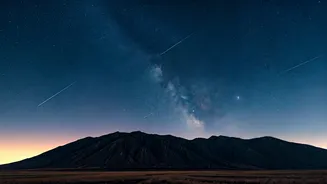
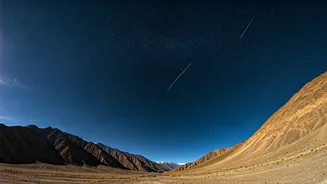
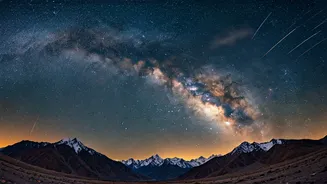
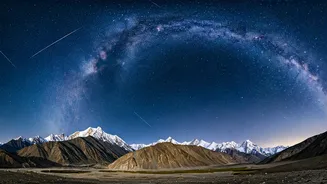
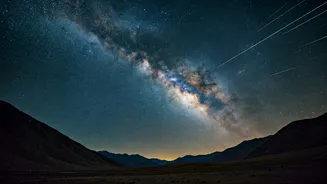
The main event for stargazers in India this year is the Perseid meteor shower, which peaks on the nights of August 12 and 13, 2026. This famous shower is known for producing up to 60-100 bright meteors per hour at its peak. It is caused by Earth passing
through the debris trail of Comet Swift-Tuttle. What makes 2026 exceptionally special is that the peak coincides with a new moon, meaning the sky will be completely dark, allowing even faint meteors to shine brightly. While much of India is affected by the monsoon in August, Ladakh’s high-altitude desert climate often remains clear, making it a prime location for viewing the Perseids. For those traveling earlier, the Delta Aquariids are active in late July, but the 2026 peak on July 29-30 will be obscured by a bright full moon, making viewing challenging.
Why Ladakh Is a Stargazer's Paradise
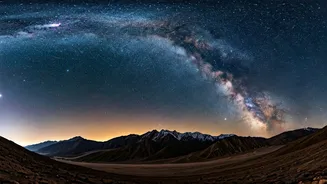
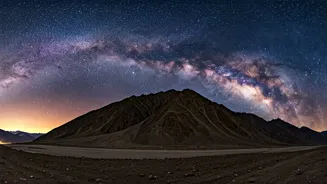
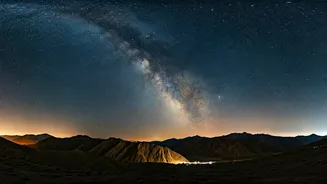
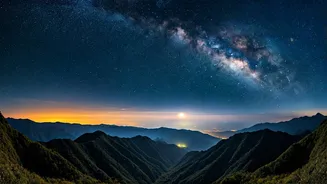
Ladakh's unique geography makes it one of the world's best places for astronomy. Its high altitude, with most locations above 10,000 feet, means there is less atmosphere to distort the view of the stars. The region's dry climate results in exceptionally clear, cloudless nights, especially outside the brief monsoon window. Crucially, its sparse population and remote location ensure minimal light pollution, a key factor for observing celestial events. The region is home to India's first official Dark Sky Reserve in Hanle, a testament to the pristine quality of its night skies. This designation ensures light pollution is actively controlled to protect the area for both scientific research and astro-tourism.
Top Viewing Locations
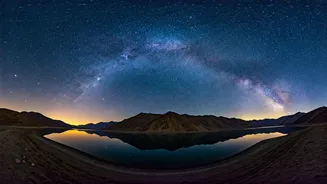
While almost any spot away from Leh town offers great views, some locations are truly world-class. Hanle is the premier choice, located within the Changthang Wildlife Sanctuary at an altitude of 4,500 metres. As India's first Dark Sky Reserve, it provides unparalleled darkness and is home to the Indian Astronomical Observatory. Pangong Tso and Tso Moriri lakes offer a magical experience, with the stars reflecting on their calm, high-altitude waters. Nubra Valley, accessed via the Khardung La pass, is another excellent option with its wide, open landscapes and minimal light. Even the area around Lamayuru Monastery, known as the "Moonland of Ladakh," provides dramatic foregrounds for astrophotography.
Planning Your Trip: Health and Acclimatization
Altitude sickness is a serious consideration when traveling to Ladakh. Leh is situated at 3,500 metres (about 11,500 feet), and most stargazing spots are even higher. If you are flying into Leh, it is critical to rest for at least 24 to 48 hours upon arrival to allow your body to acclimatize. Avoid strenuous activity during this initial period. The key principle is to ascend slowly; if possible, plan your itinerary to visit lower altitude areas first. Staying hydrated by drinking plenty of water (4-6 litres a day) is essential. Symptoms of altitude sickness can include headache, dizziness, and fatigue. If symptoms worsen, do not ascend further and consider moving to a lower altitude.
What to Pack and How to Watch
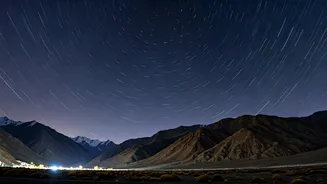
To fully enjoy the meteor shower, you don't need a telescope; the naked eye is best for taking in the wide expanse of the sky. Find a comfortable spot away from any stray lights, lie back, and give your eyes at least 20-30 minutes to fully adapt to the darkness. Pack multiple layers of warm clothing, including thermal wear, a jacket, gloves, and a cap, as night temperatures in Ladakh can drop to freezing even in summer. A red-light torch is highly recommended as it helps you see in the dark without ruining your night vision. For astrophotographers, a sturdy tripod and a wide-angle lens are essential to capture the stunning night sky.