







A New Academy Tackles a Core Problem
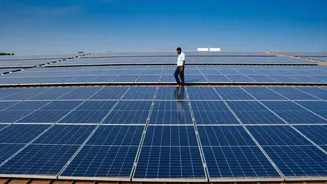
In Gandhinagar, the recently launched India-Australia Rooftop Solar Training Academy has welcomed its first cohort of technicians. This initiative, a milestone in the India-Australia Renewable Energy Partnership, isn't just another educational institution.
Its primary mission is to address one of the most significant, yet often overlooked, obstacles in India's clean energy transition: the shortage of a field-ready workforce. While India produces over a million engineers annually, a persistent gap exists between academic knowledge and the practical skills required for high-quality solar installation, operation, and maintenance. This new academy, based at Pandit Deendayal Energy University (PDEU), was created specifically to bridge that gap.
Beyond the Textbook: The Focus on Hands-On Skill
The main takeaway from the academy’s launch is its relentless focus on practical, hands-on training. The curriculum moves beyond theoretical knowledge to impart the specific competencies needed on a rooftop: proper installation techniques, safety protocols for hazardous work, system maintenance, and basic troubleshooting. This is critical because poor installation quality is a major challenge for the industry. Issues like improper wiring, incorrect panel orientation, and a lack of site assessment lead to underperforming systems and expensive fixes, undermining consumer confidence. The academy aims to produce technicians who are not just certified, but genuinely field-ready—a distinction that industry experts say is crucial. The program places a strong emphasis on real-world scenarios, preparing workers to handle the physical and technical demands of the job from day one.
Addressing a National Skills Deficit
India's push for renewable energy, including the ambitious PM Surya Ghar: Muft Bijli Yojana, has created massive demand for skilled labour. Projections suggest the green economy could create over 7 million jobs by FY28. However, industry leaders have consistently warned that the skills shortage is a major barrier to growth, potentially slowing project execution by as much as 20%. The problem is not a lack of people, but a lack of trained people. Many installation crews are assembled from adjacent trades like construction or general electricians, often without specialised solar training. Initiatives like the new academy, which aims to train 2,000 technicians in its first two years, are designed to directly counter this trend. By focusing on practical skills and even including training for women and youth, the program seeks to build a sustainable and inclusive workforce.
Why Quality Installation Powers the Solar Dream
Ultimately, India's ability to achieve its goal of 500 GW of clean energy by 2030 depends on the quality and reliability of its installations. A solar panel system is a 25-year asset, but its performance and safety depend entirely on the quality of the initial installation and ongoing maintenance. When technicians lack proper training, the risks are significant, ranging from underperformance and financial loss for the consumer to serious safety hazards like fires or rooftop falls. By creating a pipeline of highly skilled, practical-minded technicians, the rooftop-solar academy and similar programs are doing more than just filling jobs. They are building the foundational workforce required to ensure the long-term success and sustainability of India's entire solar ecosystem. This focus on hands-on expertise is the critical, often unglamorous, work that will turn ambitious energy targets into a tangible reality for millions of homes and businesses across the country.